Ensar Emre TUNA
@eetuna
kartal sinek avlamaz



It was a commonly held belief among the allies that the Turks were not inclined to take prisoners, and the events immediately after the defeat of Cpl Kerr's outfit suggested nothing to the contrary The Turks converged looking ragged in their tattered uniforms. Some were even barefoot. Despite their somewhat pathetic appearance, they showed little compassion for their foes.
One wounded man, Priv. Calcutt, of Williamstown, was bayoneted to death, and when the wounded Priv. O'Conner yelled in protest, the same Turk walked over and proceeded to bash him over the head with a large rock until he became unconscious.
Cpl Kerr had been shot through the left thigh and right arm. As he lay bleeding, he attempted to relieve himself using his right hand, and a Turkish soldier who saw him drew his bayonet and threatened to finish him off. The soldier shouted angrily in a tongue the corporal could not understand, but he thought he heard the word 'Allah' a few times and had the presence of mind to switch hands, guessing that Muslims regard it as offensive to use the 'clean' right hand when urinating. It was enough to appease the offended soldier, who moved his attentions elsewhere.

Reklam
How the Anzacs would have triumphed, say the myth-makers, if they had been favoured by providance and insightful leadership; how would have shone if Mustafa Kemal had been elsewhere. If only the Allied commanders had known how depleted the Turkish defences were early on in the campaign.
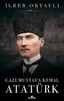
Some military strategists viewed the difficult Gallipoli plan as a sporting challange for the Allied troops. Fresh in their minds was the Turkish humiliation at the Suez Canal and recent destablishing developments, including a coup d'état in the Ottoman Empire, staged by 'Young Turk' dissidents, one of whom, Mustafa Kemal, would become a Gallipoli legend.
There is no one in command at Suvla or Anzac - except Kemal.


Reklam