
"The sitter is merely the accident, the occasion. It is not he who is revealed by the painter; it is rather the painter who, on the coloured canvas, reveals himself. The reason I will not exhibit this picture is that I am afraid that I have shown in it the secret of my own soul."
And so begins this tale of art and sin.
I would highly recommend first watching the movie Wilde, a film which takes the audience on a journey through the life of the tormented writer, from the beginnings of his fame to his later incarceration for "gross indecency" - a charge used to imprison individuals when it was impossible to prove sodomy. Wilde was sentenced to two years hard labour and died not long after being freed due to health problems gained during those two years. Looking at Wilde's story from a twenty-first century perspective, it is sad and horrifying to realise this man was indirectly sentenced to death for being gay. The "hard labour" prescribed was carried out in various ways but one of the most common was the treadmill.
This machine made prisoners walk continuously uphill for hours on end and had many long-term effects on people's health.
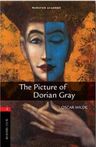
Why do I think it's important to know this? Because, as Wilde claims, in every piece of art there is more of the artist than anything else. And I believe this is especially true of The Picture of Dorian Gray more than perhaps any other fictional work I've read. In this novel, Wilde explores the nature of sin, of morality and immorality. The homoerotic undertones between Dorian Gray, Basil Hallward and Lord Henry Wotton are, I think, the author's little expression of his own secret "sins" within his work. Rarely does a work of fiction so deeply seem to mirror elements of the author's life.
By 1891, when The Picture of Dorian Gray was published, Oscar Wilde had met and fallen in love with Lord Alfred Douglas and they had begun a semi-secret affair. By which I mean that many were suspicious of the relationship but didn't argue with Wilde's claims that they shared a Socrates/Plato teacher/student kind of love. The idolisation of Dorian Gray's youth and beauty, his tendency to be mean at random... these characteristics all fit with the description and personality of Lord Alfred Douglas. For me, there is no real question as to whether part of Dorian is meant to be Mr Wilde's lover.
I think if you familiarise yourself with Oscar Wilde, this becomes a very personal novel, much more than just a disturbing horror story where a man sells his soul. But even without any additional information, I think this is a sad and haunting book that tells of the joyful naivete of youth and the sad wisdom of maturity.
·
221 Gösterim
Yorumlar
Yorum yapabilmeniz için giriş yapmanız gerekmektedir.