
*It may contain spoilers*
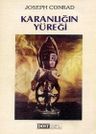
One of the main reasons that paved the way for geographical discoveries is the compass being started use by Europeans. The beginning of geographical discoveries is considered as the first step of systematic colonial efforts of Europeans. Colonialism is a spread desire that a state by taking other nations, states, communities, under its political and economic domination. Colonists often confiscate the resources, labour, and markets of the regions they are exploiting, and at the same time put pressure on the sociocultural and religious values of the people under their colonies. The European states entered the expedition races. Although Portuguese and Spanish led the discoveries, the number of nations exploring over time increased and many European countries have discovered new lands. The Europeans, who discovered previously unknown places in the world in the 16th centuries, began to exploit their discovered places in the direction of their economic, military, and political interests, thanks to their advanced military technologies, including their powerful navy, disciplined armies and effective weapons. In the late 1800s, Europe heads colonizing in less developed countries, especially in Africa, because Africa had rich underground resources. Especially after the Industrial Revolution, the increasing raw material, labour force and the need for a market, have put the world states in a relentless colonial race. The perception of having a colony as a prerequisite for being a big state has caused the states such as Germany, Italy and Belgium to participate in the competition to obtain colonies over time. These discoveries of European states have resulted in the exploitation of the underground and surface riches of the land. As of the 15th century, while the Portuguese was capturing the shores of Angola and Mozambique, the Dutch were also settling on the South African coasts and, the French started to enter the west African coast from Senegal as of the 16th century. The British settled on the shores of the Gulf of Guinea. Africa was exploited by these states. Belgium is also responsible for the system of exploitation in Africa. The policies implemented by Belgium on this continent have prepared the infrastructure in the process leads to genocide, as in Rwanda or it's directly resulted in the massacres as in the Democratic Republic of the Congo. The Democratic Republic of the Congo is one of the largest countries in the continent with a large surface area. With King Leopold's initiatives, the International African Union was established in 1876 to civilize Africa and end the slave trade. Belgium became the first country to appoint a national committee. King Leopold II financed this committee from his private wealth. The Belgian Humanitarian Organization was amazed by its goals and turned into a commercial company with anxiety for growth and profit. The blindfolded king began to exploit the rich resources of Congo, and humans were enslaved. Joseph Conrad drops the civilization mask of colonialism in his book 'The Heart of Darkness', inspired by his journey to Congo. The story begins with the main character of the novella, Marlow, who describes the heroes of the white man who illuminates the dark lands. The mystery of the undiscovered land fascinates him so much that he is asking her aunt to make a torpedo for him, so, he can be a steam ship captain. Her aunt does not break him, and she makes a request from the company, and after the company accepts Marlow's aunt's request, his journey begins. He deals with the darkness of the persecution of Europeans to the natives, the persecution of humans to animals, and the devilish and darkness desire hidden within each person. In this story, we will witness the exploitation in the region through the eyes of Marlow.
In that period, King Leopold II. caused a great persecution in the lands where it never stepped. They went the Congo to civilize the natives. The Europeans seek to convert the people of Congo region's way of live to themselves. Europeans believed that the natives were lower than them, and they need to be cultured. Kurtz also believed the natives need to be humanized and enhanced. But after everything was changed. The white men adorned the aims of the company they founded with the lie of civilization, and they could continue this persecution for a long time. The natives are calmed by sense of safety and then slaved by the European colonialists. The working conditions and health of the natives were not important for Europeans. They came to their land and claimed rights and exploited them. They put them working for peanuts, and they avoided everything that was already theirs. They persecuted them sometimes to satisfy themselves, sometimes to frighten others. Kurtz had heads hung on the roof of his hut. This is a warning for others. They were afraid of Kurtz, and they saw the white men as the owner of everything. As a result of colonialism’s cruelty, the natives felt a superior fear from the colonialists, so the Europeans used that in order to get what they wanted.
The characters mentioned by the author as pilgrims are explorers from Europe to collect ivory, and these pilgrims are a striking reference that imperialism has become as sacred as a religion in Europe. Ivory symbolizes the greed of the Europeans, and Kurtz symbolizes the Europe’s personification. It all started because of the greed of the Europeans. The exploiting side is again people, but this time the exploited are animals. People are after elephant teeth because they are valuable, but in doing, so, they do not hesitate to harm them as if they forget that the elephants are living beings. In those lands, they brought the generation of elephants almost to extinction. They hunted elephants mercilessly merely by taking care of themselves and took their elephant's teeth. This is another striking example of colonialism. The colonialist side has turned the weakness of the exploited side into power for itself. When Marlow arrives at the Inner Station, he sees a clown-looking funny man in a strange outfit, covered with blue, red, and yellow patches. He likens him to harlequin. The patches of different colours on the clothing represent various colonial companies of the imperialist states. He also painted Congo, like a clown, trying to benefit the imperialist states. In the following pages, as far as we understand from the clown pockets; imperialism shows and disseminates its power and potency through books and weapons.
Another dark situation faced by Conrad is the evil in Kurtz. Every person has good and evil in her, but evil always tries to destroy or use good. There is a force trying to exploit the good within us, and this is evil. It wants to exploit everything around it for its plans and future. In this way, it will have what it wants and can take control. Marlow wakes up when Kurtz tries to escape while sick. He realizes that Kurtz is not in place and goes looking for him. Marlow sees Kurtz in the dark. Kurtz is fighting the darkness within himself. When he decides to return, he comes out of the heart of darkness and walks towards the light. He did not allow evil to exploit the good. But of course, he has not always been successful in this. This is exactly why he is at war with him. He chose to persecute the natives for his desires. In this case, he exploited both his goodness and the locals there.
This story shows us how much people can be savage for their own benefit and how the darkness in them can come to light. We see characters who exploit humans and animals, but fight with the evilness inside themselves. These characters often succumb to their desires in this war with evil. Especially the eyes of Europe so darkened that it is not aware of her brutality at all. Greed surrounded it completely, and this situation does not bother it, on the contrary, it is satisfied. When it started exploiting for the first time, it got that pleasure, and it will not be easy to stop it anymore. Its nafs want more, and more. Thus, it becomes more blind and wild. Kurtz also worked hard in this war. Although he was able to take a successful stance in some places, he often did not stand against colonialism. In situations that contradict his own benefits, he has lost his humanity. Now the only truth that is important to him and believes is exploitation. This story leaves behind it innocent people who lost their organs or died, and elephants that were in danger of extinction. They became unable to work in any job throughout their lives. As the mortality rates increased, the traumas experienced also affected the birth rates, and the population problem emerged. With the effect of all these events, the population in Congo is estimated to decrease from 20 million to 10 million from 1880 to 1920. This story helped us see both the darkness of heart and heart of darkness.
·
281 Gösterim
Yorumlar
Lütfen giriş yapınız.