miray
@fuelmors
welcome to the machine
33 okur puanı
Temmuz 2018 tarihinde katıldı



a review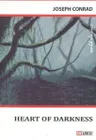

Puan vermedi
In Joseph Conrad's "Heart of Darkness," Kurtz's utterance, "the horror! the horror!" embodies the complexities of his character. Kurtz's fall from a respected and idealized European figure to a corrupt and unstable savage shows the duality of human identity and civilization. His garden decorations, the heads of those he has killed, symbolizes the moral degradation and brutality that led by unchecked power and colonial exploitation. Kurtz's journey into the heart of darkness serves as a metaphor for the corrupting influence of colonialism. The wilderness of the African jungle represents the primal, untamed "otherness" those challenges and ultimately consumes Kurtz, reflecting the inherent conflict between civilization and nature.
His death marks the peak of his moral decay and has a cruel meaning on the destructive consequences of colonialism and imperialism. Kurtz embodies the concept of the "white man's burden" showing the Western arrogance at the beginning. As time flowed, he moves forward into the inland, and lost his identity. At his death moment, he feels terrified as if all his experiences passed before his eyes and he screams "horror! horror!”. His ivory white face symbolizes the death of value and moral. Although he is flawed and corrupt, the terror he felt shows that he is still human. Colonization and imperialism are refined in the image of Kurtz, and he sees how horrifying the mission of civilization is in his deathbed.

0-30p: Kontrollü okuyucu 📖
40-70p: Hafif bağımlı 👀
80p+: Geçmiş olsun, kitaplar seni ele geçirmiş 😅
a review
Puan vermedi
The window imagery in “Wuthering Heights” is a multifaceted symbol, representing themes of confinement, isolation, desire for connection, and the interplay between the internal and external worlds. They often represent barriers and confinement. Catherine and Heathcliff frequently look out of windows, reminding lack of belonging or desire for escape. Also, the physical barriers of the windowpanes symbolize the isolation and emotional distance prevalent in the novel. While Catherine is sick, she wants Nelly to open the windows, so that the wall between Heathcliff's and her own worlds can be opened and their souls can blend. For the same reason, Heathcliff opens the windows before he dies, with his eyes open. When Nelly finds him dead, she compares his eyes to the "windows of hell" and tries to close them like a window.
The window becomes a metaphorical boundary between the civilized and the primal, tamed and wild. When Catherine and Heathcliff are children, they spy on the Lintons through the window, and they see how luxurious and "splendid" the Thrushcross Grange in contrast to Wuthering Heights. Moreover, windows blur the boundary between inside and outside, just as Heathcliff, an ambiguous and in-between character. Another window metaphor can be seen in Lockwood's relationship with the story. Lockwood listens to the whole story from Nelly as if he were looking through a window, literally peeping Heathcliff and Catherine's past.
a review
In the novel, the most significant acting is Dorian Gray's obsessive identification with the portrait, allowing it to overshadow his human qualities. From the outset, Dorian perceives the portrait as a reflection of himself, by internalizing it extremely. Oscar Wilde, in addressing this, contends that art means nothing but itself, and should be acknowledged as indifferent to life. In contrast, Dorian confuses the borders between life and art, errantly believing that only the portrait, not himself, will bear the consequences of degradation. In this misguided pursuit, he loses not only his humanity but also his aestheticism. This leads Richard Ellmann to characterize Dorian as "the first victim of aestheticism," emphasizing the tragic cost of Dorian's misinterpretation and the subsequent erosion of his dual identity.
The duality inherent in the portrait reflects his inner conflict and the moral dichotomy. At the beginning, the unspoiled portrait represents Dorian’s innocence and serves as an indicator of his untouched morality. As Dorian begins to live in an immoral way, the portrait ages, begins to decay, and become ugly. This degradation reflects the moral cost of Dorian’s actions and the corruption growing within him. His beautiful and youthful appearance contrasts with the corruption and decay depicted in the portrait. This duality highlights the tension between the socially acceptable surface and the hidden corrupt reality. Therefore, the portrait becomes a psychological mirror reflects Dorian’s inner struggle. He is also a symbolic embodiment of aesthetic decadence. He shows fin de siècle’s fascination with superficial beauty and hidden corruption, with his Dionysian character hidden under an Apollyonic image.