Kızıl Panda yayınlarının ucube çevirisiİnceleme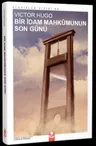

In the historical context of 19th-century France, we encounter a protagonist condemned to meet his demise under the guillotine's blade. His narrative unfolds within the confines of Bicêtre, an institutional backdrop that serves as the crucible for his reflections. The act of committing his ruminations, emotions, and trepidations to writing becomes a conduit for charting his inner evolution as he grapples with the external milieu.
Within this narrative tapestry, the nuanced cadence of his transformation is artfully delineated. An illuminating chiaroscuro is cast upon his dynamic interaction with the realm beyond his prison confines, imbuing the story with a sense of palpable tension. His introspective musings traverse the gamut of his prison cell's architectural features to the distinctive personas populating his insular sphere, including the enigmatic prison chaplain. Veiling his own identity and the specifics of his transgression in enigma, he hints elliptically at a life extinguished—an unattributed, anonymous casualty rendered faceless by design.
A salient feature of this novella is its thematic interweaving with Jean Valjean's narrative arc, an iconic figure within Victor Hugo's magnum opus, "Les Misérables." In a narrative contrapuntal to the protagonist's fate, the eponymous anti-hero encounters a fellow inmate, thereby engendering an intriguing parallelism. The parallelism is notably crystallized through the prisoner's testimony, a tale paralleling Valjean's origins, wherein a pilfered loaf of bread is evocative of desperation and altruism.
Of additional import is the narrative subplot wherein our protagonist endeavours to effectuate an escape stratagem, predicated upon exploiting a superstitious jailer's vulnerabilities. This episode underscores the profound dialectic between psychology and rationale, as the jailer's vacillations between irrationality and reason mirror the prisoner's broader struggle against the immutable confines of his situation.
The poignancy of the narrative peaks with a heartrending scene, wherein the protagonist reunites with his infant daughter on the cusp of his execution. This emotional crescendo is tinged with the bittersweet note of a child's fading recognition, epitomizing the ravages of temporal separation. A potent dichotomy of a fleeting connection imbued with loss.
The narrative's zenith culminates on the day of reckoning, as our protagonist confronts his imminent demise. In his fervent appeal for clemency, coalescing with a malediction hurled towards the impassive throngs that clamor for his macabre decapitation, the narrative reaches its zenith. The denouement leaves an indelible imprint, a tapestry interwoven with the human psyche, the capriciousness of societal judgment, and the inexorable trajectory of destiny.
The book was translated, but unfortunately, the translation turned out to be quite poor, which left me dissatisfied with the reading experience. The essence and nuances of the original text seemed to have been lost in the process, making it challenging to connect with the story on a meaningful level. It's disappointing when a subpar translation hinders the ability to fully appreciate the depth and emotion that the author originally intended to convey.
·
248 Gösterim
1 Yorum
Lütfen giriş yapınız.