
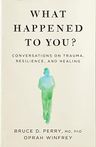
This book is a detailed discussion of trauma between Oprah Winfrey and psychiatrist Bruce Perry. It can be difficult to read because it deals with a heavy and serious subject. There were some aspects of the book that I did not like. Oprah can sometimes get out of context and give cliché self-improvement talk that she's used to. Like finishing the book with "trauma makes you stronger." I don't think those children who experienced trauma wished to be a stronger person at the time. And there was nothing in the book that mentioned that. Also, I didn't like the figures of the book about the cortex, limbic system , diencephalon, brainstem, etc. Not because I didn't understand these terms, but because they seem boring and useless to me.
The most interesting part of the book was the discussions about connectedness. When a person is dysregulated, they try to reach for various things to regulate themselves, to seek comfort, and to fill their reward bucket . Like belief, friends and family, food, drugs, alcohol, etc. Everyone's bucket contains different things with different proportions. Dr. Perry says that the most powerful form of reward is relational - positive interactions with people. Having access to a number of caring people is a better predictor of good outcomes following trauma than having access to a therapist. But we live in a world where people see less people. They work in very intense and tiring jobs. They forget the importance of connectedness and become isolated. That's why in this modern times, people got become weaker and less resilient. Continuous social interactions provide a rich source of regulation, reward, and learning. I would rather work with people I can laugh and talk with in a very busy job than work with people I can't have a conversation with in a very easy job. Because connectedness is a fundamental need.
Dr. Perry is a clinician and researcher in children's mental health and the neurosciences. That's why he talks about his child patients in this book. It was interesting to know that the child who has only two months of really bad experiences — if it's their first two months — does worse than the child with almost twelve years of bad experiences, all because of the timing of the experiences. It becomes clear how precious a child's early days are..
I love the Cheerios girl story but I couldn't find it on the internet. It's a story about a mother who gets cancer and decides to spend the last days of her life traveling with her children. One week before the mother dies, her 11-year-old daughter says to her one night, "Mom, can you wake me up when you get up to eat cereal?" And they eat cereal at 2 a.m. After the mother dies, they ask the daughter what was the best moment with her. She says it was when they were alone in the kitchen at 2 a.m. eating cereal. It's a beautiful story of how love is in these small moments, when we feel fully engaged, connected, and present.
This book tells us what we should pay attention to when analyzing a person's behavior. In order to understand someone there are a lot of personality theories like the big five traits. But people are much more than just a bunch of personality traits. What I understand from this book is that people are what they do and experience. Their strengths, vulnerabilities, and unique responses are an expression of what happened to them. Their traumas, past lives are an explanation of who they are. So we should focus on asking "What happened to you?" in order to understand.
·
123 Gösterim
Yorumlar
Lütfen giriş yapınız.