Puan vermedi
kanije defense (1601): the glorious resistance of the ottoman empire and the genius of tiryaki hasan pasha
history is sometimes written with the incredible courage of a handful of men and the genius of a leader. here is the kanije defense, it is just such a victory! tiryaki hasan pasha and 8,000 ottoman soldiers showed an epic resistance against the giant habsburg army of 50,000 men and went down in history in golden letters.
ottoman's fateful moment: kanije castle
think about it, the year is 1601. the ottoman empire is in constant struggle with the habsburgs. kanije castle passed into the hands of the ottomans in 1600 and has great strategic importance. however, habsburg emperor ii. rudolf sends a huge army to take back this castle. commander archduke ferdinand surrounds the castle with soldiers collected from germany, hungary and various european states. number superiority? it belongs to the enemy. logistical support? it belongs to the enemy. but the ottomans have something in their hands: a strategic genius and an unshakable will!
tiryaki hasan pasha: the embodiment of cunning and military genius
this man is a master of war! as his name is "tiryaki", which means constantly alert, alert, intelligent... he knows how to defeat the enemy with his limited power. here are some of his tremendous tactics:
• continuous night raids: ottoman soldiers forbade the enemy's sleep by making sudden attacks on the habsburg camp. he didn't let them breathe easily.
• deceiving movements: although there were a small number of ottoman soldiers in the castle, the cannons were constantly fired from different points, giving the enemy the feeling that there was a large army inside.
• fake letters: he spread the rumor that a large aid army came from the ottoman forces. the habsburgs

Michael Kohlhaas by Heinrich Von Kleist1000Kitap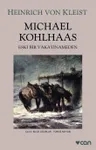

!This post contains spoiler. Read carefully!
"Michael Kohlhaas" is a German novella penned by Heinrich von Kleist, drawing inspiration from the historical narrative of Hans Kohlhase in the 16th century. At its core, the story encapsulates the plight of Hans Kohlhase, a Berlin-based merchant, who finds himself victimized when his horses are unjustly seized. His relentless quest for retribution through legal avenues is met with disappointment, ultimately compelling him to embrace a path of criminality.
Parallelly, the novella introduces us to Michael Kohlhaas, a horse dealer from Brandenburg, whose tale mirrors the historical account. As he embarks on a journey with his team of horses, he is intercepted by Junker Wenzel von Tronka's representative, who denies him passage due to a lack of proper documentation. The nobleman seizes two of Kohlhaas's horses as collateral.
Upon arriving in Dresden, Kohlhaas discovers that the demand for collateral was capricious, prompting him to demand the return of his horses. A visit to Junker Tronka's castle uncovers the shocking mistreatment of his horses and the brutal beating of his hired hand. Seeking compensation for his injured employee and the rehabilitation of his horses, Kohlhaas initiates a lawsuit against the Junker.
Despite his efforts, the wheels of justice seem to grind against him. Kohlhaas's pursuit of his rights and attempts to leverage political influence yield no tangible results. Tragedy strikes when his wife, while seeking justice, succumbs to injuries inflicted by a guard. The futility of the governmental structure in granting him fair treatment propels Kohlhaas to turn to unlawful actions, igniting a sort of private vendetta.
Gathering a band of men, he razes the Junker's castle and eliminates its inhabitants.

Bu yaz yanınızdan ayırmak istemeyeceğiniz kitapları sizin için bir araya getirdik.
💬 Siz olsanız bu listeden hangisiyle başlardınız?

First Principles is Herbert Spencer's huge prospectus to the rest of his work, the synthetic philosophy. Spencer divides truth into the Unknowable and Knowable. Whether god(s) exists or not, whether the universe is eternal or was created is unknowable. We can't conceive of self-creation, eternity, or nothingness. This makes the positions of theism/deism, atheism and pantheism up to dispute. The ultimate nature of physical reality, or materialism versus idealism, is also unknowable, as we can't conceive of space and time or matter in themselves even though we depend on them. So Spencer's basically an agnostic. We should be open minded and not conflate our beliefs with the truth. What we can know, and this is philosophy, is systematic or general knowledge of phenomena. All we can know are the effects of the ultimate force(s) behind the universe.
Force is the starting point as whatever we know is what impinges on our perception. We give primacy to our ideas of space time matter and energy to this force, though these are meaningful as mental relations and not things in themselves. The truths of philosophy are to be found in the most general scientific truths. The rest of the work focuses on the processes of evolution and dissolution which govern matter. Evolution is a concentration of matter and decrease in motion, dissolution is a decomposition of matter and increase in motion (death). Spencer sees evolution in the formation of planets from stardust and the development from a single cell to the diversity of life, macrocosm and microcosm. Through both evolution and dissolution, Spencer derives the Law of Progress of the universe from a state of homogeneity to a state of heterogeneity, simplicity to complexity. The same cause has multiple effects as forces do not act

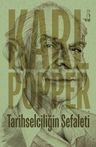
In this little book, Karl Popper worked out his earlier thoughts on the phenomenon of - what he called - historicism. This book was initially written in 1935 and revised multiple times before Popper published the final edition in 1957. In the meanwhile, Popper published his magnum opus, The Open Society and Its Enemies (1944), in which he describes the origins of the idea of historicist philosophy - he traces it back to Plato, and via Aristotle and Hegel to Marx.
I had already read The Open Society and Its Enemies and was curious if The Poverty of Historicism had to offer any new insights. And I can recommend reading this prequel to The Open Society to anyone! Popper is one of the clearest philosophers ever - he has the amazing gift of explaining the most abstract and dry material (e.g. logic) in a clear and concise way. Compare this to such bombastic philosophers like Hegel, Nietzsche, and Kant and you will never want to read continental philosophers anymore!
So what is this book exactly? The Poverty of Historicism is Popper's logical refutation of historicism. Historicism is the idea - very old, incidentally - that the philosopher can study history to find historical laws. By using these historical laws, the philosopher of history is able to not only understand the evolution of history but also - and more importantly - to make prophetical predictions about the future. This has to be clarified though since it is easy to misunderstand this position.
The historicist claims that history evolves according to laws of progress; history knows different stages and each stage has its own guiding laws. The laws of one stage aren't applicable in the preceding or following historical periods. The historicist, living in a particular historical period, is, therefore, by