
9/10
2025 27. kitabı
if you've made it this far, darren’s story is no longer just about survival — it's a matter of destiny. *lord of the shadows* is one of the darkest, most intense books in the series. it's not just the atmosphere that's heavy; darren's inner world is growing darker too. in this book, he’s forced to confront some hard truths: who he is, what he's becoming, what he can and can't prevent. these questions weigh heavier with every page.
we're back in the city, but this time the streets have never felt so threatening. the vampaneze are no longer hiding in the shadows — they're close enough to feel their breath. darren steps right into the heart of this danger, along with harkat. but the real storm isn’t just outside — it’s brewing within.
harkat plays a crucial role again. his presence, the clues to his past, and his bond with darren become much more defined in this book. and of course, there's steve. the moment he enters the stage, everything changes. every line he speaks carries a threat, every move he makes is a ghost from the past. his presence isn’t just about being an enemy — it forces darren to confront himself.
perhaps the most striking part of the book is that there's no place left to run. there are choices, but none are easy. darren doesn’t just step into the role of a hero — he’s scared, angry, uncertain. and yet, he keeps going. that’s what makes him strong.
the pacing is once again masterfully done. the tension builds gradually, but then it spikes so suddenly that it becomes hard to breathe. and the ending… is utterly devastating. maybe not physically, but emotionally, it hits like a hammer.
lord of the shadows feels like a farewell to childhood. the fairytale ends, and only the truths remain. but that’s what makes it so powerful, so moving.
be prepared —

Madness!1000Kitap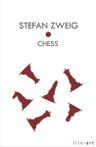

Stefan Zweig-Chess
Undoubtedly Stefan Zweig is one of the writers who reflects human emotions and handles them deeply. I can say that after reading Metamorphosis (I mentioned it to everyone and made a review of ), I couldn’t escape from its influence, and cannot still. It mentioned the value of human beings. It emphasized Gregor himself. Franz Kafka depicted the protagonist, Gregor as a ghost to reveal whether Gregor thinks of himself or considers what people say. Similarly, Chess succeeded in being one of my priorities with an emphasis on humans and his struggle to be healthy. What I mean by the word ‘healthy’? Okay. I want to ask a question to you. Do passions keep a person alive? Can they make a person mad as well? I will try to guess what your answer is. What if passions encourage a person to span a good life, can passions cause to the point he will suffer as well? That is what Zweig emphasizes. Zweig deals with Dr. B. in the book to show how strong and intelligent he is in the middle of nowhere, on the verge of insanity… Is it possible for a person to be mad and lose functions of the brain stemming from solidity and speechlessness? Maybe if he couldn’t find the chess book in the pocket of the guard, despair and loneliness would bring about madness!
---“Was that chess or madness in the cell?!” I think that there would not be any problem if the passion did not turn to jeopardy, and they do not symbolize the worst moments. The reason he is still smart and makes proper sentences in this isolated life is chess. He continuously studied it. He contemplated the chess board in his mind without real tools. He solved its rules and how to play on his own. And this passion went on in that way.
He was imprisoned by the Nazis who has pressure on Austria to get important
Reklam

Kew Gardens was written by Virginia. Virginia Woolf, who is against living Victorian style, also writes this in her works. According to the period she lived, her literature trend is modernism. She uses the style of stream of consciousness. Firstly, the title is itself important. Kew Garden is showed as a reference to The Royal Botanic Gardens in southwest London. She prefers to draw attention to the whole scene rather focus especially on theme, character, or any event in the novel. We can see some techniques of modernism like materialism, structuralism, binary opposition and intertextuality, so we can analyse the novel in terms of symbol, theme or character.
In modernism, “Make it New” is significant motto. In terms of narration, alienation, they try to use non- chronological narration, fragmented narration. In Kew Gardens, there is no chronological order or narration because there is no clear beginning and no clear ending. It means that in any novel it must be exposition, rising action, climax, falling action and resolution, yet it was not used. Characters live both past and present while they are walking in the garden that impresses them, so we can observe that symbolic archetypes are portrayed.
We can comment or analyse this novel with the concept of materialism. Simon and Eleanor thought the existence of spirits and ghost. Materialism rejects them and they couldn’t communicate each other in the deep level. For example, Eleanor says “Why should I mind, Simon? Doesn't one always think of the past, in a garden with men and women lying under the trees? Aren't they one's past, all that remains of it, those men and women, those ghosts lying under the trees…one's happiness, one's reality?" (Woolf, 1921). The other example is that he talks about spirits with older man


THE BEAST AMONG US
Personality is a set of characteristics that the individual has and distinguishes the individual from others. In psychology, personality has been studied from many aspects and theories have been established on this subject. Sigmund Freud that forms the basis of all theories has been studied over the concepts of id, ego and superego that affect the behavior and preferences of the person. Carl Gustav Jung, a student of Freud, began to oppose Freud's views in later stages, often rejecting Freud's views. Today the purpose of this paper is to express the character of Henry Fleming, the main character of The Red Badge of Courage written by Stephen Crane, in the light of archetypes that display Jung's basic human behavior.
To achieve this goal, I have organized my paper into two sections. In the first section, I am going to mention about our main character Henry Fleming’s characteristic properties in Red Badge of Courage. In the second section, I will tell you Henry Fleming’s psychological complexity in the light of Carl Gustav Jung’s thoughts.
The Red Badge of Courage by Stephen Crane, a war novel, presents us with the hidden and terrible face of war. A youth named Henry Flemming enlists in the Union Army in hopes of achieving his visions of heroism and glory. Shortly after he enlists, the fact of his decision arises. But things make him bring a different state than what was planned by Henry.
He is surpassed because of his fear of death. During his first combat, he escapes from the battle field when the enemy approaches. He instantly notices that war is not what he thought. Henry does not stop retreating even after his mockery manages to destroy the enemy. After the first conflict is over, Henry is left be alone with his own conscience. He feels
