
9/10
2022 78. kitabı
·26 saatte okudu
·Okunma: 30 Aralık 2022 03:38
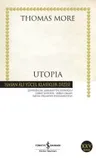
·The term 'utopia' in the way we use it today, to refer to an ideal but unattainable state, comes from this book, which More wrote in 1516. The form is political critique disguised as fantasy disguised as travelogue. More casts himself as the recorder of Raphael Hythloday's travels to the island of Utopia, where, despite their lack of Christianity, the people are closer to realizing the Christian ideal society through rational government than Europe ever was. Today serious criticism doesn't have to move under such elaborate cover, so our first impulse might be to read it like an escapist fantasy novel. But the book is really a counterpoint to the autocratic statesmanship (waning feudalism) outlined in Machiavelli's The Prince (written a few years earlier) and the new economic relations of enclosure (rising capitalism) emerging in England at the time. Think of it as a sequel to Plato's Republic and an inspiration for Swift's Gulliver's Travels. More asks: what if money and private property were abolished? Almost 500 years later it remains an interesting question.
The book is also, though short, full of wit and imaginative scenarios. On every page!
·
53 Gösterim
Yorumlar
Lütfen giriş yapınız.