Hakkında
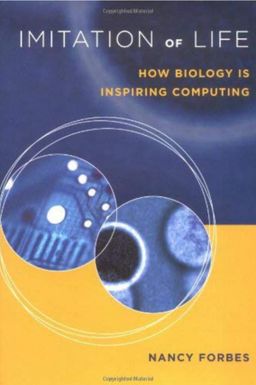
Nancy Forbes, federal hükümet için bir bilim ve teknoloji analisti olarak çalışıyor. Hem fizik hem de beşeri bilimler alanında ileri derecelere sahiptir ve Bilim ve Mühendislikte Endüstriyel Fizikçi ve Bilişim'e katkıda bulunan bir editör olarak görev yapmıştır.
Ünvan:
Yazar
Okurlar
1 okur okudu.
1 okur okuyacak.
Okur demografisi
Kadın% 0.0
Erkek% 0.0
0-12 Yaş
13-17 Yaş
18-24 Yaş
25-34 Yaş
35-44 Yaş
45-54 Yaş
55-64 Yaş
65+ Yaş
Reklam
Alıntılar


Artificial Neural Nets and Digital ComputersYapay Sinir Ağları

The way an artificial neural net processes information is fundamentally different from the way digital desktop computers do-although the latter can be modified to run artificial neural nets. Conventional digital computers are traditionally known as "von Neumann Machines" because they are based on von Neuman's original designs. They essentially work by deductive reasoning. This method is optimal for solving problems whose solutions can be reached by following a formalized, linear, finite series of instructions (algorithm) that the computer's central processing unit (CPU) executes. Computers must be programmed a priori with the exact series of steps needed to carry out the algorithm. What's more, the data fed into the program must be precise, containing no ambiguities or errors. Conventional computers are amazingly adept at carrying out what they've been programmed to do, including executing extremely complicated mathematics. They are also remarkably fast and precise. Some digital supercomputers can perform more than a trillion operations per second and are thousands of times faster than a desktop computer.
However, traditional digital computers can only solve problems we already know and understand how to solve. They're ineffective if we're not sure what kind of problem we want to solve, know an algorithm for doing it, or if the data we have to work with is vague. But if we can point to a number of examples of the kind of solution we require, or if we simply want to find a pattern in a mass of disorganized data, artificial neural nets are the best method.
In contrast to digital computers, artificial neural nets work by inductive reasoning. Give them input data and the desired solution, and the network itself constructs the proper weightings for getting from one to the
Reklam