Alpay
@alpd
.


I was closely involved with this operation. Obote and I had a personal radio link with Amin. Ours was code- named “Sparrow”; Amin’s was “Kisu.” The rebels often came to Entebbe, stayed in Amin’s house, and saw Obote. Their greatest need was for arms and transport. They had no cash, but they did have truckloads of gold and ivory, seized as they retreated from towns they had once controlled. Amin, as the rebel’s contact man, sold their gold and ivory and bought arms for them.
This was a considerable operation which revealed for the first time Amin’s chief characteristics. To me, he was always charming and easy to work with, but he also displayed a ruthless practicality, individuality and enterprise. For the first time 1 saw the effects of his particular intelligence which enabled him to snatch any advantage unconsciously offered and turn it to his own benefit.
In Amin’s dealings with the Congolese gold and ivory, no records were ever kept. The goods came by truck to his house. He did not have to account for what he sold. He simply began to bank for himself very large sums, regularly and in cash—up to 300,000 shillings at a time— amounting to something like a million dollars in all. He also kept large amounts in his house to avoid undue publicity. (A few days before my wedding in 1965, he pulled about 2,000 shillings from his pocket and gave it to me as a wedding present.)
News of his sudden wealth began to leak out. His account at the Ottoman Bank was photocopied and handed out in Parliament by an M P, Daudi Ocheng, who demanded an inquiry. A debate followed, and the inquiry was authorized. Soon afterward, however, Obote seized control of the government, arrested five ministers, four of whom supported the charges against Amin, suspended the Constitution, fired the Kabaka
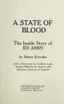

The most immediate problem facing independent Uganda was the issue of the “lost counties” which had once belonged to Bunyoro and were now part of Buganda. In the 1890s, the British had, with the assistance of the Kabaka of Buganda, fought and beaten Bunyoro, and the British had awarded the Kabaka a chunk of Bunyoro for his efforts. The Banyoro (people of Bunyoro) had always resented this. The British, conveniently for them, left the problem for the new regime to solve. The Independence Constitution called for a referendum to be held within two years so that the inhabitants of the “lost counties” could decide for themselves which area they wished to belong to. The current Kabaka, of course, had little interest in holding the referendum, for the Banyoro in the “lost counties” would undoubtedly vote to be governed by their own people rather than the Baganda. But Obote insisted on the referendum, which was held in 1964. The Kabaka duly lost the counties to Bunyoro, and the tenuous alliance between Obote and the Kabaka collapsed, a split between Prime Minister and President that eventually led to the end of democratic rule in Uganda.
When the Europeans came, three other elements were added to Ugandan society. One was European religion. The British brought their Anglicanism, and the French their Catholicism. These were more than a match for the Moslem faith brought by the Arab slave traders in the early nineteenth century. Today, only ten per cent of the population is Moslem, and the rest are about half-and- half Anglican and Catholic. The Europeans also established Christian schools. Since the Moslems did not do this, Islam soon came to be equated with a lack of education.
The British were also responsible for the introduction of Uganda’s Asians. The Asians were originally brought to build the Kenya-Uganda railway, which was supposed to carry troops to proteet the source of the Nile against the imperial ambitions of the French, Belgians and Germans. Long before it was finished in 1901, however, such stratcgic justifıcations seemed foolish—the railway was nicknamed the “Lunatic Line” by British MP’s appalled at its soaring cost. The line never carried troops, but it did enable the Asians to develop trade; they became the middle class of Uganda, and indeed of all British East Africa.
A third element, and one of particularly tragic significance for Uganda today. was the community of Southern Sudanese brought in as mercenaries by the British to staff the lower ranks of the army and the police. İn Uganda, indeed throughout East Africa, they became known as Nubians. They have retained their own identity, like the Asians. They are wholly Moslem. and stili speak their own version of Arabic.
From some thirty of these tribal areas, the British forged Uganda in the late nineteenth century. Britain, the greatest imperial power, had a particular interest in Uganda, because the region controlled the source of the Nile, which controlled Egypt, which controlled the Suez Canal, which controlled the most direct route to India, the jevvel in Britain’s imperial crovvn. Because Uganda was important to the British for its ovvn reasons, the borders vvere set vvithout much thought for the people involved. Thus the borders did not coincide with tribal territories, which overlap neighboring Zaire, Sudan, Kenya, Tanzania and Rwanda.
6/10
4 günde okudu
·2023 4. kitabı
