Ex Nihilo Dutluk
@calzifer
Arada bir kitap okuyorum.
Mütercim-Tercüman
Yüksek Lisans
Mersin
İstanbul, 23 Ekim 1994
1284 okur puanıHaziran 2017 tarihinde katıldı
We believe that we invent symbols. The truth is that they invent us; we are their creatures, shaped by their hard, defining edges. When soldiers take their oath they are given a coin, an asimi stamped with the profile of the Autarch. Their acceptance of that coin is their acceptance of the special duties and burdens of military life—they are soldiers from that moment, though they may know nothing of the management of arms. I did not know that then, but it is a profound mistake to believe that we must know of such things to be influenced by them, and in fact to believe so is to believe in the most debased and superstitious kind of magic. The would-be sorcerer alone has faith in the efficacy of pure knowledge; rational people know that things act of themselves or not at all.


6/10
2026 4. kitabı

5/10
2026 3. kitabı
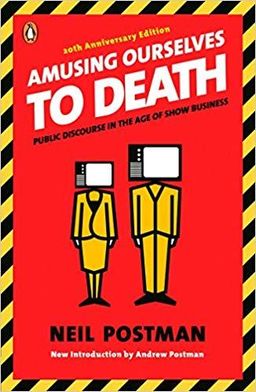
No one needs to be reminded that our world is now marred by many prison-cultures whose structure Orwell described accurately in his parables. If one were to read both 1984 and Animal Farm, and then for good measure, Arthur Koestler’s Darkness at Noon, one would have a fairly precise blueprint of the machinery of thought-control as it currently operates in scores of countries and on millions of people. Of course, Orwell was not the first to teach us about the spiritual devastations of tyranny. What is irreplaceable about his work is his insistence that it makes little difference if our wardens are inspired by right- or left-wing ideologies. The gates of the prison are equally impenetrable, surveillance equally rigorous, icon-worship equally pervasive.
What Huxley teaches is that in the age of advanced technology, spiritual devastation is more likely to come from an enemy with a smiling face than from one whose countenance exudes suspicion and hate. In the Huxleyan prophecy, Big Brother does not watch us, by his choice. We watch him, by ours. There is no need for wardens or gates or Ministries of Truth. When a population becomes distracted by trivia, when cultural life is redefined as a perpetual round of entertainments, when serious public conversation becomes a form of baby-talk, when, in short, a people become an audience and their public business a vaudeville act, then a nation finds itself at risk; culture-death is a clear possibility.

A person who reads a book or who watches television or who glances at his watch is not usually interested in how his mind is organized and controlled by these events, still less in what idea of the world is suggested by a book, television, or a watch. But there are men and women who have noticed these things, especially in our own times. Lewis Mumford, for example, has been one of our great noticers. He is not the sort of a man who looks at a clock merely to see what time it is. Not that he lacks interest in the content of clocks, which is of concern to everyone from moment to moment, but he is far more interested in how a clock creates the idea of “moment to moment.” He attends to the philosophy of clocks, to clocks as metaphor, about which our education has had little to say and clock makers nothing at all. “The clock,” Mumford has concluded, “is a piece of power machinery whose ‘product’ is seconds and minutes.” In manufacturing such a product, the clock has the effect of disassociating time from human events and thus nourishes the belief in an independent world of mathematically measurable sequences. Moment to moment, it turns out, is not God’s conception, or nature’s. It is man conversing with himself about and through a piece of machinery he created.
In Mumford’s great book Technics and Civilization, he shows how, beginning in the fourteenth century, the clock made us into time-keepers, and then time-savers, and now time-servers. In the process, we have learned irreverence toward the sun and the seasons, for in a world made up of seconds and minutes, the authority of nature is superseded. Indeed, as Mumford points out, with the invention of the clock, Eternity ceased to serve as the measure and focus of human events. And thus, though few would have imagined