Murat Yancy
@muratyancy
Pamukkale Üniversitesi
İzmir
21 okur puanı
Aralık 2020 tarihinde katıldı

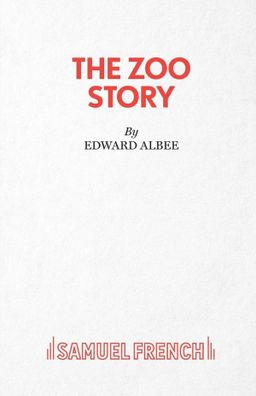
JERRY: You're married!
PETER: [with pleased emphasis] Why, certainly.
JERRY: It isn't a law, for God's sake.

Reklam
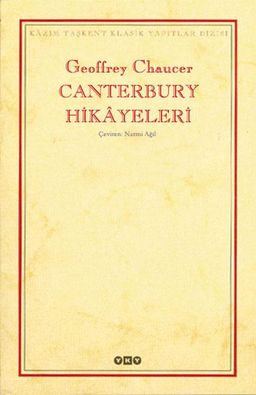
Comparison of The Knight’s Tale and The Miller’s Tale in Canterbury TalesGeçmiş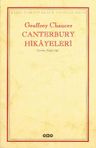
Medieval English Literature period was a period that included themes such as love, chivalry, betrayal, deception and many elements such as comic and tragic elements, social issues, and the dominance of religion. While writing Canterbury Tales, the most important work of medieval literature, Chaucer aimed to transfer different classes of society to the reader and to make criticisms on some points. The aim of this essay is to examine the first two of the tales told in Canterbury Tales in terms of themes, characters, narrators, plots and most importantly their genres. Firstly, I will talk about the narrators of the two tales and therefore the social class differences of their characters. I will then analyze the two tales from the perspective of Aristotle in terms of elements of comedy and tragedy, and finally, I will make comparisons by dealing with the plot and the themes used in both.
There are clearly noticeable differences between characters and therewithal between narrators. There is a certain class difference between The Miller and The Knight; one is from lower and the other one is from upper class. Since they reflect separate classes in society, they are different in terms of physical appearance, humors, manners and behaviors. For instance The Miller’s physical appearance is described as: “His berd as any sowe or fox was reed”(554th line, General Prologue) With the redness in physical appearance we have bad expression about The Miller but The Knight is described in the very beginning of his description as: “To riden out, he loved chivalrie, - Trouthe and honour, fredom and curteisie.” (45th, 46th lines, General Prologue) We remember that The Miller intervenes and takes some other characters’ turn. It is possible to say that there is a reason for The Miller’s
Reflections of social issues of modern people in the play “A Doll's House”Deneme
It seems that just surviving and sleeping with a full stomach are not the main problems of developed civilizations since the first formations of societies. ‘Surviving in a good condition’ is the key for modern women and men and death is mostly ignored or perceived as an end from a scientific point of view. Social status, economic level of individuals or some characteristics of modern era can provide people advantages or cause to have disadvantages in society. We can see some of these modern issues' reflections in 20th century art, literature and especially in drama. A Doll's House is one of the examples in which modern times' social issues are reflected. Henrik Ibsen, the playwright aimed to explain these problems to the audience through characters. Married couples, alone women and men are all struggling with money issues, loneliness and especially sexism in the play. Of course, these social issues are nothing compared to war, famine and natural disasters. However, these issues may appear as factors that deeply affect the mental health and psychological state of individuals that keep society alive.
Since the Lydians, money has always been the determinant of social roles. In modern age, we experienced industrialization, technological developments and capitalism. Consequently, money started to control everything including women and men’s relationships. At the very beginning of the play, we see that how money determines men's dominant role. Torvald is the one who has financial power in the family. We can see the clear social difference between Nora and her husband by Torvald’s discourses; “What is this! Is my little squirrel out of temper? - (Taking out his purse.) Nora, what do you think I have got here?”(p.3) He can make Nora happy just by giving money. Also Torvald