Cansu
@SuOfTheGreenGables
THE THEME OF MONEY AND SOCIAL NOBILITY IN MOLL FLANDERSEdebiyat

Moll Flanders tells the biography of a woman born in 18th century England from her own point of view. Born in a prison, a prostitute for twelve years, a thief for twelve years, married five times, her adventures taking her from England to America, Moll Flanders is one of the most interesting heroines in English literature with her controversial view of life and her in-depth portrait. Through Moll Flanders' life and philosophy, Daniel Defoe sharply criticises and debates 18th century England's accepted notions of human relationships, gender discrimination, social structure, morality, sexuality and crime. Since its publication in 1722, Moll Flanders has been the subject of much debate and discussion, both in terms of its subject matter and its narrative style. It is not Moll Flanders who is criticised, but society itself. The book is also significant as one of the first examples of the novel genre.
When Defoe wrote Moll Flanders, women had limited freedom and choice. Because men were assumed to be better than women in everyday life, they ruled everything in this society. Upper-class women were expected to marry a socially superior man, keep a home and give birth. Less fortunate women generally had less options, being servants, mistresses, wives or criminals. Being a woman was quite a challenge, especially for lower class women. Moll suffers from poverty, class divisions, materialism, the oppression of women and capitalism as a member of the working class. These problems led her to start stealing and prostituting.
The protagonist, Moll, was born in Newgate Prison when her mother was sent there for theft. After her mother was exiled to America, Moll wandered with gypsies for a few years. She was then taken in and cared for by an elderly nurse. Moll had a strong desire to
Reklam
THE USE OF NARRATIVE STRUCTURE IN TRISTRAM SHANDYEdebiyat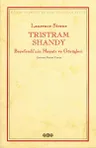
Written 264 years ago by an Anglican preacher, this novel, which subverts narrative conventions and readers' expectations, contains real and fabricated documents such as sermons, excommunication certificates, marriage contracts, various drawings, blank, black or marbled pages, flow charts, sections that have been moved or not written at all, where many of these fictional techniques are used for the first time and skilfully, the most modern of the 18th century novels and one of the earliest examples of postmodern literature before modernism existed. Marx even attempted to write a humorous novel inspired by the book at the age of 19.
The novel is an experiment in narrative form as well as a parody of the traditional 18th century novel. Tristram Shandy is essentially the story of a man called Tristram who is trying to write his own life story, but keeps getting side-tracked and distracted. The unique chronology and remarkable digressive-progressive style of Tristram Shandy are its most conspicuous formal and technical elements. The author narrates the story in a non-chronological manner, with events given out of sequence and even in reverse chronological order at times. The protagonist freely wanders back and forth in time throughout the story. He also digresses so much that story components fade into the background; the novel is filled with long essay-like passages that attract attention to what is happening or, more often than not, to something altogether else. Tristram focuses our attention to the development of his authorial endeavor in the moments when he appears to have traveled the furthest by claiming that his narrative is both divergent and progressive.
The stories of Mr. and Mrs. Shandy, Uncle Toby and Corporal Trim, Uncle Toby and the Widow Wadman, as well as
ANALYSIS OF THE GARDEN PARTYEdebiyat
The Garden Party is a short imaginary story by the author Katherine Mansfield, published in 1922. Katherine Mansfield is a very well known modernist writer. Rather than focusing on the plot, this novel emphasises the attitudes, feelings and relationships of individuals, and the author paints a picture of the protagonist's inner world as she examines class issues and ponders the meaning of life and death. This short tale takes place in the beginning of the 1900s, mainly in the garden of the Sheridan house in Wellington, New Zealand, where the author spent her youth. It revolves around a death that occurs in the Saunders Road neighbourhood on the day of a family garden party. At first the family ignore the tragedy, too busy planning the party, but as the plot continues they begin to see the brutal realities of life outside their shell.
The story's themes are class discrimination and the gap between the upper and lower classes. The story also emphasizes the naivety and cluelessness of the upper-class characters in the face of the harsh realities of life. The story also emphasizes the naivety and cluelessness of the upper-class characters in the face of the harsh realities of life. The most outstanding of the themes in this story is class structure. The main point of comparison in the story is the difference between the rich, elite Sheridans and the poor, working-class Scotts. The author uses the theme of class structure to illustrate how one's social class can affect one's views and behaviour. The narrator highlights the privileges and rights enjoyed by the wealthy and the lack of resources and opportunities available to those in lower socio-economic groups to address social injustice and inequality. Another theme in the story is death. In the story, Laura's view of her
ANALYSIS OF THE STORY OF AN HOUREdebiyat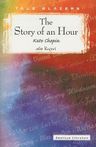
Kate Chopin’s The Story of an Hour is an early feminist work that questions attitudes about what women should be. The protagonist challenges the belief that women are nothing without a husband. After her grief subsides, Louise Mallard begins to see opportunity and freedom in her future. The author expresses the traditional idea of marriage, male-female relations, men's supremacy, and women's oppression throughout the novel. Louise Mallard realizes that she is free from the pressures of marriage and society's expectations of her and feels free for the first time in her life. But nothing would turn out as she had imagined.
The themes of The Story of an Hour are independence, death, marriage, and oppression. Women were under pressure in all aspects of life in the nineteenth century, including politics, society, economics, and psychology. Chopin focuses readers' on a story of a married lady who longs for independence. In the story, Louise Mallard's emotional transformation from a wife to an individual represents the loss of self-worth and identity that women experienced as oppressed Victorian wives, but also the desire for it. It was a completely different era than the one we are familiar with today. People were coerced into marriages over which they had no control back then. Women may marry for a variety of reasons, including social position, income, or feelings of safety. Furthermore, women see themselves as being in roles that demand they be financially, intellectually, and emotionally reliant on their spouses, requiring them to get identity and purpose from their husbands. Miss Mallard has felt trapped all her life because she was pushed into a marriage with a guy she did not love. Despite this feeling of being stuck, Miss Mallard is released on the news of her
THE SATIRIC FEATURES OF ALEXANDER POPE'S POEM THE RAPE OF LOCKEdebiyat
Alexander Pope's poem The Rape of the Lock is a critique of the idiosyncrasies and foibles of English aristocratic society. Pope uses wit, sarcasm and irony to convey his moral message. Pope depicts the false tone of the time and the frivolity of women, whilst acting sympathetically as the voice of his generation. The play is a social satire in that it pokes fun at society in a way that can still be applied in the modern day. The satire is not aimed at one individual, but at the faults and vanities of fashionable men and women at large.
Pope's poem The Rape of the Lock was based on a real-life incident between two people, told to him by his friend John Caryll. The Baron was the suitor of Arabella Fermor, Lord Petre, and Belinda was her. Arabella was furious, and the two families began to denigrate and ignore each other, until Pope wrote the poem to make light of the tragedy and to bring them back together again. Pope's memory of the joyful conclusion of the poem evolves with the times. Pope immediately wrote the first draft of the poem, which he then shared with the family for some time. This version was published unnamed in 1712 and was much briefer than the most commonly read version. Things got more difficult at this point. The sensual implications and multiple meanings of Pope's poem became more apparent as more people read the printed version, and Arabella Fermor was mortified when her friends began to point out the crude humour. The real Sir Plume of the poem, Sir Charles Brown, took offence at being called a fool. Pope transformed the basic story into a fantastical setting by including sylphs and nymphs. In order to appease Arabella Fermor, Pope wrote a dedication to the poem. Poem became a success and has been the subject of praise, criticism and debate ever
Reklam