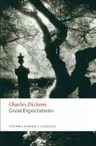
Regular readers of Vladimir Nabokov are aware that his books are full of what I call “verbal acrobatics” as he is one of the few non-native English speakers who have mastered the language and can use it at a very high-level. He’s not only building exquisite plots but he also sets up lots of puzzles, challenges and games for the readers in his books.
However, Pale Fire goes to the very extreme in this aspect, since the whole book is an elaborate puzzle, to be solved by the reader and after more than 60 years since the book was first published, not all puzzles have been solved.
Structurally, it is an interesting book. There is a Foreword written by a Charles Kinbote, allegedly a visiting professor from the faraway country of Zembla, narrating how he came by with publishing a poem of 999 lines by the esteemed scholar John Shade, recently deceased.
The poem is fully included in the text, followed by around 180 pages of commentary and the book ends with extensive footnotes.
When you start reading the Foreword by Kinbote, the text steers you towards an implication that Charles Kinbote is actually the exiled King of Zembla. However, as you continue reading the text, something strange happens. It all depends on how you read the book. To understand what I really mean here, we have to visit one of the most enlightening books in this topic, namely Nabokov’s Pale Fire: The Magic of Artistic Discovery by Brian Boyd.
There are lots of academic papers about Pale Fire, but the book I mention here provides one of the most robust and extensive explanations of the book. Brian Boyd shows that there are various ways to read the book.
One can read the book sequentially, namely can read the Foreword, the Poem, the commentary and the footnotes in the order they are printed in the book.
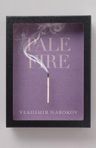

I first read Great Expectations when I was thirteen years old. It was the first of Dickens' works that I'd read of my own volition, the only other being Oliver Twist, which we'd studied parts of in school. You know, I missed out on a lot when I was thirteen. I favoured fast-paced and gritty stories and didn't understand the love for Austen (later cured). But there was something about Great Expectations that hit me hard on all levels and there was a deeper understanding I took from it even back then.
I should say first of all, this book makes me feel sad. Not a lifetime movie emotionally overwrought pass me the kleenex kind of sad. I have read it several times and have never once cried while reading it. But the book never fails to leave me with this hollow feeling that things could have been so different. When I was a kid, I often wished I could jump inside the TV and warn the good guys not to do something; stop something horrible from happening. This is that kind of book for me. All the not-knowing and mistaken assumptions that float between the characters in this novel is torture.
Some readers don't like Dickens. He's been called "lacking in style", as well as a bunch of other things. Well, I think he's like the Stephen King of the Victorian era. He loves his drama, his characters are well-drawn but sometimes edging towards caricatures, he has a wonderful talent for painting a vivid picture of a scene in your mind but a bunch of his books are a hundred pages too long. Whatever. I love his stories. And I love his characters.
In Great Expectations, you have the orphaned Philip "Pip" Pirrip who has spent his short life being poor and being bullied by his sister who is also his guardian. You have Joe Gargery, a kind man who also allows himself to be bullied by Pip's