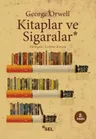
If you're expecting a book like an animal farm and 1984
Don't wait. This is much better. The book starts with a short and very light criticism that it compares cigarette and book sales, and then the heavier criticisms do not decrease one after another.
From politics to social criticism.

Puan vermedi
Komplo teorileri çoğu zaman spekülatif, kanıtsız ve marjinal düşünceler olarak görülse de; tarihte öyle olaylar vardır ki, zamanında “komplo” sanılıp yıllar sonra belgeleriyle gerçek olduğu kanıtlanmıştır. Aşağıda sunulan örnekler, devletlerin ve kurumların gücü nasıl kötüye kullanabileceğini gösteren somut olaylardır.
1. MK-Ultra Projesi – CIA’nin Zihin Kontrol Programı
1953-1973 arasında CIA tarafından yürütülen bu gizli proje, LSD, hipnoz ve duyusal yoksunluk gibi yöntemlerle bireylerin davranışlarını kontrol etme amacı güdüyordu. Çoğu deney izinsiz olarak gerçekleştirilmiş ve bazı denekler kalıcı psikolojik hasarlar yaşamıştır. Proje, 1975’te Church Komitesi raporlarıyla ifşa edilmiştir.
Kaynak:
[1] Senate Select Committee on Intelligence (1977). Project MKULTRA, The CIA’s Program of Research in Behavioral Modification. U.S. Government Printing Office.
2. Tuskegee Sifiliz Deneyi
1932–1972 arasında ABD Halk Sağlığı Servisi, 600 Afro-Amerikan erkek üzerinde izinsiz tıbbi deney yürüttü. Sifiliz tedavisi vaat edilen bireyler aslında gözlem amacıyla tedavisiz bırakıldı. Deneyin ifşası büyük kamu öfkesine neden oldu.
Kaynak:
Jones, J.H. (1993). Bad Blood: The Tuskegee Syphilis Experiment. Free Press.
3. COINTELPRO – FBI’ın İç Tehdit Manipülasyonu
1956–1971 yılları arasında FBI; sivil haklar hareketleri, siyah panterler ve savaş karşıtı gruplar gibi iç tehdit olarak gördüğü oluşumları hedef aldı. Belgeler, 1971 yılında bir FBI ofisinin aktivistlerce soyulmasıyla ortaya çıktı.
Kaynak:
Theoharis, A. (1999). The FBI & American Democracy: A Brief Critical History. University Press of Kansas.
4. Gulf of Tonkin Olayı – Vietnam Savaşı’nın Sahte Tetikleyicisi
1964’te ABD, Kuzey Vietnam tarafından saldırıya uğradığını iddia etti. Bu olay, Kongre’nin savaş yetkisini


0-30p: Kontrollü okuyucu 📖
40-70p: Hafif bağımlı 👀
80p+: Geçmiş olsun, kitaplar seni ele geçirmiş 😅
One marshmallow, or two?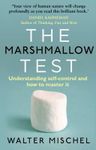

One marshmallow now, or two marshmallows afterwards?
This is a book that teaches you we as humans are able to change, resist temptations and improve our self-control. The book stems from the experiments in Stanford University. Mr. Mischel conducted the "The Marshmallow Experiments", he learnt important life lessons from those experiments and in an explicit and enjoyable way these results had been shown to the readers.
Some striking news to me:
•Painkillers work in the heartbreaks.
•In order to see the situation in cool/rational system we should think ourselves as if we are a fly on the wall that bears witness to what happens.
•When one feels sadness or anxiety, thinking about the people with whom the one is connected helps to cool down the mood of the person.
•To be able to raise responsible children, we should change our behaviour towards the way we want our children to have these behaviours. It is the behaviours rather than the speech that have strong effect on the children. So, be the model for your children!
Besides, the writer himself was struggling with his own impatience and his cigarette addiction. It reminds me that we are all human beings and we can make mistakes.
PEACE ️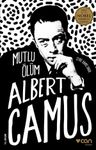

Books review in my words -
1. Why i read.
2. What i read.
• Why i read - Once my friend told me about author Albert Camus . i watched the photo the author with a cigarette in his mouth looks like a cool to me . i taught i will read his one book one day. so after searching alot what to read i choose albert camus happy death. As book is thin and cover page contain a good graphic so i tried this book and now i think i made a good desicion and i got impressed how author write everything truly from his heart no matter what it is.
• What i read -
• As the book name say this book is about the man named patrice marsault and his way of finding happiness in between of his regret and despair.
• Book is divided into two part - First part is about natural death and second part is of conscious death.
• First part it shows the life of mersault which is kind of boring life and unhappy relationships with his partner so he killed one person and took his money in thinking of getting happiness from that money so he left to new city .
• Second part is all the mersault way of finding happiness from that money , living in house in mountain by abandoning the world in the seek of happiness getting in touch with new people in new town. on the way of attaining peace mersault felt he had achieved in this world which leads to happy death of mersault.
(Last chapter when mersault was sick it was quite disturbing for me to read as it was making me anxious - Pardon)
I hope i tried my best to give the review about the book. Thank you for your support.

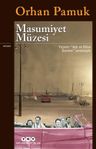
The Museum of Innocence
After finishing "The Museum of Innocence," I found myself in need to talk about it. I wanted my friends to know about this, but I wanted them to know about it slowly, in small drips, and tiny pieces.
Orhan Pamuk is such a master story-teller. He didn't just give you a relief from this journey. He took you to another path. A heroic one. A path that only a mad person would take. Well, mad or brave. Or simply in love!
Reading this book was not all a joyride. There were moments, when obsession really caught Kemal, whom later I called a friend just because I know so much about him, that I wanted to slap him in the face and say "Wake up! Enough already! Stop being this pathetic and get a life, man!" Of course, he didn't do that. I almost stopped reading at this point. That is how rich and heavy Pamuk can describe obsession.
It begins promisingly enough with a love triangle between Kemal, the young heir of one of Istanbul’s wealthiest family, Sibel, his Sorbonne-educated fiancée, and Fusun, a poor, distant relation who happens to be a nubile 18 year-old beauty contest finalist. Their illicit romance, consummated in an empty apartment filled with his mother’s abandoned possessions , slowly consumes Kemal’s life, and yet he still clings to Sibel, who is not only understanding but is also willing to nurse him through lovesickness for her rival. This earlier part of the novel is quite compelling, although the eroticism occasionally drifts towards the graphically icky territory (“As our kisses grew even longer, a honeyed pool of warm saliva gathered in the great cave that was our mouths combined, sometimes leaking a little down our chins…”). Actually, this kind of relationship is traditionally inappropriate. However, as Sibel finally gives up on her