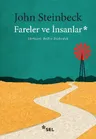
John Steinbeck’s Of Mice and Men is a novella set during the Great Depression, focusing on the lives of two itinerant workers, George Milton and Lennie Small. George is a sharp but weary man who acts as a protector to Lennie, a physically strong yet intellectually disabled man with a childlike innocence. They share a dream of owning a piece of land, where they can live independently and Lennie can tend rabbits, a source of comfort to him.
The story begins with the duo arriving at a ranch in California, seeking work after fleeing their previous job due to an incident caused by Lennie’s misunderstanding of social boundaries. At the ranch, they encounter a cast of characters, including Curley, the aggressive boss’s son; Curley’s flirtatious and lonely wife; Slim, a kind and respected worker; and Candy, an aging handyman with a missing hand who becomes invested in George and Lennie’s dream.
Tensions rise when Lennie accidentally kills Curley’s wife while stroking her hair, an action rooted in his love for soft things but tragically misunderstood. Realizing that Lennie will face brutal punishment from Curley and the other men, George takes it upon himself to mercifully end Lennie’s life, shooting him in the back of the head as a final act of protection. The novella ends with George left alone, his dream shattered.
John Steinbeck’s Of Mice and Men is a poignant exploration of human isolation, friendship, and the unattainable nature of the American Dream. Through the use of simple yet evocative prose, Steinbeck crafts a narrative that reflects the struggles of marginalized individuals during the Great Depression.
The novella’s strength lies in its portrayal of the bond between George and Lennie. Their relationship is a rare depiction of camaraderie in a harsh,

9/10
2022 78. kitabı
·26 saatte okudu
·Okunma: 30 Aralık 2022 03:38
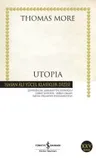
·The term 'utopia' in the way we use it today, to refer to an ideal but unattainable state, comes from this book, which More wrote in 1516. The form is political critique disguised as fantasy disguised as travelogue. More casts himself as the recorder of Raphael Hythloday's travels to the island of Utopia, where, despite their lack of Christianity, the people are closer to realizing the Christian ideal society through rational government than Europe ever was. Today serious criticism doesn't have to move under such elaborate cover, so our first impulse might be to read it like an escapist fantasy novel. But the book is really a counterpoint to the autocratic statesmanship (waning feudalism) outlined in Machiavelli's The Prince (written a few years earlier) and the new economic relations of enclosure (rising capitalism) emerging in England at the time. Think of it as a sequel to Plato's Republic and an inspiration for Swift's Gulliver's Travels. More asks: what if money and private property were abolished? Almost 500 years later it remains an interesting question.
The book is also, though short, full of wit and imaginative scenarios. On every page!