Corruption in Victorian societyEdebiyat

9/10
It is a play about corruption in politics. It exposures the period's hypocrisy through dishonest methods like blackmail, and how people act differently in their private life and public life.

Puan vermedi
“Russia! Russia! What is the incomprehensible, mysterious force that draws me to you? Why does your mournful song, carried along your whole length and breadth from sea to sea, each and re-echo incessantly in my ears? What is there in that song? What is it that calls, and sobs, and clutches at my heart? What are those sounds that caress me so poignantly, that go straight to my soul and twine about my heart? Russia! What do you want from me? What is that mysterious, hidden bond between us?”
How the affectione love for this gray country is reflected, Gogol himself is encountered by the harsh dilemma of whether to love or to complain aboout the country itself. He reveals the deep corruption of the russian society including the bureaucratic absurdity that is shown by the officials. Although the city is corrupted, he cannot hold himself without expressing the mysterious, hidden bond between him and his hometown. Even though he is complaining and creating a social satire for Russia, at the same time he accepts that he is part of this system as well, as being a russian. He admits that he has some 'Russia' in him, symbolizng both the corruption and the sweet-sound home. As well as Chichikov, the writer himself is facing the conflict caused by 'being a part of something' whether the whole thing is a negative or a positive statement.


Corruption of justice system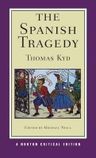

One of the earliest and most influential revenge plays in English drama .Thomas Kyd(writer) who is developed revenge tragedy in English drama .he copied Seneca 's model and adopted it for Elizabethan stage . The story generally turning around the question of who should take revenge when public justice (Legal system) fail.

I. INTRODUCTION: THE PURPOSE OF THE NOVEL
Tess of the d’Urbervilles is Thomas Hardy’s most powerful and controversial novel, written as a direct challenge to Victorian moral, religious, and sexual values. Through the life of Tess Durbeyfield, a poor rural woman, Hardy exposes the cruelty of a society that equates female worth with sexual “purity,” excuses male transgression, and disguises injustice as moral order.
Hardy does not present Tess as a fallen woman seeking redemption. Instead, he presents her as morally pure from beginning to end, and argues that the true corruption lies not in Tess, but in the social systems that destroy her.
II. DETAILED SUMMARY (WITH SPOILERS)
1. Origins and the Weight of Ancestry
Tess Durbeyfield is the eldest daughter of a poor rural family in Wessex. Her life changes when her father learns that they may be descended from the ancient aristocratic d’Urberville family. This discovery fills her parents with ambition and false hope, while Tess herself feels unease rather than pride.
When Tess accidentally causes the death of the family’s horse, Prince—their sole means of livelihood—she feels intense guilt and responsibility. This event, driven by chance rather than moral fault, sets the tragic pattern of her life: random misfortune followed by self-blame.
To help her family recover financially, Tess is sent to seek help from the wealthy d’Urbervilles—unaware that they are not true aristocrats, but merely have purchased the name.
2. Alec d’Urberville and Sexual Violation
At Trantridge, Tess meets Alec d’Urberville, a manipulative and predatory man who immediately fixates on her. Despite Tess’s repeated resistance and discomfort, Alec pursues her relentlessly.
The pivotal event of the novel occurs when Alec sexually violates Tess in


İkinci kitapta çocuğu bulmak için uğraştılar tam çocuğa kavuştular derken çocuk yine kaçırıldı, el kadar bebe sefil oldu resmen. Motellerde süründü çift. Adamların çocukları kaçırılmış bunların derdi de sevişmek :-P
Yine sabrınız varsa okuyun dediğim kitap oldu. Ben zaten söve söve bu kadının tüm kitaplarını okuyacağım gibi duruyor.

a review

In the novel, the most significant acting is Dorian Gray's obsessive identification with the portrait, allowing it to overshadow his human qualities. From the outset, Dorian perceives the portrait as a reflection of himself, by internalizing it extremely. Oscar Wilde, in addressing this, contends that art means nothing but itself, and should be acknowledged as indifferent to life. In contrast, Dorian confuses the borders between life and art, errantly believing that only the portrait, not himself, will bear the consequences of degradation. In this misguided pursuit, he loses not only his humanity but also his aestheticism. This leads Richard Ellmann to characterize Dorian as "the first victim of aestheticism," emphasizing the tragic cost of Dorian's misinterpretation and the subsequent erosion of his dual identity.
The duality inherent in the portrait reflects his inner conflict and the moral dichotomy. At the beginning, the unspoiled portrait represents Dorian’s innocence and serves as an indicator of his untouched morality. As Dorian begins to live in an immoral way, the portrait ages, begins to decay, and become ugly. This degradation reflects the moral cost of Dorian’s actions and the corruption growing within him. His beautiful and youthful appearance contrasts with the corruption and decay depicted in the portrait. This duality highlights the tension between the socially acceptable surface and the hidden corrupt reality. Therefore, the portrait becomes a psychological mirror reflects Dorian’s inner struggle. He is also a symbolic embodiment of aesthetic decadence. He shows fin de siècle’s fascination with superficial beauty and hidden corruption, with his Dionysian character hidden under an Apollyonic image.