Heyûlâ
@heyulani
"kum, çamurdan daha iyi sır saklar."
17 okur puanı
Temmuz 2024 tarihinde katıldı
Şu anda okuduğu kitap


Puan vermedi·70 syf.·
2025 1. kitabı

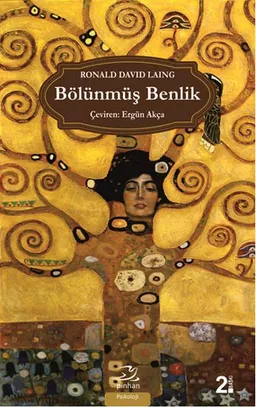
"The woman’s responsibility to the fertilized egg is imaginatively and with great conviction construed to be her relation to the adult male. At the very least, she must not murder him; nor should she outrage his existence by an assertion of her separateness from him, her dis tinctness, her importance as a person independent of him. The adult male’s identification with the fertilized egg as being fully himself can even be conceptualized in terms of power: his rightful power over an impersonal female (all females being the same in terms of function). “The power I had as one cell to affect my en vironment I shall never have again,"R. D. Laing laments in an androcentric meditation on prebirth ego. “My environment” is a woman; the adult male, even as a fertilized egg, one cell, has the right of occupation with respect to her—he has the right to be inside her and the rightful power to change her body for his sake.
This relation to gestation is specifically male. Women do not think of themselves in utero when they think either of being pregnant or of aborting; men think of pregnancy and abortion primarily in terms of themselves, including what happened or might have hap pened to them back in the womb when, as one cell, they were themselves."

Ama Antonius gibi, gösterişin kısa, altın, gündüz güneşleri, Caesar gibi, gücün sert kış güneşleri karşısında, lotus canlanmaz, hiç canlanmayacaktır da.Böyle güneşler, tomurcuğu yırtar açar ancak.

Puan vermedi·212 syf.·
37 günde okudu
·2024 151. kitabı