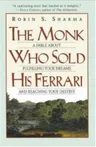
The Monk Who Sold His Ferrari is a story of a lawyer, Julian Mantle, who sold his fortune to study the seven virtues of the Sages of Sivana. Motivational writers are my guilty pleasure, and even though these books are full of clichés like "there are no mistakes in life, only lessons," I think very simple teachings need to be reminded sometimes.
Every symbol represents a virtue in this book. Each of the Seven Virtues encompasses a bunch of habits. For example, here are the habits mentioned for the first virtue, "Master Your Mind".
1. Don't judge the events as "good" or "bad," but learn and experience from them.
2. The heart of the rose: Stare at a rose in a quiet place and just concentrate on the flower for 10-20 minutes.
3. At the end of the day, write what you did today. And take 10 minutes to evaluate how to improve your next day.
4. Opposition thinking—people can easily think negative thoughts, but try the opposite this time. Take every negative thought and turn it into a positive one.
5. Secret of the lake. Envision your dreams becoming a reality. Picture vivid images of what you want to become. Then they will become a reality.
These are just habits of the "first virtue". Each one has several habits to develop. I did not practice any of these habits. They didn't interest me enough to want to implement them, but there was an enjoyment in the reading.
My favorite part of the book is the "Magnificent Garden" symbol: "When you control your thoughts, you control your mind. When you control your mind, you control your life. Mind management is the essence of life management. Stand guard at the gate of your mind garden and do not let toxic thoughts enter." This chapter opened up a new dimension for me, and I wanted to incorporate this into my life.
I disagree with a