Father SergiusEdebiyat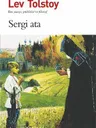

It’s been a long time since I shared a book review, so today I’d like to talk about one I recently read:
"Father Sergius" by Leo Tolstoy.
The book tells the story of Stepan Kasatsky, a young, handsome knyaz (prince) and successful military officer who stood out from his peers thanks to his extraordinary talents and loyalty to the emperor. He was deeply in love with a beautiful young woman, Freyline. However, when he discovered her previous relationship with the emperor, he was devastated. This shocking revelation led him to renounce worldly vanities and withdraw to a monastery, where he became a monk.
This is where the true story begins. As a monk, Stepan (now Father Sergius) faced a constant inner struggle battling between his devotion to God and his lingering desires for earthly pleasures. Though he outwardly lived a religious life, inwardly he still longed for recognition and worldly comfort. His encounter with Praskovya Mikhaylovna became a turning point. Through her, he realized that true peace cannot be found in external circumstances or rigid rituals, but only by transforming one’s inner self.
In the end, he abandoned his monastic life and chose a humble path as a gardener and teacher. It was in this simplicity that he finally discovered genuine peace.
To sum up, Father Sergius teaches us that changing our surroundings alone cannot bring us inner peace. Real peace requires patience, commitment, determination, and most importantly a deep faith within ourselves.
THE SATIRIC FEATURES OF ALEXANDER POPE'S POEM THE RAPE OF LOCKEdebiyat

Alexander Pope's poem The Rape of the Lock is a critique of the idiosyncrasies and foibles of English aristocratic society. Pope uses wit, sarcasm and irony to convey his moral message. Pope depicts the false tone of the time and the frivolity of women, whilst acting sympathetically as the voice of his generation. The play is a social satire in that it pokes fun at society in a way that can still be applied in the modern day. The satire is not aimed at one individual, but at the faults and vanities of fashionable men and women at large.
Pope's poem The Rape of the Lock was based on a real-life incident between two people, told to him by his friend John Caryll. The Baron was the suitor of Arabella Fermor, Lord Petre, and Belinda was her. Arabella was furious, and the two families began to denigrate and ignore each other, until Pope wrote the poem to make light of the tragedy and to bring them back together again. Pope's memory of the joyful conclusion of the poem evolves with the times. Pope immediately wrote the first draft of the poem, which he then shared with the family for some time. This version was published unnamed in 1712 and was much briefer than the most commonly read version. Things got more difficult at this point. The sensual implications and multiple meanings of Pope's poem became more apparent as more people read the printed version, and Arabella Fermor was mortified when her friends began to point out the crude humour. The real Sir Plume of the poem, Sir Charles Brown, took offence at being called a fool. Pope transformed the basic story into a fantastical setting by including sylphs and nymphs. In order to appease Arabella Fermor, Pope wrote a dedication to the poem. Poem became a success and has been the subject of praise, criticism and debate ever