Bookworms
@Serdalsimsek

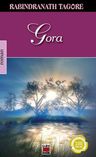
More things change, more they stay the same. This is a wonderful work of fiction (and philosophy). It was like a breath of fresh air for me, because when I read enough petty books and start wondering if maybe reading just got boring or maybe I can't quite feel like books are so grand anymore, or maybe I'm just not as impressionable, I stumble upon something like this and realize that everything is still fine with the world of books, and all I've been longing for is simply just a really good, deep read. This is precisely that kind of book, and it really impressed me how Tagore transported me into the whirlwind of thoughts and ideas that shaped the 19-20th centuries in India.
Tagore’s Gora is a profoundly Indian book. It questions the identity of each of its characters as the well as the Indian nation. Caste, tradition, filial piety, patriotism and marriage are all philosophical addressed in the novel. Tagore examines the difference between religion and religious fanaticism. Tagore compares and contrasts relationship between: fathers and daughters, ruler and ruled, society and individual.
Binoy is an intelligent young man who lives in the shadow of his best friend Gora. Gora is an orphan that is raised in an orthodox Brahman family but was unaware of it. He is intensely patriotic but does heed caste rules. Around this time, a reformist movement is established “Brahmo Samaj” to counteract orthodox Hinduism as well as Christian attacks against polytheism and idol worship. Although Hindus and Brahmos lived side by side they observed different traditions. Brahmo women had more liberty than Hindu women. Binoy, being a good Samaritan, helps an injured neighbor (Poreshbabu) find a doctor. Poreshbablu is a moderate Brahmo, who philosophically advocates the middle road. Thus

Bazı hikâyeler tam tahmin ettiğin gibi ilerler. Bazılarıysa son sayfada tüm bildiklerini sorgulatır. 🤯
Ters köşeleri seviyorsan, seni sonuna kadar merakta bırakacak 3 kitap önerisini keşfetmeye hazır ol!
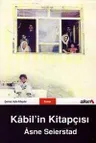
This was a tough read. If you care about women, it makes you want to cry out for them. A friend of mine from Ireland lent me his copy of this book and the first question I asked him was, was it good? He said, yes, and it is definitely thought-provoking. As soon as I finished reading another book for a book club, I picked this one up and finished it in four days. I literally could not put the book down. It is very well-written and tells a story of a man and his family in Afghanistan just after 9/11, during the Taliban times and after the fall of the Taliban. She claims she wrote it in a novel form based on true stories of what she heard told to her while living in Afghanistan. It definitely read as a novel, but I knew that it wasn't fiction from my experiences. I also knew that it's a very small representation of what goes on in Afghanistan in those areas as it is just one man and his family's story. It is also not a very flattering picture of that man's life and as for accuracy, I am assuming that it is accurate for that family, but not necessarily accurate for the entire society as a whole.
Sultan Khan is an educated man who loves his books more than anything in the world and he has high dreams of printing books and selling them to everyone. He is also the head of his family, one of thirteen children. His mother, three younger sisters, two wives, children all live with him in a tiny flat that used to be in middle class district of Kabul before it was destroyed by the Taliban and the bookseller, Sultan Khan, is a canny and shrewd business man, as well as a devout Muslim, who despite his love of books, seems to have learned little from the knowledge at his fingertips. He rules the roost like a patriarchal despot with a decidedly strict view of the role of women. In
Shadowless
This is a weird book to read, and even weirder to review because the beginning was so totally freakish I felt lost, like very lost in 100 pages. But I kept reading because the book was short and I really wanted to give it a fair chance and to finish it. With that being said, the end was cool. About more than half of the way through the book I thought "oh hey, there is a plot!" and was finally very excited that I was starting to follow along more rather than spending the whole time confused in it.
The story is very surreal, it follows the lives of those living in a small Turkish village, and those who go missing/and are found there. I had to pause and reread a lot of scenes just to check if I missed a part that said the character had gone to bed and the story feels timeless too- at one point someone mentions a truck and it gave me such whiplash because I had assumed the story was taking place long in the past- although, that's what it's like in villages, they exist in their own world and time and are so apart from the giant cities in the country.
More ever, the story jumped from one place to another, it defied the laws of physics, it presented characters living in multiple realities, it had an overall hazy, dreamlike feel. But if the Author’s sole purpose was to just create this strange fantasy, where nothing quite makes sense and most questions are left unanswered, then that is what he achieved. But still I don’t know if the story is a metaphor for something bigger. Is there a symbol in the snake? A deeper meaning in the role of the barber or the watchman? Something more to understand in the (dis)connection between the village and the city?
Towards the end the story started picking up, some questions were answered and the plot and characters developed. I

The Call of the Wild!
It is a world-classic and we all know that. it is a world-classic because Jack London is an excellent writer.
It is page-turning book that you will finish it in one sitting and moreover if you have not read the book, make sure to do so in 2019. I guarantee that you won't be disappointed. It has thrills, chills and spills. Thrills as in thrilling chases; chills as in chilling icy weather and spills as in dog fights to the death with spilling blood.
The story is about a dog called Buck. He is kidnapped from his comfy farm life with the judge and is thrown on a train. He finds himself enslaved with some terrible men until he ends up sold to the government as part of a courier service in Alaska. He quickly has to learn to adapt to the harsh environment and the pecking order between the existing dogs. He barely gets anything to eat and is constantly abused into submission. Finally, he is auctioned off after completing three legs of an impossible journey to a small group of inexperienced mushers. Forced to carry ultra-heavy loads and getting even less food leaves Buck wondering if there's something more for him. Then he meets John Thornton and my heart expanded three sizes.
You will think about these sayings
How Rebellious!
How delicious!
This story made me happy. It left me in peace. This is reason enough to read the story.

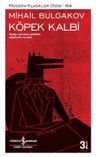
Собачье сердце = Sobach'e serdtse = The Heart of a Dog, Mikhail Afanasevich Bulgakov (1891-1940) endured the difficult experience of having to live under the pressure of censorship, but has nonetheless left some interesting books that allow us to know what he thought about the process that has taking place in the newborn Soviet Russia. "Heart of a dog" is one of those books. It was written in 1925, but it wasn`t published in Soviet Russia until 1987, due to the fact that it can easily be interpreted as a critical satire regarding the URSS.
Anyone who's ever read The Master and Margarita already knows that Bulgakov is a rebel, an anarchist, and damn good and funny with it.
Our hero is one such dog. The first-person narrative of dog in first few chapter will put a knowing smile on face of anyone who has observed dogs closely. Bulgakov is a master of the outlandish and the surreal. And this book is full of both. Just when you think Bulgakov can’t get any more outrageous, he surprises you with odd twists and turns.
The story begins with a charming tale of a stray dog (later called Sharik) but this is no Walt Disney tale, for this dog becomes the pet of notarious, renowned Moscow professor of medicine who plants human glands into the dog’s body and the dog Sharik becomes the human Sharikov, But what kind of human is he?. Sharik can talk, and asks everybody to call him first "Mr. Sharikov", and afterwards named himself "Polygraph Polygraphovich Sharikov". He also walks like a human being, and somehow resembles one... But can he think, or does he merely repeat what he hears, specially Marx`s teachings? Has the doctor`s experiment ruined a perfectly good dog, making him a perfectly despicable "human" being that threatens to denounce counterrevolutionaries and chases cats?
You