
1. "Чем люди живы" (What Men Live By) by Leo Tolstoy
This short story revolves around Simon, a poor shoemaker, who encounters a mysterious stranger, Michael, outside a church. Simon takes Michael home, showing compassion despite his own poverty. Over time, Michael reveals himself as an angel sent to learn three lessons: what dwells in man, what is not given to man, and what men live by. Through human experiences of love, suffering, and kindness, Michael realizes the answers: love dwells in man, man is not given knowledge of his own needs, and men live by love. After fulfilling his task, Michael ascends back to heaven.
Tolstoy emphasizes Christian virtues such as love, compassion, and humility. The story critiques materialism and underscores spiritual wealth over worldly possessions. The transformative power of human kindness is central, presenting love as the ultimate force that sustains humanity.
2. "Упустишь огонь – не потушишь свечка" (Neglect the Fire – You Can’t Put Out the Candle) by Leo Tolstoy
This parable warns about the consequences of neglecting one’s moral duties or small transgressions. The metaphor of fire represents sin or destructive behavior, while the candle signifies a seemingly minor problem that can grow uncontrollably if ignored.
Tolstoy uses a simple yet powerful analogy to convey a moral lesson about vigilance and responsibility. The story reflects his belief in self-discipline and attentiveness to the moral and spiritual aspects of life. It encourages readers to address issues early rather than letting them escalate.
3. "Девчонки умнее стариков" / "Little Girls Wiser Than Men" by Leo Tolstoy
Two little girls, Akulya and Malasha, play near a puddle during Easter. Despite cautioning each other, Malasha accidentally splashes water onto


8. takımın gittiği Asakusa'da önce kılık değiştirenler ortalığı karıştırır sonra beyaz kukuletalılar saldırmaya ve alev insanlar oluşmaya başlar. Bu karışıklık karşısında itfaiyeciler ne yapacaklar?
Bu ciltte yedinci takımın kuruluş hikayesini de görüyoruz.
Güzel bir seri. Tavsiye ederim.


Hangi tür kitapları seviyorsun?
🔎 Polisiye
💕 Romantik
🚀 Bilim Kurgu
🏰 Fantastik
📖 Klasik
🧠 Kişisel Gelişim
🏛️ Tarih
😱 Gerilim
Fire ForceManga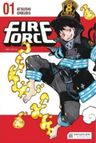

Dün kitap kargom elime gelir gelmez okudum mangayı.Akılçelenin iyi bir seçim yaptığını düşünüyorum ve umarım mangakanın bir önceki eseri soul eater'ı da çevirirler.Konusu kapaktanda anlaşıldığı üzere itfaiyecilikle ilgili fakat biraz daha farklı.Buradaki işleri bir nedenden ötürü yanan insanları huzura kavuşturmak.Çizimleri çok güzel.Yani kişiden kişiye değişir ama ben çizim tarzını seviyorum.Konusu gidişatı olarak mangada şimdi iyi ilerliyor tabi şuan 1. Ciltteyiz.Bu manganın animeside var fakat bana animesi fazla karışık oradan oraya atlama şeklinde geldiği için sevmemiştim.Animesinden ziyade mangası çıktıkça alıp okumanız yeterli.Akılçelenin kağıt kalitesine gelirsek bence güzel.Ben öyle çok takılan birisi değilim kağıt konusunda tabi çokta göz zevkimi bozmadığı sürece.Eser türkçe basılmış olması önemli ...

4/5 Stars (%83/100)
With volume 34, we finally say goodbye to Fire Force. It has been a good journey for me and I am quite satisfied with the ending. Though I cannot wait for all of these to be animated. The ending of this series also confirmed that Fire Force and Soul Eater are connected. This actually made me curious about Soul Eater as I pretty much know nothing about it.
Shinra transforms into Shinrabansho-man as Shinra, Sho and Mari Kusakabe combine. If I'm not wrong Shinrabansho means all of creation or something similar. This is why Shinra is like a god now. Thanks to his new form he will be able to fight the Evangelist and become the Hero he strived to be. It is also nice that we got to see the aftermath of the battle. Overall, I liked the ending and I know it is not THE perfect ending we were hoping for but I'm not sure what I would change it specifically. However, Fire Force is definitely worth your time, both manga and the anime.

4/5 Stars (%77/100)
Fire Force will end with volume 34. I will talk about my thoughts and feelings about the whole series next time when the final volume is published. I liked this volume in general. We've learned that Despair is what fuels the fires of the Great Cataclysm and Shinra's Hope is the only thing that stands between the end of the world. Thus, the final battle against the Evangelist finally begins in this chapter. As the fight continues we learn more about the Evangelist, the Cataclysm, and many other things. I love the absurdity of Fire Force's world so I especially liked the ending of the book. It will be difficult to say goodbye to this series.
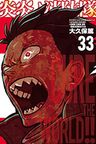
4/5 Stars (%83/100)
I would say that this volume is separated into two parts; one that deals with Tamaki and the rest of the good guys, mainly Benimaru. Tamaki part was silly and quite amusing but I found it forced. The author tried to make the other characters relevant like Tamaki being the sign of life but Shinra and others are on a different dimension in terms of power level. The other part is actually what made me like the book. We get to see a lot of characters including Joker's doppelganger, Burns, and last but not least Benimaru's doppelganger. The fight between the strongest versus the strongest doppelganger was great. Benimaru has always been my favorite so it is no surprise I liked it. The ending was also good because of a plot twist. So, the first half was a bit weak but it quickly managed to catch my attention with the second half.
