Okay (1931-2017), İslam Ansiklopedisi’nin on altıncı cildinde yazdığı ‘’hatırat’’ başlıklı madde başında ilk olarak hatıratın, edebi bir kavram ve terim olduğundan ve ilk örneklerine tarihsel değeri yüksek metinlerin içerisinde bulabileceğimizden söz eder. Söz konusu metinler tarih, seyahatname, rûzname, menâkıp, tezkire, muhtıra ve mektuplardır. Okay, yazısının devamında hatıratın bir kelime olarak Osmanlı Türkçesinde yer edinişinden ve etimolojik yapı çözümlemesinden söz eder. Okay’a göre, hatırat kelimesi XIX. yüzyılda Avrupalı devletler ile -özellikle Fransa- kurulan gerek diplomatik gerek diğer siyasi ve entelektüel temaslar sonucunda Fransızcadaki ‘’mémoires’’ kelimesine bir karşılık olarak Arapçadan Türkçeye devşirilen ‘’müzzekirât’’ ve ‘’zikreyât’’ kelimelerinin kullanılmaya başlanmasıyla yerleşir. Hatıratın otobiyografik bir anlatım türü olduğunu vurgulayan Okay, söz konusu yazısının sonlarına doğru edebiyatımızda kaleme alınmış hatırat örneklerine kronikleştirilmiş bir anlatım yöntemi ile örneklerin kendilerine has özelliklerine dikkat çekerek değinir. Okay’ın söz konusu yazısında değindiği bir diğer önemli husus ise, hatırat yahut hatıra kelimelerine bir karşılık olarak ‘’anı’’ kelimesinin son yıllarda kullanım olarak tercih edildiğidir.
Okay (1931-2017), İslam Ansiklopedisi’nin on altıncı cildinde yazdığı ‘’hatırat’’ başlıklı madde başında ilk olarak hatıratın, edebi bir kavram ve terim olduğundan ve ilk örneklerine tarihsel değeri yüksek metinlerin içerisinde bulabileceğimizden söz eder. Söz konusu metinler tarih, seyahatname, rûzname, menâkıp, tezkire, muhtıra ve mektuplardır. Okay, yazısının devamında hatıratın bir kelime olarak Osmanlı Türkçesinde yer edinişinden ve etimolojik yapı çözümlemesinden söz eder. Okay’a göre, hatırat kelimesi XIX. yüzyılda

Breaking Human Nature : Frankissstein and Sexbots

Jeanette Winterson is a flourishing writer who has numerous prizes for instance John Llewellyn Rhys Prize, Whitbread Prize, a BAFTA Award, E. M. Forster Award, the St. Louis Literary Award, also Lambda Literary Award. Frankissstein by Jeanette Winterson is written in 2019 and it is a postmodernist novel that giving a sense of re-writing Frankenstein in the present tense with Winterson’s sense of humor. The genres are historical fiction, Lgbt novel, or science fiction. The plot is about dr. Ry and Victor Stein’s story of creating robots like Marry Shelley and Victor Frankenstein creating a living being. It can be undeniable to say that the work has parallels with each other’s in terms of themes, characters, and the plot but mainly with the ideology of the society which is criticized throughout the novel like in the umbrella of popular culture.
The characters of the novel who are Ry Shelley, Professor Stein, Mary Shelley, Victor Frankenstein are the most discussed ones and the novel is mainly connecting them. Work’s genre is a postmodernist novel, for the reader, it is easy to have close reading within the text. Because Frankenstein is a story within a story but also Frankinssstein breaks the boundaries and touches the reader and provides a sense of existing in the story. Characters and writers are aware of they are in a novel which can be understood ‘’Further to your visit, the man who calls himself Victor Frankenstein, a character in your excellent novel’’ as an example. Readers can see Marry Shelley’s writing process, ideas, conscious of her and other characters. It would be healthful to understand Frankenstein and the story’s representation of Frankissstein. Frankenstein is written in the Regency Period when it is between 1811 to 1820. Timeline plays a great role

📚🔔 Tatil zili çaldı!
Bir yıl boyunca verilen emeklerin ardından şimdi dinlenme, keşfetme ve yeni maceralara atılma zamanı. 🌞
Bu yaz bol kahkahalı, bol anılı ve elbette bol kitaplı geçsin. Tüm öğrencilere keyifli tatiller diliyoruz! 💙📖

SPOILER içerir...
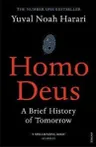
First, I wanna provide a brief summary of the book then I will share my comments on it:
Humans defeated famine, plague and war (starvation, epidemics and violence)
Humanities new targets are immortality, happiness and divinity by using artificial intelligence, big data, biotechnology, genetic engineering, regenerative medicine and nanotechnology and thus upgrading Homo Sapiens to Homo Deus.
Imminent dangers are climate change, global warming, pollution
Humans domesticated more than 90% of all large animals and thus conquered the world.
But humans are no different than animals since we have no soul, consciousness, mind or free will. Our sensations, emotions, desires and thoughts are biochemical data processing algorithms
What makes humans more special than animals are not our soul, mind or consciousness but our ability to cooperate flexibly in large numbers by creating ‘fictional myths’ such as money, corporation, state, gods. Fictions enable us to cooperate better and without fiction no complex human society can function.
Scientists study how the world functions, but there is no scientific method for determining how humans ought to behave. So, countries cannot function on the basis of scientific theories alone. They require some religion or ideology to maintain order.
Humanism (the worship of humankind which sanctifies life, happiness and power of Homo Sapiens) became the dominant world religion for the last 300 years.
Humanism split into three main branches, all of which believe that human experience is the supreme source of authority and meaning, yet they interpret human experience in different ways: Orthodox Humanism (Liberal humanism or simply as liberalism), Socialist Humanism (Communism, leftists), Evolutionary Humanism (Racism, Fascism