A Critical Review of Humankind

Rutger Bregman’s book Humankind is one of the books that questions negative ideas about human nature and makes readers think. For many years, many people believed that humans are naturally selfish, bad, and only care about themselves. However, Bregman does not agree with this idea. According to him, human nature is not as dark as people think. Instead, people are more willing to help each other, understand others’ feelings, and do good things. In the book, the author supports these ideas with many examples from wars, psychology experiments, history, and biology. One of the best parts of the book is that it gives hope about humanity. Still, when I finished the book, I did not only feel admiration. On one side, I was happy to read it because it made me think differently. On the other side, some of the author’s ideas felt too optimistic to me. Because of this, the book was both interesting and questionable for me.
One of the strongest parts of the book is that it makes people question ideas about human nature that many accept without thinking. Today, we often see violence, murder, wars, and fights on television, social media, and in the news. After some time, people start to believe that the world is full of bad people. At this point, Bregman asks an important question: If humans were really bad by nature, how could societies survive for so many years? A big part of human history was shaped by helping each other, working together, and surviving together. From this side, the writer’s ideas are important and meaningful.
His ideas against the belief that humans are naturally wild are especially interesting. Today, when someone behaves badly, people sometimes say, “Did you grow up in a cave?” However, Bregman says that hunter-gatherer societies were not as violent as many

As I have read this book in English and in the UK I think I better write a rewiew in English.
The book won a Nero Book Award and was longlisted for Booker Prize.
The book was just how I expected it to be. It was kind of sentimental and to be frank it was a bit heartbreaking.
Thomas lives with his mother who has a complete control over him. He doesn't know his father. Pop grows him up he is dead now like his father.
One day a man shows up who claims to be a renowned director and offers him a job. But in the end everything turns out to be a kind of disaster.
I adored this book.

Reklam
The Vegetarian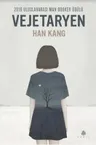

The Vegetarian
I have read a most staggering and profound book. I don't want to give spoilers, but I want to mention how this book affected my feelings and my thoughts about society. South Korean author Han Kang writes this book from three different perspectives. She criticizes the traditional and patriarchal society of South Korea.
At the beginning of the book, Yong-hye's husband tells us about his wife. He describes her as an ordinary woman with nothing special about her. One day, Yong-hye has a nightmare and decides never to eat meat again. This causes a major conflict within the family. Her father hits her, and for this reason, she attempts suicide. Later, her brother-in-law takes her to the hospital. Due to the Mongolian spot on Yong-hye’s back, he becomes obsessed with her and sleeps with her. His wife catches them; consequently, both of them are taken to psychiatric clinics.
Yong-hye consistently refuses to eat meat and begins to think of herself as a tree. Her sister feels sorry for her, yet on the other hand, she has been unhappy since her own marriage. Yong-hye believes that eating meat is related to violence. Society, her family, and her husband all want to take control of her life and body. Yong-hye maintains a silent resistance against South Korea's traditional and patriarchal society. At the same time, she wants to transform from an animal into a vegetal entity.
This book is about how people defy societal norms to find freedom. The Vegetarian is not just a book about diet; it is a story that depicts a person's desire to be one with nature.

In Ward No. 6, Anton Chekhov constructs a quiet but devastating meditation on suffering, indifference, and the fragile boundary between sanity and madness. Set in a decaying provincial hospital, the story revolves around Dr. Andrey Yefimych Ragin, a man who has retreated into intellectual detachment as a way of coping with the bleakness of life. The hospital itself, neglected and almost forgotten, becomes more than a setting; it functions as a symbol of a broader social and moral decay, where suffering is not only present but systematically ignored.
At the center of the narrative lies a philosophical tension that gradually unfolds through the doctor’s encounters with the patient Ivan Dmitrich Gromov. Ragin subscribes, at least superficially, to a version of Stoicism. Stoicism, originating in ancient Greek philosophy, teaches that individuals should cultivate inner peace by accepting what they cannot control and by remaining indifferent to external pain or pleasure. In its original form, it is a disciplined ethical system aimed at resilience and moral clarity. However, Ragin’s interpretation is hollowed out. What he practices is not active moral strength but passive withdrawal. He convinces himself that suffering is insignificant, that pain is merely a matter of perception, and therefore not worth resisting. This belief allows him to justify his inaction in the face of the hospital’s inhumane conditions.
Gromov, by contrast, embodies a radically different philosophical stance, one that could be described as an existential sensitivity to injustice. He is deeply affected by the possibility of suffering, oppression, and arbitrariness in human life. His anxiety and paranoia are not presented merely as symptoms of illness but as exaggerated responses to real conditions of


Puan vermedi
This is Jodi Picoult’s debut novel, and it tells the story of a family falling apart.
The novel centers on a family of three: Oliver, Jane, and their daughter Rebecca.
From the outside, they appear to be an ordinary family. In reality, however, their marriage is strained by deep miscommunication and emotional dissatisfaction.
• Jane feels trapped and undervalued in her marriage.
• Oliver is controlling and dominant.
• Fifteen-year-old Rebecca is caught in the tension between her parents.
One day, Jane leaves home with Rebecca. During their journey, Rebecca suddenly disappears. From that point on, the story unfolds around:
• A mother’s desperation
• A father’s need for control
• A teenager’s search for identity
• The emotional distance within a family
Oliver is a marine biologist who studies humpback whales — specifically their communication and migration patterns.
Oliver works closely with whale research and spends long periods observing them in the ocean.
That detail is central because:
• His professional life revolves around studying communication between whales.
• Yet at home, he completely fails to communicate with his own wife and daughter.
• The irony strengthens the novel’s main theme: people can be physically close but emotionally distant.

I. INTRODUCTION: THE PURPOSE OF THE NOVEL
Tess of the d’Urbervilles is Thomas Hardy’s most powerful and controversial novel, written as a direct challenge to Victorian moral, religious, and sexual values. Through the life of Tess Durbeyfield, a poor rural woman, Hardy exposes the cruelty of a society that equates female worth with sexual “purity,” excuses male transgression, and disguises injustice as moral order.
Hardy does not present Tess as a fallen woman seeking redemption. Instead, he presents her as morally pure from beginning to end, and argues that the true corruption lies not in Tess, but in the social systems that destroy her.
II. DETAILED SUMMARY (WITH SPOILERS)
1. Origins and the Weight of Ancestry
Tess Durbeyfield is the eldest daughter of a poor rural family in Wessex. Her life changes when her father learns that they may be descended from the ancient aristocratic d’Urberville family. This discovery fills her parents with ambition and false hope, while Tess herself feels unease rather than pride.
When Tess accidentally causes the death of the family’s horse, Prince—their sole means of livelihood—she feels intense guilt and responsibility. This event, driven by chance rather than moral fault, sets the tragic pattern of her life: random misfortune followed by self-blame.
To help her family recover financially, Tess is sent to seek help from the wealthy d’Urbervilles—unaware that they are not true aristocrats, but merely have purchased the name.
2. Alec d’Urberville and Sexual Violation
At Trantridge, Tess meets Alec d’Urberville, a manipulative and predatory man who immediately fixates on her. Despite Tess’s repeated resistance and discomfort, Alec pursues her relentlessly.
The pivotal event of the novel occurs when Alec sexually violates Tess in

Reklam
Reklam