Before You Judge me, make sure You are Perfect!Psikoloji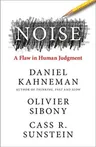

Imagine a world where a patient goes to a clinic and gets prescribed highly addictive opioids because it is the end of the doctor’s long day – or that different sentences are given to people who committed the same crimes because one judge hasn’t had lunch yet.
These are some of the many real-world examples of “noise” that are mentioned in Noise: A Flaw in Human Judgment by renowned psychologist and winner of the 2002 Nobel Prize in Economic Sciences Daniel Kahneman. Noise is the follow-up to his previous book Thinking, Fast and Slow, released in 2011, which brought attention to his work on how cognitive biases shape judgment. In Noise, Kahneman and his co-authors, Oliver Sibony and Cass R. Sunstein, explore the other type of error impacting our judgments: noise.
The book follows the premise that “wherever there is judgment, there is noise – and more of it than you think”. If noise is so prevalent, why is it not widely spoken about? Kahneman notes that noise can only be identified in statistics, making it more difficult to track, which means it tends to go unnoticed and unmentioned.
Noise is broken up into six parts. It begins with the difference between noise (random scatter) and bias (systematic deviations), the nature of human judgment and how to measure accuracy and error. It also goes into predictive judgment, human psychology and the causes of noise, how to improve judgments and prevent error, and what is the right level of noise.
Who knew that important decisions could be swayed by seemingly redundant factors? Such as who spoke first in the meeting, what day of the week it is or whether the local football team won last night’s match. Many different types of noise are discussed in the book, but the most significant one, Kahneman says, is system noise. System
Flowers For Algernonİnsan ve Hayat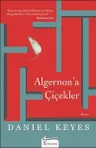

Charlie Gordon is a man who has low IQ level. He is in 30s and lives in America. He works in a bakery as a cleaner. Also he studies at a school where teaches reading and writing to special people. He wants to be a smart person.
Two scientists study at university about low IQ level people. They do an experiment on a mouse who named Algernon. They observe successful concluison and the next step is a humanbeing.. They decide to do same experiment on Charlie. Charlie meets Algernon and race with its. Algernon is more successful than Charlie almost all tests.
After surgery, Charlie become smart person step by step. He reach the highest IQ level. Although Charlie's intelligence, he has no friend. And he realizes some mistake on Algernon. It behaves like ordinary mouse. What it means? Charlie will become old Charlie or not..
All along of story Charlie is a human who deserves love, friendship and a family which love him, when he is a moron or intelligent... He is just a human like all human.
Reklam

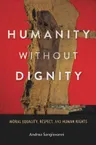
Name any valued human trait--intelligence, wit, charm, grace, strength--and you will find an inexhaustible variety and complexity in its expression among individuals. Yet we insist that such diversity does not provide grounds for differential treatment at the most basic level. Whatever merit, blame, praise, love, or hate we receive as beings with a particular past and a particular constitution, we are always and everywhere due equal respect merely as persons.
But why? Most who attempt to answer this question appeal to the idea that all human beings possess an intrinsic dignity and worth--grounded in our capacities, for example, to reason, reflect, or love--that raises us up in the order of nature. Writer rejects this predominant view and offers a radical alternative.
To understand our commitment to basic equality, Humanity without Dignity argues that we must begin with a consideration not of equality but of inequality. Rather than search for a chimerical value-bestowing capacity possessed to an equal extent by each one of us, we ought to ask: Why and when is it wrong to treat others as inferior? Sangiovanni comes to the conclusion that our commitment to moral equality is best explained by a rejection of cruelty rather than a celebration of rational capacity. He traces the impact of this fundamental shift for our understanding of human rights and the norms of anti-discrimination that underlie it.