What do we do when things go wrong?

Years ago, when I first spotted this book in a stationery shop, I decided to buy it without even flipping through its pages. On the cover, three men were being carried by the river's current toward an unknown destination. The title revealed little more than the image itself: Three Men in a Boat. Where they were going and why remained hidden between the pages.
For some reason, I never got around to reading it. The book sat forgotten on a shelf for years, quietly waiting for me. Then one day I picked it up and finally began. Soon, I discovered why these three men had embarked on such a sudden and peculiar boating trip. Tired of their daily routines and convinced that they were suffering from all sorts of illnesses, they believe an adventure will do them good. Instead, the following two weeks prove far more challenging than expected. They can never quite agree on what should be done or how it should be done. They blame one another, make a mess of simple tasks, and seem incapable of catching a break. Jerome narrates all of this with an exaggerated sense of humor and remarkable wit.
In the end, the three companions more or less accomplish what they set out to do. By the time they return to dry land, they are rather proud of themselves. But perhaps this book was written not only to amuse, but also to make us reflect. As we accompany these three friends like an invisible fourth passenger, we spend much of the journey wanting to step in and sort things out for them.
And yet, when things go wrong in our own lives, what exactly do we do?
AnalysisDuygu ve Düşünce

Fistly,I want to express some doubts about the reliability of the narrator, Nick Carraway, who tells the life of the main character, Jay Gatsby, from his own perspective because Nick sometimes praises Gatsby and sometimes expresses critical thoughts about him. This situation shows that the narrator is not completely objective and tells the story according to his own feelings.
Secondly, we see the American Dream theme from the beginning to the end of the story. The American Dream is the belief that no matter which social class people come from, they can become rich and successful through hard work. This thought is Jay Gatsby’s main motivation. His obsessive love for Daisy Buchanan and his hope that she will return to him one day lead him to work harder and do everything he can to become rich. The novel conveys this hope through the symbol of the green light. The green light comes from Daisy’s house, and when Gatsby looks at it, he sees his dreams and hopes. So the green light shows Gatsby’s dreams and the future he wants, and it also shows how unreachable the American Dream can be.
In addition, Jay Gatsby organizes big and flashy parties to prove his wealth and to show it to Daisy Buchanan. However, this situation did not affect either Daisy or the other people. Because society was divided into two parts: “new money” (people who became rich later) and “old money” (people who inherited their wealth). Although Gatsby became rich through his own efforts, he was not appreciated and was even despised by society. Therefore, Daisy did not choose to be with him. This situation shows that for Daisy, social status and wealth were more important than love.
Finally, Jay Gatsby was left alone at the end of his life despite his struggles. Nearly nobody came to his funeral. This
Reklam
The Unbearable Dirtiness of Being A “Fraud”

Puan vermedi
During the six days I read the book, I was exposed to so many fraud stories/news that I was amazed I have never read a novel where the protagonist defended himself from the perspective of a fraud. The first story I matched perfectly was  Küçük Ağaç'ın Eğitimi, author Forrest Carter, real name Asa Earl Carter. I'm sure the partially autobiographical nature of the book, published in '76, affected sales. It would later be revealed that the author was a racist and had changed his name/life story simply to sell more, and opinions would change. When I first learned this, I wondered what he'd done, how he'd done it, and how he'd been exposed. What I was most curious about was why he wanted to hide himself. After a little research, it was clear that this decision stemmed from a combination of motivations. But giving an interview (using an accent) as if he were of Native American heritage was a sign that things had gotten out of hand. It's a shame there wasn't a real person behind such a huge success.
The same goes for Juniper, the character of #k:390059. She was the supposed owner of a great success, always knowing she was wrong, and never content with it. The process progressed in a fluctuating manner, but even in her happiest moments, it gnawed at her from within. How can anyone endure this? She couldn't just say enough and let go, she sank deeper and deeper. It consumed her. While reading, I kept hoping she'd admit her mistakes and return to the right path, but frankly, she didn't; she didn't abandon her mistakes. Her ambition took over. For a while, I thought the author could have shared her character's deeper feelings, but someone who makes such decisions can't see deeper than they are. Because she's fighting to "justify" her own darkness, she can't shed light on her darker sides. Even
Küçük Ağaç'ın Eğitimi, author Forrest Carter, real name Asa Earl Carter. I'm sure the partially autobiographical nature of the book, published in '76, affected sales. It would later be revealed that the author was a racist and had changed his name/life story simply to sell more, and opinions would change. When I first learned this, I wondered what he'd done, how he'd done it, and how he'd been exposed. What I was most curious about was why he wanted to hide himself. After a little research, it was clear that this decision stemmed from a combination of motivations. But giving an interview (using an accent) as if he were of Native American heritage was a sign that things had gotten out of hand. It's a shame there wasn't a real person behind such a huge success.
The same goes for Juniper, the character of #k:390059. She was the supposed owner of a great success, always knowing she was wrong, and never content with it. The process progressed in a fluctuating manner, but even in her happiest moments, it gnawed at her from within. How can anyone endure this? She couldn't just say enough and let go, she sank deeper and deeper. It consumed her. While reading, I kept hoping she'd admit her mistakes and return to the right path, but frankly, she didn't; she didn't abandon her mistakes. Her ambition took over. For a while, I thought the author could have shared her character's deeper feelings, but someone who makes such decisions can't see deeper than they are. Because she's fighting to "justify" her own darkness, she can't shed light on her darker sides. Even
Küçük Ağaç'ın Eğitimi, author Forrest Carter, real name Asa Earl Carter. I'm sure the partially autobiographical nature of the book, published in '76, affected sales. It would later be revealed that the author was a racist and had changed his name/life story simply to sell more, and opinions would change. When I first learned this, I wondered what he'd done, how he'd done it, and how he'd been exposed. What I was most curious about was why he wanted to hide himself. After a little research, it was clear that this decision stemmed from a combination of motivations. But giving an interview (using an accent) as if he were of Native American heritage was a sign that things had gotten out of hand. It's a shame there wasn't a real person behind such a huge success.
The same goes for Juniper, the character of #k:390059. She was the supposed owner of a great success, always knowing she was wrong, and never content with it. The process progressed in a fluctuating manner, but even in her happiest moments, it gnawed at her from within. How can anyone endure this? She couldn't just say enough and let go, she sank deeper and deeper. It consumed her. While reading, I kept hoping she'd admit her mistakes and return to the right path, but frankly, she didn't; she didn't abandon her mistakes. Her ambition took over. For a while, I thought the author could have shared her character's deeper feelings, but someone who makes such decisions can't see deeper than they are. Because she's fighting to "justify" her own darkness, she can't shed light on her darker sides. Even
Had it not been for the thoughtful gesture of a dear friend who gifted me this book, I might have dismissed it entirely due to my preconceived notions about its title and cover. Admittedly, I had my reservations, and it’s likely that I wouldn’t have picked it up on my own. However, this gift turned out to be a profound treasure, and I am endlessly grateful that it found its way into my hands.
This remarkable work, penned by a psychiatrist with a deeply spiritual perspective, feels like a balm for the soul. It addresses with striking clarity and empathy the existential crises that so many of us grapple with. For anyone burdened by the relentless weight of perfectionism, which often feels like a self-imposed prison, this book provides not only understanding but also a pathway to liberation. Furthermore, it speaks to the unspoken wounds we carry—the lingering bitterness towards life’s unfairness, the inner restlessness, and the quiet despair we sometimes feel but cannot articulate. What sets this book apart is how the author masterfully intertwines these psychological insights with faith. Through a deeply religious lens, he reminds us of Allah’s infinite and unconditional love, offering us a profound perspective on life’s trials. He encourages us to see every challenge as an opportunity to grow closer to our Creator, to interpret our struggles as part of a divine plan rather than as misfortunes, and to cultivate gratitude even in the face of adversity. These reflections are both humbling and transformative, as they guide the reader toward a sense of peace rooted in faith.
This is not merely a book to read once and set aside. It is the kind of work that demands revisiting, reflection, and deep absorption. I know I will return to its pages multiple times, each time

Uncle Tom's Cabin

Puan vermedi
Tom Uncle’s Cabin was written in 1850 by Harriet Beecher Stowe and was published in 1852. This book articulates nineteenth-century America's shameful attitude to slavery, the horrors of slavery, its contradictions to human nature, its moral and religious fallacy.
The author tackles slavery as a problem for whites and prioritizes the suffering and hardship suffered from blacks. The author reflects slaves, especially Uncle Tom, as moral, gentle, and faithful people.
In the nineteenth century of America, slavery, just because the whites wanted it, separated the mother from her offspring, the child from her mother, the wives from each other, and more than that, snatched away from the hearts the of faith. White people oppressed, despised and tortured the black people without being aware that black people were human-like white people, without being aware that they had feelings and thoughts like them, without being aware that their lives were lives. So much so that even black people don’t think they are the same!
Uncle Tom's kindness, his devotion to the owner, made the owner love him. However, he was forced to sell him and a child slave to cover his debts. After Uncle Tom changed two owners after him, he was flogged and killed for helping two Negroes to be freed. The son of the first owner found Uncle Tom, as he had previously promised Aunt Chloe (Uncle Tom's wife), but was able to retrieve his dead body. Kneeled on the grave of his poor friend and said these sentences;
“Witness eternal God! Oh witness, that from this hour, I will do what one man can to drive out this curse of slavery from my land.”
From these sentences, we can understand that thanks to Uncle Tom the other slaves will break out of in the book.
“Return, ye ransomed sinners, home.”
“One thing more,”

*It may contain spoilers*
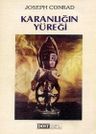
One of the main reasons that paved the way for geographical discoveries is the compass being started use by Europeans. The beginning of geographical discoveries is considered as the first step of systematic colonial efforts of Europeans. Colonialism is a spread desire that a state by taking other nations, states, communities, under its political and economic domination. Colonists often confiscate the resources, labour, and markets of the regions they are exploiting, and at the same time put pressure on the sociocultural and religious values of the people under their colonies. The European states entered the expedition races. Although Portuguese and Spanish led the discoveries, the number of nations exploring over time increased and many European countries have discovered new lands. The Europeans, who discovered previously unknown places in the world in the 16th centuries, began to exploit their discovered places in the direction of their economic, military, and political interests, thanks to their advanced military technologies, including their powerful navy, disciplined armies and effective weapons. In the late 1800s, Europe heads colonizing in less developed countries, especially in Africa, because Africa had rich underground resources. Especially after the Industrial Revolution, the increasing raw material, labour force and the need for a market, have put the world states in a relentless colonial race. The perception of having a colony as a prerequisite for being a big state has caused the states such as Germany, Italy and Belgium to participate in the competition to obtain colonies over time. These discoveries of European states have resulted in the exploitation of the underground and surface riches of the land. As of the 15th century,
Reklam