A Critical Review of Humankind

Rutger Bregman’s book Humankind is one of the books that questions negative ideas about human nature and makes readers think. For many years, many people believed that humans are naturally selfish, bad, and only care about themselves. However, Bregman does not agree with this idea. According to him, human nature is not as dark as people think. Instead, people are more willing to help each other, understand others’ feelings, and do good things. In the book, the author supports these ideas with many examples from wars, psychology experiments, history, and biology. One of the best parts of the book is that it gives hope about humanity. Still, when I finished the book, I did not only feel admiration. On one side, I was happy to read it because it made me think differently. On the other side, some of the author’s ideas felt too optimistic to me. Because of this, the book was both interesting and questionable for me.
One of the strongest parts of the book is that it makes people question ideas about human nature that many accept without thinking. Today, we often see violence, murder, wars, and fights on television, social media, and in the news. After some time, people start to believe that the world is full of bad people. At this point, Bregman asks an important question: If humans were really bad by nature, how could societies survive for so many years? A big part of human history was shaped by helping each other, working together, and surviving together. From this side, the writer’s ideas are important and meaningful.
His ideas against the belief that humans are naturally wild are especially interesting. Today, when someone behaves badly, people sometimes say, “Did you grow up in a cave?” However, Bregman says that hunter-gatherer societies were not as violent as many
In the Depth of PostmodernismFelsefe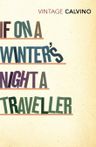

I've never read a book that was both so complex and so organized at the same time as this one. Metafiction, fragmented structure, questioning metanarratives, posthumanism, postcolonialism, and all the "post-" are combined in this book. The book's self-reflective nature and its direct conversation with the reader have made it one of my favorite books written from a second-person perspective. It has a style that leads the reader into paradoxes, confuses them, and definitely broadens their horizons. Especially the stories that follow each episode are like a narrative version of the main plot of that episode. For example, in the first chapter, we, as readers, embark on a journey. A reading journey. The title of the next chapter is "If on a winter's night a traveler". So it's about someone who's embarked on a journey, a traveler. But this episode is cut short, and our character's journey is interrupted. Just like we, the readers, are constantly interrupted by the narrator throughout this book. There's a mystery in this chapter. We don't know what that mystery is. We also encounter a mystery while reading this book; which book are we reading? Why is the book incomplete? Where is the rest? And in the next chapter, we, the readers, are on the hunt for the continuation of the previous story. We go to the bookstore and find another story that could be a sequel. But this story we found has been replaced by the main story. Just like the main plot of the story we are about to read. So throughout the book, we, the readers and narrators, speak first, taking on an active role. At the end of each chapter, we read a different story. And these stories are like continuations of the previous chapter's narrative.
This rather confusing book achieves its purpose: it bores the reader. But

Bazı hikâyeler tam tahmin ettiğin gibi ilerler. Bazılarıysa son sayfada tüm bildiklerini sorgulatır. 🤯
Ters köşeleri seviyorsan, seni sonuna kadar merakta bırakacak 3 kitap önerisini keşfetmeye hazır ol!
Fransızlar neden insan gibi konuşmaz ki?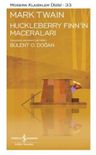

I had already read The Adventures of Tom Sawyer before, and Huckleberry Finn was one of the characters in that book. Because of that, I became curious about him and wanted to read Adventures of Huckleberry Finn as well.
After I started reading, I realized that I really enjoyed the humorous style of the book. The language and the dialogues made the story more interesting and enjoyable for me.
Adventures of Huckleberry Finn was published in 1884 and is considered one of the major works of American Realism. Unlike Romantic literature, Twain focuses on ordinary people, realistic language, and social problems. Through Huck’s journey, the novel reflects important issues of 19th-century American society such as racism, slavery, violence, religious hypocrisy, and social inequality. Twain also satirizes romantic adventure stories, especially through the character of Tom Sawyer.
The novel follows Huck Finn, a young boy who escapes from his abusive father and travels along the Mississippi River with Jim, an escaped enslaved man. During their journey, they meet many different people and experience both humorous and serious situations. Through these adventures, Huck begins to question society’s values, racism, religion, and morality.
Huck also starts to test the religious teachings of Miss Watson and Widow Douglas. He does not fully accept everything that society and religion teach him, and throughout the novel he tries to understand what is morally right by himself.
Mark Twain mainly criticizes romanticism and unrealistic adventure stories. Tom tries to behave like the characters in books, while Huck thinks more realistically and questions these ideas. Through this contrast, Twain makes fun of romantic ideals that are disconnected from real life. Whether everything we learn

In Ward No. 6, Anton Chekhov constructs a quiet but devastating meditation on suffering, indifference, and the fragile boundary between sanity and madness. Set in a decaying provincial hospital, the story revolves around Dr. Andrey Yefimych Ragin, a man who has retreated into intellectual detachment as a way of coping with the bleakness of life. The hospital itself, neglected and almost forgotten, becomes more than a setting; it functions as a symbol of a broader social and moral decay, where suffering is not only present but systematically ignored.
At the center of the narrative lies a philosophical tension that gradually unfolds through the doctor’s encounters with the patient Ivan Dmitrich Gromov. Ragin subscribes, at least superficially, to a version of Stoicism. Stoicism, originating in ancient Greek philosophy, teaches that individuals should cultivate inner peace by accepting what they cannot control and by remaining indifferent to external pain or pleasure. In its original form, it is a disciplined ethical system aimed at resilience and moral clarity. However, Ragin’s interpretation is hollowed out. What he practices is not active moral strength but passive withdrawal. He convinces himself that suffering is insignificant, that pain is merely a matter of perception, and therefore not worth resisting. This belief allows him to justify his inaction in the face of the hospital’s inhumane conditions.
Gromov, by contrast, embodies a radically different philosophical stance, one that could be described as an existential sensitivity to injustice. He is deeply affected by the possibility of suffering, oppression, and arbitrariness in human life. His anxiety and paranoia are not presented merely as symptoms of illness but as exaggerated responses to real conditions of


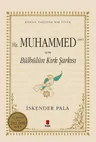
Peygamber Efendimiz S.A.V in anlatıldığı bir kitap ile alakalı olarak inceleme yazma haddini kendi aczime bir hadsizlik kabul edeceğimden, yazdığım kelam bir inceleme değil de bir avamın tavsiyede bulunma cüreti olarak algılanmasını temenni ederim.
Eser beğenerek, duygulanarak ve kendimce nefsimde sorgulamam gerekenleri idrak etme gayesine sığınarak okumaktan şeref duyguğum bir kitap oldu. Sadece uhud savaşında ayneyn tepesini bırakan sahabelerin ganimet arzusu ile yerlerini terk ettiği şekilde anlatılması eserin en eksik ve noksan , eleştirilesi yeri olarak gözüme çarptı, bunu günümüzde dile getiren başka insanlarda olmasına rağmen, malından ve canından Allah ve Resulü uğruna vazgeçmiş sahabe efendilerimizi bu şekilde ifade etmenin uygun olmadığını düşünüyorum.
Henüz okumayan ve araştırma aşamasında olan tüm kitapseverlere tavsiyemdir.
Saygılarımla ;

5/10
2026 1. kitabı
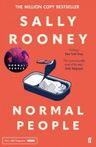
I have just finished the book Normal People by Sally Rooney. Overall, to me, it seemed like a normal book: an enjoyable drama, thrilling and addictive. However, there was still a question: what was I reading about? I think this happened because I had high expectations. But who set them? I think it was because it was everywhere, I mean so many people recommended this book. Even when I opened the front page, famous people's quotes were there, and it was awarded so many times. But to me, it still does not make any sense why it got so many awards.
Who decided that this book is actually "good"? What is even a good or bad book? It is up to people’s preference, no? So, I think to me this was just an average drama.
But what makes this book good to me are the two perfect characters, two normal people. Also, as a side note, maybe the reason I thought this was just an average book is its topic. It was literally about two normal, ordinary people, people we can see at university. There was nothing extraordinary, fancy, or miraculous.
Reviewing the two main characters is a good beginning. I would like to start with Marianne. While I was reading about Marianne, the one thing I agreed with once more is that we accept the love we think we deserve; we accept the behavior we think we deserve. That is why it’s important to have self-love and self-respect. Because if you don't love yourself or respect yourself, you will accept disrespect from others as well. Deep inside, you think you deserve it and feel no need to fight it. She had literally no value towards herself. I believe there are many people like this, but for her, it was at the lowest point.
Connell is a typical person who lives for the acceptance of society. He was so afraid of loneliness that he agreed to fit in anywhere he