
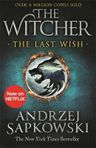
Reading witcher in english is fascinating. Even though its translated directly from Polish, English sometimes flattens the raw, gritty Slavic wit, but the dark atmosphere still punches through. I love how this book tears down pretty fairy tales. It shows a magical world ruined by ugly human realities such as injustice, racism, and violence. It proves that no matter the universe, human nature always brings the same disgusting problems. Since I’ve played all the games, I didn't have to build this world from scratch. I felt like I was returning home, totally immersed from page one. Plus, every character is so distinct you instantly adopt them. Dandelion, especially, is brilliant, his dramatic bard energy perfectly balances the grim reality. The core of the book for me is Geralt. He acts like a heartless mutant who only kills for coin, forcing himself to believe he has no feelings because society expects him to be cold. But underneath, he is incredibly soft hearted. I related to him deeply. People often call me emotionless too. But I know how much I actually care. When it matters, sometimes I act way more thoughtful and genuinely considerate than the people who constantly brag about how sensitive they are. Like Geralt, being guarded doesn't mean you don't feel. Some dislike that this is just a collection of scattered short stories, but I think it’s the perfect, low pressure gateway into the universe. It’s a fun, easy read that makes you feel both the darkness of the world and the hidden warmth of its hero.

Currently being the only reader and the first reviewer of this book is thrilling! Alright, let's start.
So, this book is literally a conspiracy theory itself.
Silas Orven is a man, a supposed time-traveller, who appeared in a private Facebook group in about 2024-2025 if I remember correctly. In that group he claimed that he came from the future to try and edit the timeline because humanity in his era of the future is having massive problems. If you can "edit" the timeline, it creates a new variable. Our current actions, if they are different, can create a new result and new future timeline. At first, people mocked him, trolled him, dismissed him completely. But when he began accurately predicting specific events, people were stunned and began taking him far more seriously. Some even started idolizing him and treating him like some kind of divine figure, even though he repeatedly said he wasn’t a prophet or anything divine and that no one should worship him. The guy became a sensation, basically.
So in 2025 he published this book and then completely disappeared. No one knows where he is. No one can identify him. His name doesn’t even show up in any global database. Some of his most devoted followers genuinely believe he went back to the future, where he came from.
I read the book, and it’s incredibly well-written. Some parts are genuinely disturbing; his descriptions of the future and the era he comes from are pretty terrifying. It's pretty dystopian. It’s impressive how he explains how time travel supposedly works, and he even touches on several taboo topics like Hitler, aliens and their origins, why they abduct humans, as well as God, the Bible, the Qur’an, who built the pyramids and why, whether humans will achieve eternal life, what happens after death, and so

Reklam
A Critical Review of Humankind

Rutger Bregman’s book Humankind is one of the books that questions negative ideas about human nature and makes readers think. For many years, many people believed that humans are naturally selfish, bad, and only care about themselves. However, Bregman does not agree with this idea. According to him, human nature is not as dark as people think. Instead, people are more willing to help each other, understand others’ feelings, and do good things. In the book, the author supports these ideas with many examples from wars, psychology experiments, history, and biology. One of the best parts of the book is that it gives hope about humanity. Still, when I finished the book, I did not only feel admiration. On one side, I was happy to read it because it made me think differently. On the other side, some of the author’s ideas felt too optimistic to me. Because of this, the book was both interesting and questionable for me.
One of the strongest parts of the book is that it makes people question ideas about human nature that many accept without thinking. Today, we often see violence, murder, wars, and fights on television, social media, and in the news. After some time, people start to believe that the world is full of bad people. At this point, Bregman asks an important question: If humans were really bad by nature, how could societies survive for so many years? A big part of human history was shaped by helping each other, working together, and surviving together. From this side, the writer’s ideas are important and meaningful.
His ideas against the belief that humans are naturally wild are especially interesting. Today, when someone behaves badly, people sometimes say, “Did you grow up in a cave?” However, Bregman says that hunter-gatherer societies were not as violent as many

In Amis’s famous novel, London Fields, the witty language is used and highlighted in the book repatedly. With the use of wit and pan (word play) Amis creates one of the most intelligent written novel ‘London Fields’. These uses of high elevated language and word plays also gives us the hints of postmodern fiction. As the novel is considered one of the best novel representing postmodernism, one can appreciate it due to the style that the novel is written, by means of wit and language. To give examples from the book;
-It was fixed. It was written. The murderer was not the murderer. But the murderee had always been a murderee.
The quote from Samson Young foreshadows that the real murderer is not the one we think, it will change. However the murderee ‘Nicola’ will always be the victim, not be affected by the inconstant murderer.
- I know what his poetry will be about. What poetry is always about. The cruelty of the poet’s mistress.
In this quote we can also sense the metaphor that is made to Nicola. Here Samson , as a writer, claims that the poets are writing poetry due to the relationship between their mistresses. It is known that Young also writes a novel about Nicola, creating the same plot with the poets he criticizes.
-I close my eyes, trying to see a way- how do writers dare do what they do ? – and there is just chaos. It seems to me that writing brings trouble with it, moral trouble, unexamined trouble. Even to the best.
-When God got mad he was a jealous God. He had other planets, thanks, and in better parts of the universe. He promised plague, famine mile-high tides, sound-speed winds and terror, ubiquitous and incessant terror, with blood flowing bridle deep. He threatened to make her old and keep her that way forever… Cross that firebreak and then cross that

In the Depth of PostmodernismFelsefe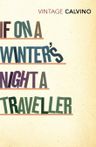

I've never read a book that was both so complex and so organized at the same time as this one. Metafiction, fragmented structure, questioning metanarratives, posthumanism, postcolonialism, and all the "post-" are combined in this book. The book's self-reflective nature and its direct conversation with the reader have made it one of my favorite books written from a second-person perspective. It has a style that leads the reader into paradoxes, confuses them, and definitely broadens their horizons. Especially the stories that follow each episode are like a narrative version of the main plot of that episode. For example, in the first chapter, we, as readers, embark on a journey. A reading journey. The title of the next chapter is "If on a winter's night a traveler". So it's about someone who's embarked on a journey, a traveler. But this episode is cut short, and our character's journey is interrupted. Just like we, the readers, are constantly interrupted by the narrator throughout this book. There's a mystery in this chapter. We don't know what that mystery is. We also encounter a mystery while reading this book; which book are we reading? Why is the book incomplete? Where is the rest? And in the next chapter, we, the readers, are on the hunt for the continuation of the previous story. We go to the bookstore and find another story that could be a sequel. But this story we found has been replaced by the main story. Just like the main plot of the story we are about to read. So throughout the book, we, the readers and narrators, speak first, taking on an active role. At the end of each chapter, we read a different story. And these stories are like continuations of the previous chapter's narrative.
This rather confusing book achieves its purpose: it bores the reader. But

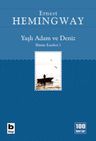
The Old Man and the Sea by Ernest Hemingway tells a story that feels simple at first, almost like something you could explain in a few sentences. An old fisherman goes out to sea, catches a great fish, and loses it on the way back. But as the story unfolds, it becomes clear that this is not really a story about fishing at all. It is about endurance, dignity, and what it means to struggle in a world that does not always reward effort.
The novella centers on Santiago, an old Cuban fisherman who has gone eighty-four days without catching a fish. In his village, he is seen as unlucky, even defeated. Only a young boy, Manolin, continues to believe in him, although he is no longer allowed to fish with Santiago. This quiet isolation shapes the emotional atmosphere of the story. Santiago is not just physically alone at sea; he is also set apart from the people around him, living on the edge of relevance.
When he finally sets out far into the Gulf Stream, determined to break his unlucky streak, he hooks a giant marlin. What follows is a long, exhausting struggle that lasts for days. The fish pulls his small boat deep into the open sea, and Santiago, despite his age and pain, refuses to give up. What is striking here is not just the physical challenge, but the way Santiago thinks about the fish. He does not hate it. He respects it, admires it, even feels a kind of kinship with it. At times, he speaks to it as if it were an equal. This changes the nature of the conflict. It is not a simple battle between man and nature, but something more complex, almost like a test of worth between two noble beings.
When Santiago finally kills the marlin, it feels like a moment of triumph, but that triumph does not last. Sharks are drawn to the blood of the fish and begin to attack it.
Reklam
Reklam