
SPOILER içerir...
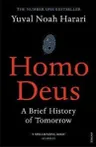
First, I wanna provide a brief summary of the book then I will share my comments on it:
Humans defeated famine, plague and war (starvation, epidemics and violence)
Humanities new targets are immortality, happiness and divinity by using artificial intelligence, big data, biotechnology, genetic engineering, regenerative medicine and nanotechnology and thus upgrading Homo Sapiens to Homo Deus.
Imminent dangers are climate change, global warming, pollution
Humans domesticated more than 90% of all large animals and thus conquered the world.
But humans are no different than animals since we have no soul, consciousness, mind or free will. Our sensations, emotions, desires and thoughts are biochemical data processing algorithms
What makes humans more special than animals are not our soul, mind or consciousness but our ability to cooperate flexibly in large numbers by creating ‘fictional myths’ such as money, corporation, state, gods. Fictions enable us to cooperate better and without fiction no complex human society can function.
Scientists study how the world functions, but there is no scientific method for determining how humans ought to behave. So, countries cannot function on the basis of scientific theories alone. They require some religion or ideology to maintain order.
Humanism (the worship of humankind which sanctifies life, happiness and power of Homo Sapiens) became the dominant world religion for the last 300 years.
Humanism split into three main branches, all of which believe that human experience is the supreme source of authority and meaning, yet they interpret human experience in different ways: Orthodox Humanism (Liberal humanism or simply as liberalism), Socialist Humanism (Communism, leftists), Evolutionary Humanism (Racism, Fascism
Aşk ve gurur ile Uğultulu Tepeleri Karşılaştırdım, keyifli okumalar :)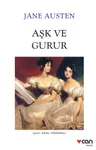

Comparison Between Pride and Prejudice and Wuthering Heights
There are many authors who show us 18th century British society. While some of the authors glorify the community life in the 18th century, some of them criticize the century by their strict rules about the women and social discriminations. Undoubtedly, Emily Bronte and Jane Austen are known as for social criticism or acute perception of gender roles in their society. The works of these two important authors are not about the French Revolution or the wars. They prefer generally to focus on ordinary people, daily life and love. Our writers, who lived in a time when marriages dictated the status of women in society, expressed themselves in a way and produced excellent works . Pride and Prejudice by Jane Austen and Wuthering Heights by Emily Bronte are books that have similarities and differences for readers. This paper will analyse British society by the 18th century and make a comparison between Pride and Prejudice and Wuthering Heights.
To achieve this, I have organized my paper into three sections.In the first section, I will talk about the 18th century Britain,also known as the Victorian age and the value of women in society in those times. Secondly, I am going to give some information about the author’s life and their writing styles. In the end, I will do some analysis about the differences and similarities of Pride and Prejudice and Wuthering Heights in aspects of main characters.
According to many historians, the reform movement in 1832 is the original beginning of the Victorian era, also the Victorian age is called the Romantic era. Courtship is considered a tradition in those days and has been very popular. Queen Victoria and her family are the Victorian society’s heroes. Society finds

Bu yaz yanınızdan ayırmak istemeyeceğiniz kitapları sizin için bir araya getirdik.
💬 Siz olsanız bu listeden hangisiyle başlardınız?

“Freeing yourself was one thing, claiming ownership of that freed self was another.”
“That “Love is or it ain't. Thin love ain't love at all.”
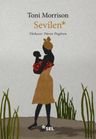
I picked up this book because I wanted to get some perspective, but I feel changed after reading this book. So complex, so painful, so painfully beautiful, such life in the telling of this story, It grips at your heart, and somehow you can feel the pain. It makes you shudder to think of how evil and cruel humanity can be. People were worse than animals in their treatment of so many people of this era. The chain gang was a terrible way to make people live. It shows how power in the hands of the wrong people can bring about a hell on earth. We might not be able to believe these things could really happen, that man was capable of such things were it not for the proof that we have in so much of history.
The story is based on a real case, on in which Margaret Garner (remembered in this book as the family name given to the less horrendous slave owners) killed her children for the same reason in 1856, Ohio. Sethe and her daughter Denver live in a house on 124 Bluestone Road. Once a lively place where freed slaves congregated after Emancipation to get news and socialize, it’s now desolate and creepy, haunted by the spiteful ghost of Sethe’s dead two-year-old child. The matriarch Baby Suggs (Sethe’s mother-in-law) is now dead, and Sethe’s two sons have fled the premises.
When Paul D enters the home, things begin to change. He and Sethe worked on the same plantation – called Sweet Home, ironic because it was anything but – decades earlier. They share history, good and bad, and harbor secrets from the other. Paul D’s presence makes the ghost leave, and he alienates the shy, awkward Denver and begins to make Sethe unshackle herself from
It has been years since I've read a book by such a descriptive writer. He is rapidly becoming a favorite of mine. This book was recommended to me by one of friends from Russia “Dinara”
First of all, this book is over 800 pages, so I found it a little challenging to start because I didn't want to carry it around with me to read on the bus (too bulky) and I was so tired each night that I couldn't read more than a page or two. But I finally got a chance to read a small chunk of it in one sitting and that was it for me. I loved it and couldn't put it down.
Secondly, the books plot, twists, and pace would make a great book in itself. What caught me is without trying to shove it down your throat is the Author's love of people. Good, bad, ugly, beautiful, extremely poor, extremely rich, strange, and even straight out hell types of people. The author and main character who portrays himself as no pillar of society seems to have an intense love of humans and human nature. Not only are the characters and what they do complex but no matter how deep or shallow they are in crime ranging from petty scammers to murderers and even torturers, in by far most cases he pulls the good out of them and demonstrates that even though people get themselves in these situations regularly, that we consider heinous crimes, there is actually good in them that may be hidden deep but is in every human being.
As the novel opens, the reader is introduced to Lin, a man who has escaped his Australian jail and arrives in Bombay, hoping to hide in India's vast populace. Early on, Lin is forced to realise that India is a beast unlike any other; culturally, racially, and economically. It is, however, home to many who have the same idea, hiding from their criminal pasts elsewhere. These include Karla
