
Bazı notlarım aşağıdaki gibidir:
İntihar ürünleri temin ve tedarik eden dükkan sahipleri de intiharı düşünür ancak aileden birinin intiharı halinde hizmet akamete uğrayacaktır dolayısıyla intihar bu aile için düşünülemez ve tatbik edilemez bir eylemdir.
"Ölümünüzü başaracaksınız..." Başarılabilecek son şey ölümdür insan için...ancak İngilizce'de örneğin ölmek de doğmak gibi "passive", yani edilgen bir eylemdir.
İngilizce yazılan incelemelere baktığımda kaosa sürüklenmiş dünyada insanların intiharı bir çıkış yolu olarak benimsemeleri ne atıf yapıldığını gördüm. İntihar kelimesinin özellikle tercih edildiğini çünkü ölüm ile intihar arkasındaki sınırın insan iradesine bağlandığını, hayatında hiçbir şeyi başaramamış insana bir başarı alanı tanındığını görmemek kabil değildi.
deliberate killing of oneself," from Modern Latin suicidium "suicide," from Latin sui "of oneself" (genitive of se "self"), from PIE *s(u)w-o- "one's own," from root *s(w)e- (see idiom) + -cidium "a killing," from caedere "to slay" (from PIE root *kae-id- "to strike").
Etimolojik sözlükte karışma çıkan ilk açıklama bu. İnsanın belirli bir kasıt ile kendini öldürmesi. (Bir mesaj bırakmak, güçlü olduğunu ispatlamak vb) Kelime kökünde saklı bir 'kendilik' var. İntihar kişinin kendisine yönelik bir eylemi ve bunu kazaen değil kasten yapması gerekiyor. Yani irade şart. Satırları aşağı kaydırdıkça 'sane" kelimesi ile karşılaşıyorum. Akıl...insane ise delilik...demek ki aklın yerinde olması gerekiyor bu eylemin gerçekleştiği sırada. Diğer yandan 'commit suicide' şeklinde kullanılıyor kelime, yani uygulanıyor, gerçekleştiriliyor...
(Bir paragraf 'çünkü' ile başlamaz ama...) Çünkü terminolojide intihar ve intihara teşebbüs ayrı ayrı ele alınıyor. İngilizce inceleme yazısında da başarıya ulaşamayan

The Vegetarian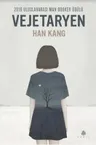

The Vegetarian
I have read a most staggering and profound book. I don't want to give spoilers, but I want to mention how this book affected my feelings and my thoughts about society. South Korean author Han Kang writes this book from three different perspectives. She criticizes the traditional and patriarchal society of South Korea.
At the beginning of the book, Yong-hye's husband tells us about his wife. He describes her as an ordinary woman with nothing special about her. One day, Yong-hye has a nightmare and decides never to eat meat again. This causes a major conflict within the family. Her father hits her, and for this reason, she attempts suicide. Later, her brother-in-law takes her to the hospital. Due to the Mongolian spot on Yong-hye’s back, he becomes obsessed with her and sleeps with her. His wife catches them; consequently, both of them are taken to psychiatric clinics.
Yong-hye consistently refuses to eat meat and begins to think of herself as a tree. Her sister feels sorry for her, yet on the other hand, she has been unhappy since her own marriage. Yong-hye believes that eating meat is related to violence. Society, her family, and her husband all want to take control of her life and body. Yong-hye maintains a silent resistance against South Korea's traditional and patriarchal society. At the same time, she wants to transform from an animal into a vegetal entity.
This book is about how people defy societal norms to find freedom. The Vegetarian is not just a book about diet; it is a story that depicts a person's desire to be one with nature.


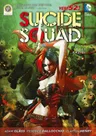
Tatlıydı harleen için aldım esasen, genel hatlarıyla suicide squat'i tanıtan bi cizgi roman olmuş çıtır cerezlik son birkaç bölümü iyi sardı.
sanirim 6.5'tan 7'yi hak ediyor

İnsan bir kez ölür ve bunun unutulmaz bir an olmasını ister... Evet bundan eminim, çoğumuz böyle gitmek istiyoruzdur hayattan; unutulmamak ve varsa ahirette güzel şeyleri hatırlamak... Kitabın incelemesine neden bunları yazarak başladım bilmiyorum ama sanırım son haftalarda yaşadığımız kötü olaylar ve benim hâlâ alışamadığım bu hayat(ım)a son verme isteği. (Şu an gözlerim doldu, hele de kulağımdaki şarkıyla değmeyin kederime!) Sanırım kendimi kitabın baş kahramanı ve benim gibi evin en küçüğü olan Alan'a benzettiğim içindir... Evet kitap; umutsuz insanların, kırılganların, kırgınların, yoğun duygular yaşayanların ve hayatına son vermek isteyenlerin uğrak yeri olan, kaliteli ürünler satarak hizmet vermeye çalışan Tuvache ailesinin işlettiği İntihar Dükkânı'nda yaşanılan olayları anlatıyor... Fakat ailenin içinde öyle biri var ki, tüm bu karamsar ortama ve yaşama karşı koyarak hayatını idame etmeye çalışıyor... Alan; gülmeyi seven, neşesi hiç azalmayan, şarkı söylemekten hoşlanan, bazen yazılar yazan, ezeli ve ebedi iyimser olan ve iyimserliği hep çevresindekilere aşılayan (kendimi anlatıyormuşum gibi şımardım) bir çocuktur. Oysa böyle olması ailesi tarafından hiç hoş karşılanmıyor çünkü adı üstüne; dükkan, intihar dükkanı... Tuvache ailesi, müşterilerine son istekleri olan ölümü verdikleri için gayet memnundur... Bu istek için farklı yöntemler kullanırlar; bazen silahlar, bazen zehirler, bazen asmak için kullanılan ipler, bazen de korkunç maskeler... Evet, aile çocuklarını bu şekilde büyütmeye çalışır ancak Alan kendini ailesinin hayatına zıt olan mutlu bir çocuk olarak yetiştirmeye çalışır... Bundan memnun olmayan aile Alan'ı disiplin eğitimi alması için ceza olarak Monaco Suicide Commando’ya gönderir... Fakat bu ceza Alan’ın neşesinde herhangi bir olumsuz etki
sanırım eskiden yaratıcı biriymişim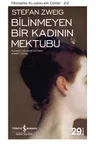

15.04.2020
Dear Unknown Woman,
“To you who has never known me.” I want to start with your sentences dear Mrs. Unknown Woman. You wrote these sentences for Mr.R. and I’m writing to you now. You guess why I wrote to you. I read your letter to Mr.R. and decided to write to you. There are a lot of things that I want to tell and ask you. I don't know whether my letter can help you or not.Please listen to me.
Do you think that your emotions are normal towards Mr.R? You've been loving him since you were 13.You fell in love with him even though he was older than you and there were a lot of women around him. I remember that your mother decided to move to Innsbruck. You had resisted not to change cities for days. What was for? For your friend, your school.No, just Mr.R. After a while, you went back Vienna. Actually you are such a brave woman that you turned alone for your love. (I appreciated you for this.)But while all this was happening, he didn't even know your name.Then,one day you had the opportunity to eat with Mr. R. I can imagine what a fascinating day it was for you.It was an ordinary day for him and this was very annoying for you. If I were you, I would face him and tell him how much I love him and the fact that I have a child.But I don't get mad at you because you didn't face MrR. Because if Mr.R. had known you, would there have been such a deep love story?
But on the other hand,Yeah maybe that kind of love wouldn't come out but at least you would be happy.Also you could marry another man who loves you. Besides your child could have a beautiful life. By the way, I’m so sorry for your son honey. Rest In Peace:/
I don't know, I'm so confused.
Anyway,I have one more question for you.Did you try love another man or forget him.Though you see loving someone else as a
Bilinmeyen Bir Kadının MektubuStefan Zweig · Türkiye İş Bankası Kültür Yayınları · 2022266,6bin okunma
"Heaven is only people you met"1000Kitap

"Sum," is a collection of stories about the afterlife and the possibilities are endless. The author, David Eagleman, uses the far reaches of his imagination to create forty unique takes on afterlife. Death and what follows is, to many, a mysterious subject and the author capitalizes on that mystique. Eagleman presents his many scenarios of what might be or what could be in the afterlife. The author takes the image of the creator to the extremes. In one narrative, "The Microbe," he describes god as the size of a microbe, so small that he does not know that we exist. In another tale, the reader is told that god is a Giantess who is so large that it is virtually impossible to communicate with her.
Many of the stories focus on the consciousness of those entering the afterlife. For example, in "Graveyard of the Gods," afterlife is for man and for everything created or made by man. Therefore, anything that man invented has an afterlife. Everything from toasters to grand pianos have a place in the afterlife. But afterlife is also for the literary and mythic creations of man. All the gods that man ever created in stories have a place in the afterlife. In another story, those arriving in the afterlife are met with the daunting challenge of meeting versions of themselves - what they could have been - in comparison of their own filtered views of themselves.
In several stories god, or the creator, is seen as anything but all powerful. In "Reins," god is perplexed when a committee, urged on by angels, finds him incompetent of deciding who should go to heaven and who should go to hell. In "Narcissus," the creators are called Cartographers. These creatures are smaller than man and equip man's eyes with high-resolution cameras. During their time on earth, humans are to take photos