Puan vermedi
"Sanatlı bir eser, sanatkârı icab eder..."
İşte ey tabiata saplanan ve bataklıkta boğulmak derecesine gelen gàfil! Bütün mâzi ve müstakbele ulaşacak hikmetli ve kudretli mânevî el sahibi olmayan birşey, nasıl bu zeminin hayatına karışabilir? Senin gibi hiç ender hiç olan tesadüf ve tabiat buna karışabilir mi? Kurtulmak istersen, "Tabiat, olsa olsa bir defter-i kudret-i İlâhiyedir; tesadüf ise, cehlimizi örten gizli bir hikmet-i İlâhiyenin perdesidir" de, hakikate yanaş.
Yirmi Beşinci Pencere
Nasıl ki, madrub, elbette dâribe delâlet eder; san’atlı bir eser, san’atkârı icâb eder; veled, vâlidi iktizâ eder; tahtiyet, fevkıyeti istilzam eder, ve hâkezâ. Bütün umûr-u izâfiye tâbir ettikleri, biribirsiz olmayan evsâf-ı nisbiye misillü, şu kâinatın cüz’iyâtında ve heyet-i umumiyesinde görünen imkân dahi, vücûbu gösterir. Ve bütün onlarda görünen infiâl, bir fiili gösterir. Ve umumunda görünen mahlûkıyet, hàlıkıyeti gösterir. Ve umumunda görünen kesret ve terkib, vahdeti istilzam eder. Ve vücûb ve fiil ve hàlıkıyet ve vahdet, bilbedâhe ve bizzarure, mümkin, münfail, kesîr, mürekkeb, mahlûk olmayan, Vâcib ve Fâil, Vâhid ve Hàlık olan mevsuflarını ister. Öyle ise, bilbedâhe, bütün kâinattaki bütün imkânlar, bütün infiâller, bütün mahlûkıyetler, bütün kesret ve terkibler, bir Zât-ı Vâcibü’l-Vücud, Fa’âlü’n-Limâ Yürîd, Hàlık-ı Küll-i Şeye, Vâhid-i Ehade şehâdet eder.
Elhâsıl: Nasıl imkândan vücûb görünüyor; infiâlden fiil ve kesretten vahdet-bunların vücudu, onların vücuduna katiyen delâlet eder. Öyle de, mevcudât üstünde görünen mahlûkıyet ve merzûkıyet gibi sıfatlar dahi sâniiyet, rezzâkıyet gibi şe’nlerin vücudlarına katî delâlet ediyor. Şu sıfâtın vücudu dahi, bizzarure ve bilbedâhe, bir Hallâk ve bir Rezzâk Sâni-i Rahîmin vücuduna delâlet eder.
Demek, herbir mevcud,


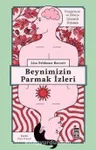
the book that made me want to be a neuropyschologist for a good amount of time. the way Lisa found herself, her way to choose this very specific, untouched, large subject to research on and had her whole laboratory-from monkeys to humans- (not your usual science lab!) work on it is truly what i always wanted to do. even though i haven't fully grasped on the scientific terms when i first read it, it has changed my way of thinking a lot. it completely cleared the classic concept of 'emotions' from my mind and put something way more complicated instead of it. i struggle explaining people why emotions were made by people and that there aren't just 4 or 5 of them around. so this book is a nice standing point for me. ofc it's hard to put something that's pages long in a single paragraph, so im just gonna say i will read it once more, maybe adding up my experiences from med school, and maybe see if some of these researches are still scientifically valid. (since this book was written in 2017, i'm sure A LOT has changed!)

Bu yaz yanınızdan ayırmak istemeyeceğiniz kitapları sizin için bir araya getirdik.
💬 Siz olsanız bu listeden hangisiyle başlardınız?
History Lovers should bot have missed to read it1000k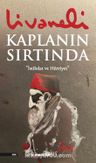

Dictatorship and Decline
Many historians and citizens criticize Abdulhamid II’s reign for:
Authoritarianism: The 1878 suspension of the constitution and parliament, ruling via censorship and spies
Heavy surveillance and suppression of dissent (especially against reformists)
Massive territorial losses, such as:
Cyprus (to Britain, 1878)
Tunisia (to France, 1881)
Egypt (to Britain, 1882)
Kars, Ardahan, Batumi (to Russia, 1878)
Later, under his weakening rule, increasing control lost in the Balkans
Blocking of internal reform movements, such as those led by the Young Turks
So, it’s valid to see his legacy as mixed or even damaging depending on your historical lens.
How to Think About It Historically
Both views can be partially valid — here's a neutral framing:
Positive Legacy Negative Legacy

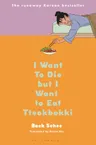
that story makes me realize one thing about how exactly I see myself. I just want to give my thoughts on this book in a short and basic way.
The title itself is a perfect summarization of the inner conflict so many face: a desire to escape life, yet also finding comfort in something as simple as a favorite food.
It offers quiet companionship to readers who might be going through similar emotions.
This isn’t a book of answers—it’s a book of questions and quiet revelations. For anyone who has ever felt like they’re "not sad enough to be depressed" but also not quite okay, this book will likely resonate deeply. It reminds us that small joys can coexist with deep pain, and that both are valid. veryone will see some details from their own live perspective in the book.

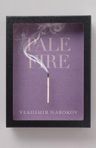
Regular readers of Vladimir Nabokov are aware that his books are full of what I call “verbal acrobatics” as he is one of the few non-native English speakers who have mastered the language and can use it at a very high-level. He’s not only building exquisite plots but he also sets up lots of puzzles, challenges and games for the readers in his books.
However, Pale Fire goes to the very extreme in this aspect, since the whole book is an elaborate puzzle, to be solved by the reader and after more than 60 years since the book was first published, not all puzzles have been solved.
Structurally, it is an interesting book. There is a Foreword written by a Charles Kinbote, allegedly a visiting professor from the faraway country of Zembla, narrating how he came by with publishing a poem of 999 lines by the esteemed scholar John Shade, recently deceased.
The poem is fully included in the text, followed by around 180 pages of commentary and the book ends with extensive footnotes.
When you start reading the Foreword by Kinbote, the text steers you towards an implication that Charles Kinbote is actually the exiled King of Zembla. However, as you continue reading the text, something strange happens. It all depends on how you read the book. To understand what I really mean here, we have to visit one of the most enlightening books in this topic, namely Nabokov’s Pale Fire: The Magic of Artistic Discovery by Brian Boyd.
There are lots of academic papers about Pale Fire, but the book I mention here provides one of the most robust and extensive explanations of the book. Brian Boyd shows that there are various ways to read the book.
One can read the book sequentially, namely can read the Foreword, the Poem, the commentary and the footnotes in the order they are printed in the book.