A Critical Review of Humankind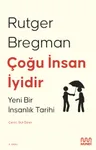

Rutger Bregman’s book Humankind is one of the books that questions negative ideas about human nature and makes readers think. For many years, many people believed that humans are naturally selfish, bad, and only care about themselves. However, Bregman does not agree with this idea. According to him, human nature is not as dark as people think. Instead, people are more willing to help each other, understand others’ feelings, and do good things. In the book, the author supports these ideas with many examples from wars, psychology experiments, history, and biology. One of the best parts of the book is that it gives hope about humanity. Still, when I finished the book, I did not only feel admiration. On one side, I was happy to read it because it made me think differently. On the other side, some of the author’s ideas felt too optimistic to me. Because of this, the book was both interesting and questionable for me.
One of the strongest parts of the book is that it makes people question ideas about human nature that many accept without thinking. Today, we often see violence, murder, wars, and fights on television, social media, and in the news. After some time, people start to believe that the world is full of bad people. At this point, Bregman asks an important question: If humans were really bad by nature, how could societies survive for so many years? A big part of human history was shaped by helping each other, working together, and surviving together. From this side, the writer’s ideas are important and meaningful.
His ideas against the belief that humans are naturally wild are especially interesting. Today, when someone behaves badly, people sometimes say, “Did you grow up in a cave?” However, Bregman says that hunter-gatherer societies were not as violent as many

spoiler!
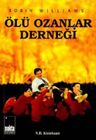
Dead Poets Society is a deeply emotional story that reminds us that life is not only about success or discipline, but also about poetry, romance, love, and passion. One of the most heartbreaking parts of the book is Neil’s tragic death, which changes the entire atmosphere of the story. In the film adaptation of the book, whenever the word “death” is mentioned, the camera often focuses on Neil’s face, creating a powerful example of foreshadowing. This detail makes the ending even more emotional and unforgettable, while also emphasizing how destructive social pressure can be on young people’s dreams.
Reklam

"But, alas, I had done what I had determined not to do; I had slipped unthinkingly into praise of my own sex." (page: 121)
A Room of One's Own is best understood when we first reflect on what feminism actually represents. Is it merely a demand for equality? Or a rebellion against centuries of imposed roles and limitations placed upon women? Even today, when we read about the historical denial of women’s most basic rights and freedoms, we are still surprised, perhaps because contemporary society presents such a different image of gender roles.
Let us imagine a world in which women were confined solely to domestic responsibilities: raising children, sewing, and managing the household, often forced into marriage and denied access to education. A world in which they had no private space, not even half an hour truly their own. In Woolf’s argument, the absence of such material and intellectual space explains why fewer women emerged as successful writers. Without a room of one’s own, she suggests, a woman is also deprived of an inner world that belongs to her alone. Nothing is truly hers; everything is defined through ownership by men. Even the impulse to resist such conditions is gradually suppressed.
Woolf’s writing carries a clear sense of intellectual rebellion. She questions why women could not live as freely as men, and imagines the creative potential that might have emerged under equal conditions. She also attempts to explain male claims of superiority through psychological and social patterns: insecurity masked as dominance, and the need to define oneself as superior to at least half of society in order to compensate for internal doubt. Meanwhile, women, historically excluded even from libraries and formal education, were denied the very conditions necessary to

In the Depth of PostmodernismFelsefe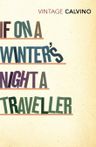

I've never read a book that was both so complex and so organized at the same time as this one. Metafiction, fragmented structure, questioning metanarratives, posthumanism, postcolonialism, and all the "post-" are combined in this book. The book's self-reflective nature and its direct conversation with the reader have made it one of my favorite books written from a second-person perspective. It has a style that leads the reader into paradoxes, confuses them, and definitely broadens their horizons. Especially the stories that follow each episode are like a narrative version of the main plot of that episode. For example, in the first chapter, we, as readers, embark on a journey. A reading journey. The title of the next chapter is "If on a winter's night a traveler". So it's about someone who's embarked on a journey, a traveler. But this episode is cut short, and our character's journey is interrupted. Just like we, the readers, are constantly interrupted by the narrator throughout this book. There's a mystery in this chapter. We don't know what that mystery is. We also encounter a mystery while reading this book; which book are we reading? Why is the book incomplete? Where is the rest? And in the next chapter, we, the readers, are on the hunt for the continuation of the previous story. We go to the bookstore and find another story that could be a sequel. But this story we found has been replaced by the main story. Just like the main plot of the story we are about to read. So throughout the book, we, the readers and narrators, speak first, taking on an active role. At the end of each chapter, we read a different story. And these stories are like continuations of the previous chapter's narrative.
This rather confusing book achieves its purpose: it bores the reader. But

In Ward No. 6, Anton Chekhov constructs a quiet but devastating meditation on suffering, indifference, and the fragile boundary between sanity and madness. Set in a decaying provincial hospital, the story revolves around Dr. Andrey Yefimych Ragin, a man who has retreated into intellectual detachment as a way of coping with the bleakness of life. The hospital itself, neglected and almost forgotten, becomes more than a setting; it functions as a symbol of a broader social and moral decay, where suffering is not only present but systematically ignored.
At the center of the narrative lies a philosophical tension that gradually unfolds through the doctor’s encounters with the patient Ivan Dmitrich Gromov. Ragin subscribes, at least superficially, to a version of Stoicism. Stoicism, originating in ancient Greek philosophy, teaches that individuals should cultivate inner peace by accepting what they cannot control and by remaining indifferent to external pain or pleasure. In its original form, it is a disciplined ethical system aimed at resilience and moral clarity. However, Ragin’s interpretation is hollowed out. What he practices is not active moral strength but passive withdrawal. He convinces himself that suffering is insignificant, that pain is merely a matter of perception, and therefore not worth resisting. This belief allows him to justify his inaction in the face of the hospital’s inhumane conditions.
Gromov, by contrast, embodies a radically different philosophical stance, one that could be described as an existential sensitivity to injustice. He is deeply affected by the possibility of suffering, oppression, and arbitrariness in human life. His anxiety and paranoia are not presented merely as symptoms of illness but as exaggerated responses to real conditions of

It’s The Best Ever

It is literally the best end-game book ever written and the majority of those who read it are masters, which is a book that chess players who have reached a certain level should read and study the matches again and again. It is a book that guided me on my chess journey. It is one of the 3 best chess books I have read so far rather than the end of the game. I strongly recommend the 2nd, 4th and 6th edition. Too much G.o.a.t.
Reklam
Reklam