
Sanırım hayatımda bu kadar detaylı yazılmış bir İngilizce kitap okuduğumu söyleyemem. Bir noktadan sonra bu kitabın iyi çevrilmiş bir Türkçe versiyonunu okumayı gerçekten çok isterdim, ama sanırım böyle bir çevirisi yok — ya da en azından ben denk gelmedim. Bu kitabı okurken bir an bile küçük bir detayı kaçırırsanız, ne okuduğunuzu unutabiliyorsunuz. Çünkü hiçbir şey göründüğü gibi değil. Her şey düşüncelerden ibaret ve düşünceler her şey olabilir, değil mi? Mutlu bir şarkı sizi iyileştirebilir ya da hüzünlü bir şarkı kırık parçalarınızı onarmanıza yardımcı olabilir.
Okurken hikâyenin nereye varacağını çok merak ettim ve tahmin ettiğim gibi hiç olmadı. Hatta sonu beni gerçekten şaşırttı. Kafamın karıştığı çok fazla yer oldu. Ana diliniz dışında bir dilde kitap okumanın zorluklarından biri de bu sanırım. Ama Raya ve Q’yu karakter olarak gerçekten çok sevdim. Hâlâ sonundan emin değilim. Gerçek miydi, hayal miydi? Mutlu oldular mı? Birbirlerine kavuştular mı? Bence yazar bana bir açıklama borçlu.
İlk başta treni çok sevmiştim ama trenin sırları ortaya çıktıkça, Raya gibi ben de aslında böyle bir trende olmak istemediğimi fark ettim. Ama eğer bir gün denk gelirseniz, bence okuyun. Çünkü sizi oldukça ilginç bir yolculuk bekliyor olacak.
Sözlerimi kitaptaki Raya’nın şarkısıyla bitirmek istiyorum:
Live. Breathe. Be.
---
I don’t think I’ve ever read an English book written with this much detail before. At some point, I really wished I could read a well-translated Turkish version of this book, but I don’t think one exists — or at least I’ve never come across it. While reading, if you miss even the smallest detail for a moment, you suddenly forget what exactly you’re reading. Because nothing is what you think it is. Everything is made of thoughts, and thoughts can become


MEHMET CAN VARLIK-İÇSEL YÖN
İnsan, yaşadığı olayların içinde kaybolduğunu sanıyor ama asıl kaybolduğu yer kendi zihninin içinde kurduğu otomatik senaryo. Mehmet Can Varlık, “pusula içeridedir” cümlesini romantik bir motivasyon sloganı olarak değil, zihnin çalışma mantığına dayanan bir tez gibi kuruyor: Dışarıdaki olaylar elbette var; ama o olayların sende bıraktığı etkiyi büyüten şey, beynin onlara verdiği anlam, yani senin zihin modelin.
Kitabın ilk büyük hamlesi, okuru “Ben böyleyim” dediği yerden çekip “Ben böyle çalışıyorum” noktasına getirmek. Zihin–beyin–bilinçaltı ayrımı, prefrontal korteks–amigdala gibi kavramlar ve “ödül sistemi” anlatıları bunun için var: Okur, kendini “zayıf irade” ya da “yetersiz karakter” diye etiketlemek yerine, aslında iki sistemin çatıştığını görmeye başlıyor. Bir yanın planlıyor, mantıklı karar veriyor; diğer yanın tehdit algılıyor, geçmişten kayıtlı duygularla otomatik tepki veriyor. Yazarın okura hissettirmek istediği ilk duygu bence şu: Suçlu değilsin; yönetilebilir bir sistemin içindesin. Bu, kitabın en güçlü psikolojik etkisi: rahatlatma ve “kontrol geri gelebilir” hissi.
Sonra olay örgüsü “neden”den “nasıl”a dönüyor. Kitap, düşünce–duygu–davranış döngüsünü kurup şunu söylüyor: Zihin bir fabrika gibi; hangi düşünceyi üretirsen, o düşünce bir duygu üretir; duygu da davranışı tetikler. Burada yazarın asıl hedefi, okuru “duygularım beni yönetiyor” hissinden çıkarıp “duygularım bir veri, ben yönlendirebilirim” noktasına taşımak. Yani kitap, okuru kurban rolünden gözlemci rolüne geçiriyor. Bu yüzden sayfalarda sık sık “Ne öğrendim?”, “Şu an kontrolümde olan ne?”, “Bundan sonra ilk adımım ne?” gibi sorular var. Bunlar basit sorular gibi görünse de aslında okura yeni bir kimlik veriyor: kendi zihninin yöneticisi.
Kitabın orta damarında

Reklam
Honestly, I don’t even know where to start. I never expected this book to completely draw me in like this. It actually surprised me multiple times. Just when I thought I had figured everything out and knew what was going on, I realized the author had tricked me again. There were so many unexpected events. From the very beginning, it feels like we were reading a lie. Wow… Especially the way the story shifts between the present and the past… I’m once again grateful that I know English. The reason I picked up the book was because it was the audiobook Taylor listened to in the Eras Tour documentary. I wish I could have listened to it as an audiobook too, but still—it was truly a great experience. It was very engaging to read, constantly making me wonder what would happen next, where everything was heading… And I also loved how everything was tied together in the end.
Especially the final sentence was beautiful.
Açıkçası nereden başlasam bilemiyorum. Bu kitabın beni böyle alıp sarmasını hiç beklemiyordum. Hatta kitap resmen beni birden fazla kez şaşırttı. Tam her şeyi öğrendim, ne olduğunu biliyorum dediğim an bile aslında yazar tarafından şaşırtıldığımı anladım. Hiç beklemediğim olaylar oldu. Hikâyenin başından beri resmen bir yalanı okuyormuşuz. Vay canına... Özellikle günümüz ve geçmişe gitmemiz.... Bir kez daha İngilizce biliyor olmama şükrediyorum... Kitabı okuma sebebim Taylor'ın Eras Tour belgeselinde dinlediği sesli kitap olması. Bende sesli bir şekilde dinlemek isterdim ama olsun. Cidden güzel bir tecrübeydi. Okuması baya güzeldi ve sürekli sonra ne oldu, ne olacak, nereye varacaklar... Her şeyin bir sonuca bağlanması da güzeldi ayrıca...
Özellikle son cümle çok güzeldi.
"When she looks back to the island she sees only the pines, drawn closed like a curtain


Puan vermedi
Ahmet Mithat Efendi; He is an enlightened writer with a strong oratory who dominates all fields such as journalist, story and novel writer, philosopher of history and contributes to the enlightenment of the society he is in, transferring his knowledge and experience to all segments of society. He wrote about the renewal movement that started with the Tanzimat in his works and he became a guide by writing his writings for information purposes. He read a lot of French books, gained knowledge about literary movements and transferred them to his works with his own interpretation. Ahmet Mithat Efendi is the leading name in the works of the Tanzimat Period. He conveyed his existing experiences both in his novels and his works such as Müşahedat, Taffüf, Mesail-i Muğlaka, Ahmet Mithat Efendi, Edebiyat Yazıları 1 and 2, he became one of the most enlightened writers of Turkish novelism, and he deserved to be known as a novelist because he was mostly engaged in novels among prose genres. Ahmet Mithat Müşahedat criticized Emile Zola in his introduction titled 'Hasbihâl with Kâriîn' in his work titled Müşahedat and described the situation of Emile Zola, who wrote with a naturalist perspective of French society, from a critical point of view. Mithat Efendi wrote almost all his works to guide and educate people. And for this reason, according to him, transferring the events existing in the society as they are, instead of educating people, he was worried about leading them down the wrong path and therefore he opposed the Turkish society to read Emile Zola.
Ahmet Mithat is a socialist and devoted writer. His aim to educate the public has led him to address the problems of the people. In this respect, he is in a way the sociologist of his period. Naturalism is established through the


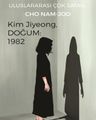
Choo Nam-joo’s novel Palsip Yi Nyeon Saeng Kim Jiyeong (better known in English as Kim Ji-young, Born 1982) is a deceptively simple yet profoundly impactful book. At first glance, it tells the life story of an ordinary Korean woman, Kim Jiyeong, tracing her experiences from childhood through adulthood. But as the narrative unfurls, it becomes clear that Ji-young’s life is far from “ordinary." It is a case study in the cumulative effects of everyday gender inequality.
The writing style is clear and direct, almost documentary-like, often presenting events with a clinical objectivity that makes the reader all the more aware of how “normal” discrimination can feel. We see Jiyeong repeatedly sidelined: in school when boys are prioritized and her concerns are dismissed; in the workplace through unequal pay, limited promotion opportunities, and subtle harassment; and later in domestic life where she is expected to sacrifice her career to become a full-time caregiver. These experiences are not presented as rare injustices, but as the everyday reality for many women, which is precisely the point.
One striking aspect of the novel is how it blends fictional life moments with real statistics and social commentary, sometimes through footnotes or contextual details that extend beyond Jiyeong’s personal story. This approach underlines how pervasive and normalized gender bias is. It’s not just one woman’s tragedy but a representation of structural inequality.
What makes the novel especially powerful is that it builds to something deeper than a recounting of wrongs: it reveals how systemic patriarchy distorts identity and self-worth. Jiyeong’s mental health deteriorates under the weight of internalized misogyny, cultural expectations, and relentless inequity, reminding the reader
Literary Review – Записки сумасшедшего (Diary of a Madman)
Gogol’s Diary of a Madman is one of the most psychologically rich and unsettling works in Russian literature. Written in the form of diary entries, it immerses the reader directly into the mind of its protagonist Aksenty Ivanovich Poprishchin, a low-level civil servant whose inner world gradually becomes detached from reality.
This is not just a story about madness; it is an exploration of loneliness, social hierarchy, humiliation, and the fragile boundary between hope and delusion. Gogol masterfully shifts the narrative tone: what begins as light satire slowly darkens, turning into a deeply emotional and tragic psychological portrait.
Stylistically, the novella demonstrates Gogol’s brilliance in blending absurd humor with piercing social commentary. His language is vivid, his observations precise, and the emotional progression of the protagonist feels disturbingly real. The work remains influential today because it captures universal feelings: wanting to belong, yearning for recognition, being crushed by a rigid society, and escaping into fantasy when reality becomes unbearable.
Summary Without Spoilers
The story is written as a series of diary entries by Poprishchin, a minor government official who feels insignificant and overlooked in the bureaucratic world of St. Petersburg.
At first, he records ordinary frustrations: his tedious job, his longing for the attention of a woman above his social rank, and his resentment toward higher-ranking officials. As time passes, these frustrations deepen.
Poprishchin begins to notice strange things and interprets events in unusual ways. He becomes convinced that signs around him carry special meaning. His diary entries grow increasingly fragmented, emotional, and

Reklam
Reklam