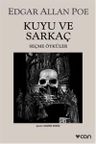
The book consists of 13 stories in total. I have commented on all the stories below.
1) MS. Found in a Bottle:
"MS. Found in a Bottle" by Edgar Allan Poe is a classic example of his mastery in the Gothic and macabre. The story is presented as a narrative from an unnamed protagonist who, along with others, finds himself aboard a mysterious ship caught in a relentless, enigmatic whirlpool.
Poe's writing in this story is marked by its atmospheric and suspenseful qualities. The reader is drawn into the eerie and claustrophobic world of the ship, which seems to defy the laws of nature and logic. As the narrative unfolds, the tension escalates, leaving the reader with a sense of impending doom.
What stands out in "MS. Found in a Bottle" is Poe's ability to create an atmosphere of dread and the unknown. The narrative keeps you on edge, wondering about the fate of the protagonist and the true nature of the ship. It's a fine example of Poe's ability to blur the line between reality and the supernatural, making it a compelling and unsettling read.
Overall, "MS. Found in a Bottle" is a must-read for fans of Edgar Allan Poe's work and those who appreciate tales of mystery and the uncanny. It showcases Poe's skill in weaving a chilling narrative that leaves a lasting impression, making it a significant contribution to the world of Gothic literature.
2) The Gold Bug:
"The Gold-Bug" by Edgar Allan Poe is a captivating and enigmatic short story that combines elements of adventure, cryptography, and treasure hunting. The narrative follows the unnamed protagonist, William Legrand, who becomes obsessed with deciphering a cryptic message he believes will lead to a hidden treasure.
Poe's writing in "The Gold-Bug" is both intricate and mysterious, creating an atmosphere of intrigue that
THE USE OF NARRATIVE STRUCTURE IN TRISTRAM SHANDYEdebiyat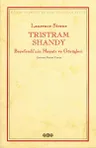

Written 264 years ago by an Anglican preacher, this novel, which subverts narrative conventions and readers' expectations, contains real and fabricated documents such as sermons, excommunication certificates, marriage contracts, various drawings, blank, black or marbled pages, flow charts, sections that have been moved or not written at all, where many of these fictional techniques are used for the first time and skilfully, the most modern of the 18th century novels and one of the earliest examples of postmodern literature before modernism existed. Marx even attempted to write a humorous novel inspired by the book at the age of 19.
The novel is an experiment in narrative form as well as a parody of the traditional 18th century novel. Tristram Shandy is essentially the story of a man called Tristram who is trying to write his own life story, but keeps getting side-tracked and distracted. The unique chronology and remarkable digressive-progressive style of Tristram Shandy are its most conspicuous formal and technical elements. The author narrates the story in a non-chronological manner, with events given out of sequence and even in reverse chronological order at times. The protagonist freely wanders back and forth in time throughout the story. He also digresses so much that story components fade into the background; the novel is filled with long essay-like passages that attract attention to what is happening or, more often than not, to something altogether else. Tristram focuses our attention to the development of his authorial endeavor in the moments when he appears to have traveled the furthest by claiming that his narrative is both divergent and progressive.
The stories of Mr. and Mrs. Shandy, Uncle Toby and Corporal Trim, Uncle Toby and the Widow Wadman, as well as

Hangi tür kitapları seviyorsun?
🔎 Polisiye
💕 Romantik
🚀 Bilim Kurgu
🏰 Fantastik
📖 Klasik
🧠 Kişisel Gelişim
🏛️ Tarih
😱 Gerilim

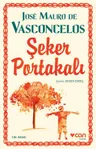
"O Meu Pé de Laranja Lima" by José Mauro de Vasconcelos is a classic coming-of-age novel set in Brazil in the 1920s. The book is written in a simple, yet evocative style and tells the story of a young boy named Zezé who is raised by his grandmother in a small village. The novel explores themes of poverty, family, and the struggle for survival in a harsh and unforgiving environment.
One of the strengths of the book is the way it captures the spirit of the time and place in which it is set. The author does an excellent job of depicting the struggles of rural life in Brazil, and the reader can feel the heat, dust, and poverty of the village through the descriptive writing.
The novel's protagonist, Zezé, is an endearing and relatable character, and the reader can't help but root for him as he faces the many challenges of growing up in a poor and isolated community. The relationship between Zezé and his grandmother is particularly poignant, and their bond is one of the highlights of the book.
Overall, "O Meu Pé de Laranja Lima" is a beautifully written and powerful novel that is sure to leave a lasting impression on its readers. It's a must-read for anyone interested in Brazilian literature, and it is considered a classic of the genre.

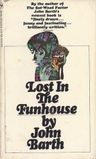
John Barth is the most important postmodernist novelist and his works of art fiction and reality somehow is complicated. It becomes difficult to decide which one is real and which one is fiction. Blurring and uncertainty is so immense that sometimes it is problematic to understand what is happening and what is going on this story. In the story we have suspicions and questions. All the time, nothing is accepted, and we have a sceptical reading. Every concern and everything are sceptical, and we should not forget that the question is very important. Linda Hutcheon talks about self-reflexivity. Do nothing that we are pieces of reality. In fact, we are fictional. They all the time try to make us aware of being fictional. This progress is self-reflexivity of postmodernist works of art. Another word, it shows us through metafiction, through inflectional references, through parody and pastiche.
The author used mostly the techniques of metafiction. The author often comments on the narration and sometimes criticizes creation. While narrating the story, he starts to tell very unusual thing, or he starts to give some certain clues related to the techniques. So, all these things help you understand that be aware. This is not a sort of real thing. Do not get lost in the magical story. The other is playful language. Immitations of the language is one of the problems that postmodernist author criticizes. They try to challenge the limitations through playing with the languages. Pronunciations and the spelling of these words are somehow distorted. It shows “mock “this is the motto of postmodernism. Parody, fragmented narration, open ended closure, intertextual references, and uncertainty are the other concepts or techniques used in the novel. Open ended closure is sometimes subverted