An exceptional man with an extraordinary memory capacityNörobilim

This relatively short book is about an exceptional man with an extraordinary memory capacity. The author introduced him as "a Jewish boy who, having failed as a musician and as a journalist, had become a mnemonist". Whilst the focus of the book is the subject’s "vast memory", what the author eventually depicts is a man whose total personality is truly unique and complex. What emerges is a picture of a strange man with very great expectations but unfulfilled ambitions, whose inexhaustible memory capacity is matched only by his enigmatic nature. Quite fascinating is the author’s forensic and painstaking unraveling of the underlying mechanism behind this man’s phenomenal memory and unusual character (page 4). The book’s comprehensive approach was guided by the author’s precept that ‘the thoughtful physician is never interested merely in the course of a disease he happens to be studying at the moment, but tries to determine what effect a disturbance has on other organic processes…thus giving rise to the total picture of disease (pages 4-5). He exemplified this precept throughout the book, urging others to follow his example and study other psychological syndromes such as this (page 5).
The author, a psychologist and neurologist, studied the protagonist, now known as Solomon Shereshevsky, for almost thirty years, starting in the 1920’s. His approach was methodical, typified by a keen attention to detail, and carried out over a long period of time. What he unearthed was a rare and exceptional man whose memory he described as ‘one of the keenest the literature on the subject has ever described’ (page 3). It didn’t take much testing for the author to realise that "it was impossible to establish a point of limit to the capacity or the duration of his memory" because he had the
Before You Judge me, make sure You are Perfect!Psikoloji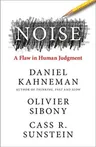

Imagine a world where a patient goes to a clinic and gets prescribed highly addictive opioids because it is the end of the doctor’s long day – or that different sentences are given to people who committed the same crimes because one judge hasn’t had lunch yet.
These are some of the many real-world examples of “noise” that are mentioned in Noise: A Flaw in Human Judgment by renowned psychologist and winner of the 2002 Nobel Prize in Economic Sciences Daniel Kahneman. Noise is the follow-up to his previous book Thinking, Fast and Slow, released in 2011, which brought attention to his work on how cognitive biases shape judgment. In Noise, Kahneman and his co-authors, Oliver Sibony and Cass R. Sunstein, explore the other type of error impacting our judgments: noise.
The book follows the premise that “wherever there is judgment, there is noise – and more of it than you think”. If noise is so prevalent, why is it not widely spoken about? Kahneman notes that noise can only be identified in statistics, making it more difficult to track, which means it tends to go unnoticed and unmentioned.
Noise is broken up into six parts. It begins with the difference between noise (random scatter) and bias (systematic deviations), the nature of human judgment and how to measure accuracy and error. It also goes into predictive judgment, human psychology and the causes of noise, how to improve judgments and prevent error, and what is the right level of noise.
Who knew that important decisions could be swayed by seemingly redundant factors? Such as who spoke first in the meeting, what day of the week it is or whether the local football team won last night’s match. Many different types of noise are discussed in the book, but the most significant one, Kahneman says, is system noise. System

📚🔔 Tatil zili çaldı!
Bir yıl boyunca verilen emeklerin ardından şimdi dinlenme, keşfetme ve yeni maceralara atılma zamanı. 🌞
Bu yaz bol kahkahalı, bol anılı ve elbette bol kitaplı geçsin. Tüm öğrencilere keyifli tatiller diliyoruz! 💙📖

Review 03/05/22: rtc, happy pub day!!
*****
04/05/22:
Thank you NetGalley for giving me this ARC in exchange for an honest review.
Get ready for a google docs rant review kids, this is going to be a bumpy ride.
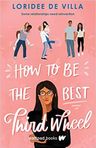
Never thought my rating of a book could change so much throughout reading it until I read this one, How To Be The Best Third-Wheel. AKA another reason why you shouldn’t judge a book by its cover (because sometimes books with pretty covers turn out to be boring and a waste of your time!). I picked up HTBTBTW, thinking that I would read a fun rom-com about third wheeling and it delivered that, and it delivered even MORE of that and not in a good way. This book was so unnecessarily long, that I just couldn’t stand it anymore and started skimming the last 100 pages. Though, I must say, it did have a great dedication:
“To my love life- thank you for being so nonexistent that I had to write this.”
This book is about Lara Dela Cruz (what even is that name-) going on a vacation to the Philippines and returning back to school only to find out that all of the members of her girl gang have boyfriends now. Instead of being a normal person and a good friend, she treats them like shit for having boyfriends (????) and then plays the victim. I had an unpleasant experience with those kinds of people, so it was quite fun to read about (ironically I requested the book because I was third wheeling at school after my friend had a new boyfriend)!!!!! I just wanted to hit her with the back of the thickest book I own in my bookshelf. I know that it sounds malicious and weird but I really, really hated her. She was just this selfish, whiny and ungrateful 16 year-old who was not even close to being mature (or even pretending to be mature, for heaven’s sake). I’m not a psychologist

4/5 Stars (%75/100)
I really liked it and I could say some parts of the book actually made me open my eyes to certain situations in my life. The book was recommended to me by the YouTube channel "Kurzgesagt" and I wanted to check it out and see if it could help me or not. I did not have any expectations as I don't really like reading self-help books nor I enjoy them when I do read. I really liked that Winch is very straightforward about how he presents his ideas.
It goes like this: Psychological injury is introduced, how it actually injures you, many examples are given from real life, and finally some tips for treating the injury. The structure is the same for all 7 of these injuries. I highlighted many parts and I will probably come back to the book from time to time. I also plan to use some of these treatments for myself and also for people I care about. Here's a short summary but I would highly suggest you to read it yourself because these cannot be explained in few sentences. Winch did a great job with the treatment sections.
1-Rejection: The Emotional Cuts and Scrapes of Daily Life
Treatments:
-Argue with self-criticism
-Revive your self-worth
-Replenish feelings of social connection
-Desensitize yourself
2-Loneliness: Relationship Muscle Weakens
Treatments:
-Remove your negatively tinted glasses
-Identify your self-defeating behaviors
-Take on the other person's perspective
-Deepen your emotional bonds
-Create opportunities for social connection
-Adopt a best friend
3-Loss and Trauma: Walking on Broken Bones
Treatments:
-Soothe your emotional pain your way
-Recover lost aspects of your self
-Find meaning in tragedy
4-Guilt: The Poison in Our System
Treatments:


Kitabın dili ve biraz da araştırma ödevimle alakalı olduğu için bu inceleme İngilizce olacak, umarım sonrasında güzel bir inceleme daha yazabilirim, tabi ki Türkçe olarak... Ilgilisine ve meraklısına güzel ve açıklayıcı bir özet şeklinde bir inceleme olduğunu düşünüyorum. (Özet derken... Sanırım o kadar da özet değil. :’) )
Şunu da belirtmek istiyorum yine de, bu kitabı okurken o sıralarda hayatın anlamıyla ilgili araştırma yapan ve rapor yazacak bir arkadaşım vardı. Ama yazdıkları intihar, düşüncesi ve buna meyiili (suicidal) insanlardan oluşuyordu nerdeyse. Aslında kitabın başında, ön sözde Frankl'ın “Neden intihar etmiyorsunuz?” sorusu yer alır. Bu da zaten anlam arayışında ilk basamaklardan birinde olduğumuzun, aslında verdiğimiz cevaplarla da bir kapıyı araladığımızın, hatta bazen ardına kadar açabildiğimizin farkına varmamız içindir. Anlam ve ölümün işte bu kadar yakın, bu kadar iç içe olduğunu hissettirmişti bu da bana. Bu incelemeyi o arkadaşım için yapmak istemiştim.
MAN'S SEARCH FOR MEANING
Man's search for meaning was written by psychiatrist and neurologist Victor E. Frankl (1905-1997). It was first published in German in 1946 just one year after the end of World War II. The book consists of two parts and a postscript, the first part is "Experiences in a Concentration Camp" which is autobigraphical, a story of author's life. His observations and experiences of the Holocaust, while he was in Auschwitz. The second part which is the part that includes one of Frankl's theory "Lagotheraphy in a Nutshell". What is Lagotheraphy and what its diffrences from psychoanalysis? And the postscript's name is "The Case for a Tragic Optimism".
In the first part, Frankl mentioned about three stages that for people who are in the camp process. These are the period