Acı çekmek bir tercih meselesidirKişisel gelişim - Edebiyat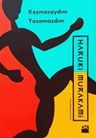

Hayatta her birimiz bir şeyleri başarmak için mücadele içindeyiz. Ya buna katlanır devam edersin ya da pes edersin. Yazarın da söylediği gibi 𝐚𝐜𝛊 𝐜̧𝐞𝐤𝐦𝐞𝐤 𝐛𝐢𝐫 𝐭𝐞𝐫𝐜𝐢𝐡 𝐦𝐞𝐬𝐞𝐥𝐞𝐬𝐢𝐝𝐢𝐫.
1980'lerden bu yana egzersiz sloganı olarak kullanılan "ℕ𝕠 𝕡𝕒𝕚𝕟, 𝕟𝕠 𝕘𝕒𝕚𝕟." mottosunu sadece egzersizde değil aynı zamanda hayatta başarıyı yakalamak istiyorsanız her konuda bunu uygulayabilirsiniz. Kendinizi zorlamadan acıyı, mücadeleyi seçmeden bir şey elde edemezsiniz. Hedeflerinizi ciddiye alıp çok profesyonel yaklaşmanız gerekmektedir. İşte bu noktada yazarın tam olarak yaptığı budur. Tek farkı severek yapmasıdır. Sevmediğiniz, keyif almadığınız bir şeyi rutininize uzun süre dahil edemezsiniz.
Yazar koşmaya başlamadan önce üniversiteden sonra caz bar tarzı bir yer işletmeye başlar. Sabahtan gece yarılarına kadar çalışıyor bir de üstüne o yorgunlukla yılmadan1-1.5 saat yazma eylemini sürdürmeye çalışıyordu. Ama eserlerinde tam odaklı bir yazma olmadığı kanısındaydı. Tam bu noktada yazarlığı profesyonel boyuta taşımak için barı tüm haklarıyla devretmeyi düşündü ve uyguladı. Çünkü onun karakterinde tek işe odaklanıp sınırlarını zorlamak vardır. Bu yüzden kırsal bir alana taşındı. Normalde bar işletirken geç saatlerde uyanıp yatma alışkanlığı kazandığı yaşam döngüsünü kökten değiştirip eşinin de bunu desteklemesiyle her gün 22.00'dan önce uyuma ve 05.00'ten önce uyanma rutinini hayatına ekler ve bunun sonucunda gece hayatı bitse de insan ilişkilerinde gerileme yaşasa da bundan memnundur çünkü insanın zamanını düzenleyip neye odaklanacağını seçmesi insanın bir şeyleri başarabilmesi için bir hayat koşuludur. Zaman bize verilmiş sınırlı ve geri dönüşü olmayan bir hediyedir. Kullanmazsan geçip gider ve tekrar eline alman mümkün değildir. Yazar bu rutini hayatına koymasıyla zamanı daha verimli

The Fatal Eggs is a science-fiction novella by Mikhail Bulgakov, a Soviet novelist and playwright whose most famous work is The Master and Margarita. It was written in 1924 and first published in 1925. The book became quite popular, but was much criticized by some Soviet critics as a satire of the Russian Revolution of 1917 and the leadership of Soviet Russia.
The Fatal Eggs can be described as a science fiction novel. Its main protagonist is an aging zoologist, Vladimir Ipat'evich Persikov, a specialist in amphibians. The narration begins in Moscow of 1928, which seems to have overcome the destructive effects of the Russian Civil War and is quite prosperous. After a long period of degradation, research at the Zoological Institute has revived. After leaving his microscope for several hours, Persikov suddenly noticed that the out-of-focus microscope produced a ray of red light; amoeba left under that light showed an impossibly increased rate of binary fission, reproducing at enormous speeds and demonstrating unusual aggression.
Later experiments with large cameras, to produce a larger ray, confirmed that the same increased speed of reproduction applied to other organisms, such as frogs, which evolved and produced a next generation within two days. Persikov's invention quickly becomes known to journalists, and eventually to foreign spies and to the GPU, the Soviet secret service. At the same time, the country is affected by an unknown disease in domesticated poultry, which results in a complete extinction of all chickens in the Soviet Russia, with the plague stopping at the borders of the country.
A sovkhoz manager Aleksandr Semenovich Rokk (whose name is also a pun on the novel's title, Rok meaning fate) receives an official permission to confiscate Persikov's


Bu yaz yanınızdan ayırmak istemeyeceğiniz kitapları sizin için bir araya getirdik.
💬 Siz olsanız bu listeden hangisiyle başlardınız?
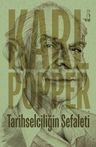
In this little book, Karl Popper worked out his earlier thoughts on the phenomenon of - what he called - historicism. This book was initially written in 1935 and revised multiple times before Popper published the final edition in 1957. In the meanwhile, Popper published his magnum opus, The Open Society and Its Enemies (1944), in which he describes the origins of the idea of historicist philosophy - he traces it back to Plato, and via Aristotle and Hegel to Marx.
I had already read The Open Society and Its Enemies and was curious if The Poverty of Historicism had to offer any new insights. And I can recommend reading this prequel to The Open Society to anyone! Popper is one of the clearest philosophers ever - he has the amazing gift of explaining the most abstract and dry material (e.g. logic) in a clear and concise way. Compare this to such bombastic philosophers like Hegel, Nietzsche, and Kant and you will never want to read continental philosophers anymore!
So what is this book exactly? The Poverty of Historicism is Popper's logical refutation of historicism. Historicism is the idea - very old, incidentally - that the philosopher can study history to find historical laws. By using these historical laws, the philosopher of history is able to not only understand the evolution of history but also - and more importantly - to make prophetical predictions about the future. This has to be clarified though since it is easy to misunderstand this position.
The historicist claims that history evolves according to laws of progress; history knows different stages and each stage has its own guiding laws. The laws of one stage aren't applicable in the preceding or following historical periods. The historicist, living in a particular historical period, is, therefore, by

/The Aspect of Phenomenology for Every Character/
Shakespeare is the most famous playwright and poet and Hamlet was masterfully written by him in the golden era of Elizabethan theatre. The play begins with the murder of Hamlet’s father. Throughout the play, the main purpose of characters is to revenge each other. Meanwhile, we can observe the thoughts and behaviour of the characters.
First of all, we can analyze the behaviours of his family and his relatives after Hamlet’s father is killed by Claudius. Hamlet is the one who deeply feels the sorrow of his death and even therefore he doesn’t like Denmark. We can clearly understand his thoughts in this quotation:“nor customary suits of solemn black, nor windy suspiration of forced breath, no nor the fruitful river I the eye, nor the dejected havior of the visage, together with all forms, moods, shapes of grief that can denote me truly: these indeed seem.” In addition, Queen Gertrude, Hamlet’s mother, is sad of the death of her husband, but she is not so deeply affected. In this quotation, she tells her son that “Thou know’st tis common; all that lives must die, passing trough nature to eternity.” Moreover, Claudius who is King of Denmark is the murderer of Hamlet’s father. He pretends to be upset because nobody knows he is the killer of his brother. He wears a mask and he says that death is normal and that being in too much sorrow is coming against God.
Secondly, we can discuss the relationship between Hamlet and Ophelia who is the daughter of Polonius because everyone has different thoughts about them. They love each other and start spending time together. However, her father and brother worry about her youth and age so they warn about their relationship. Throughout the play, Hamlet thinks his father’s ghost and makes
