
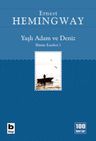
The Old Man and the Sea by Ernest Hemingway tells a story that feels simple at first, almost like something you could explain in a few sentences. An old fisherman goes out to sea, catches a great fish, and loses it on the way back. But as the story unfolds, it becomes clear that this is not really a story about fishing at all. It is about endurance, dignity, and what it means to struggle in a world that does not always reward effort.
The novella centers on Santiago, an old Cuban fisherman who has gone eighty-four days without catching a fish. In his village, he is seen as unlucky, even defeated. Only a young boy, Manolin, continues to believe in him, although he is no longer allowed to fish with Santiago. This quiet isolation shapes the emotional atmosphere of the story. Santiago is not just physically alone at sea; he is also set apart from the people around him, living on the edge of relevance.
When he finally sets out far into the Gulf Stream, determined to break his unlucky streak, he hooks a giant marlin. What follows is a long, exhausting struggle that lasts for days. The fish pulls his small boat deep into the open sea, and Santiago, despite his age and pain, refuses to give up. What is striking here is not just the physical challenge, but the way Santiago thinks about the fish. He does not hate it. He respects it, admires it, even feels a kind of kinship with it. At times, he speaks to it as if it were an equal. This changes the nature of the conflict. It is not a simple battle between man and nature, but something more complex, almost like a test of worth between two noble beings.
When Santiago finally kills the marlin, it feels like a moment of triumph, but that triumph does not last. Sharks are drawn to the blood of the fish and begin to attack it.
In Ward No. 6, Anton Chekhov constructs a quiet but devastating meditation on suffering, indifference, and the fragile boundary between sanity and madness. Set in a decaying provincial hospital, the story revolves around Dr. Andrey Yefimych Ragin, a man who has retreated into intellectual detachment as a way of coping with the bleakness of life. The hospital itself, neglected and almost forgotten, becomes more than a setting; it functions as a symbol of a broader social and moral decay, where suffering is not only present but systematically ignored.
At the center of the narrative lies a philosophical tension that gradually unfolds through the doctor’s encounters with the patient Ivan Dmitrich Gromov. Ragin subscribes, at least superficially, to a version of Stoicism. Stoicism, originating in ancient Greek philosophy, teaches that individuals should cultivate inner peace by accepting what they cannot control and by remaining indifferent to external pain or pleasure. In its original form, it is a disciplined ethical system aimed at resilience and moral clarity. However, Ragin’s interpretation is hollowed out. What he practices is not active moral strength but passive withdrawal. He convinces himself that suffering is insignificant, that pain is merely a matter of perception, and therefore not worth resisting. This belief allows him to justify his inaction in the face of the hospital’s inhumane conditions.
Gromov, by contrast, embodies a radically different philosophical stance, one that could be described as an existential sensitivity to injustice. He is deeply affected by the possibility of suffering, oppression, and arbitrariness in human life. His anxiety and paranoia are not presented merely as symptoms of illness but as exaggerated responses to real conditions of

Reklam

5/10
2026 1. kitabı
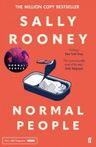
I have just finished the book Normal People by Sally Rooney. Overall, to me, it seemed like a normal book: an enjoyable drama, thrilling and addictive. However, there was still a question: what was I reading about? I think this happened because I had high expectations. But who set them? I think it was because it was everywhere, I mean so many people recommended this book. Even when I opened the front page, famous people's quotes were there, and it was awarded so many times. But to me, it still does not make any sense why it got so many awards.
Who decided that this book is actually "good"? What is even a good or bad book? It is up to people’s preference, no? So, I think to me this was just an average drama.
But what makes this book good to me are the two perfect characters, two normal people. Also, as a side note, maybe the reason I thought this was just an average book is its topic. It was literally about two normal, ordinary people, people we can see at university. There was nothing extraordinary, fancy, or miraculous.
Reviewing the two main characters is a good beginning. I would like to start with Marianne. While I was reading about Marianne, the one thing I agreed with once more is that we accept the love we think we deserve; we accept the behavior we think we deserve. That is why it’s important to have self-love and self-respect. Because if you don't love yourself or respect yourself, you will accept disrespect from others as well. Deep inside, you think you deserve it and feel no need to fight it. She had literally no value towards herself. I believe there are many people like this, but for her, it was at the lowest point.
Connell is a typical person who lives for the acceptance of society. He was so afraid of loneliness that he agreed to fit in anywhere he

This review may contain spoilers.
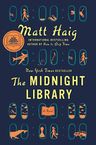
In The Midnight Library by Matt Haig, Nora Seed is the main character, a woman overwhelmed by regret and convinced that her life has little value. After attempting to end her life, she finds herself in a mysterious library that exists between life and death.
There, Nora meets Mrs. Elm, her former school librarian, who explains that each book represents a different life Nora could have lived if she had made different choices. Guided through these alternate lives, Nora experiences the realities of paths she once regretted not taking.
As she lives out these possibilities, Nora realizes that no single version of her life guarantees happiness or fulfillment. Even the lives she once idealized contain struggle and disappointment. Through this journey, she begins to understand the importance of accepting imperfection and appreciating life as it is.
The Midnight Library is a captivating and thought-provoking novel that keeps the reader engaged throughout. It offers a moving reflection on regret, mental health, and the value of living, making it both relatable and impactful.

If you have never read Boris Vian before, please do not start with this book:) The work, which his wife wrote as a gift during the nekahet period and decorated with drawings with his friend, is "debatable" with its literary value and what he wants to tell.
Due to the fact that it is too short, I thought I was missing something, and as soon as I finished it, I returned to it.
Although I liked fantastic narratives, I was unable to both make sense of the work and love it. An absurd fairy tale was tried to be told, but at that time, I think our twenty-three-year-old writer kept it only as a harbinger of his future works.
My humble advice is to say hello to reading Vian with "Foam of Days". Believe me, I rarely experience this situation, I have run out of words about the book:) I didn't get it on my recommendation list.

Spoiler içermez!!!!!·75 syf.·

10/10
2025 94. kitabı
Çok rahat okudum ingilizcesi beni ağlattıysa türkçesi herhalde kalbimi paramparça ederdi diye düşünüyorum :((Negro Mesela ben bu kelimeyi bir futbol maçı olayında duymuştum bunun hakaret olduğunu bilmiyordum burda duyunca üzdü açıkçası. Hikâye kısaca, efendisinin borçları yüzünden köleleri satmasıyla başlıyor ve onların yaşadığı zorlu mücadeleleri anlatıyor.Roman konusu köleliğin acımasızlığından bahsediyor .Ana karakterimiz Tom Amca, iyi kalpli,sabırlı ve dindar bir adam.Tom amca ,köleliğin masumiyeti ve iyiliği sembol ediyor.
Simon Legree ise kötülüğü ve zalimliği temsil ediyor.Eliza karakteri özgürlük arayışını sembol ediyor.küçük kız Eva ise masumiyeti iyiliği sembol ediyor.Roman, insanların vicdanını sorgulatan bir mesaj niteteliğinde .
Yazar, köleliğin insanlık dışı bir sistem olduğunu göstermek istiyor.Kitapta umut ve direniş temaları ön planda .Eser, okuyucuya adalet ve insanlık üzerine önemli düşünceler bırakıyor. Bu normal bizim inceleme türümümüz metin incelemelerinde :) şimdi kendi düşüncelerim :)
Eliza'nın kaçış kısmı çok güzel işlenmişti .İnsanı derinden sarsan bir hikayeydi. O dönemde kölellere karşı tutumlar, kanunlar vs olmasına rağmen vicdanlı insanların da olması bence kitaba kalite kazandırdı. Bir kölenin özgürlük hakkı olmasına rağmen yine de köleliğin gerektirdiği kölelik sistemine uyması bu da çok etkileyiciydi mesela.Beyaz siyah ayrimi : (zenci hakarettir siyahi demek lazim dip not buraya ).Yani sanki film izledim o kadar etkileyiciydi .Tom karakteri ezilen hor görülen ordan oraya sürülen bir çok ölüm gören sonunda da acimasızca işkence gören yine de sadık kalan bu adama aşık oldum :(( neyse spoiler veririm diye korkuyorum .
Bu da ceviriisi :)( ingilizceyi unuttum full yardim aldik .)
I read it so easily, and if the English version made me
Reklam
Reklam