
SPOILER ALERT
Huózhe (To Live) — Yu Hua
Summary
Yu Hua’s Huózhe (活着, To Live) follows the tragic life of Xu Fugui, once a wealthy young man who squanders his fortune gambling and is reduced to poverty. After losing his land and wealth, Fugui is conscripted into the Nationalist army, later captured by the Communists, and finally returns home years later only to find his father dead and his family destitute.
From then on, Fugui’s life becomes a series of losses: his mother dies, his son Youqing is accidentally killed during a blood transfusion intended for a local official’s wife, his daughter Fengxia (mute from childhood illness) dies giving birth, and his wife Jiazhen passes away quietly not long after. Fugui’s son-in-law also dies in a construction accident, leaving Fugui to raise his grandson Kugen, who later dies from overeating sweet potatoes.
By the novel’s end, Fugui lives alone with an old ox named after himself, recounting his story to a wandering narrator. Despite unbearable grief, he endures.
> “人是为了活着本身而活着的,不是为了活着之外的任何事物而活着。”
“People live for the sake of living itself, not for anything beyond that.”
This quote captures the moral essence of the novel, existence as resistance.
Character Focus
Xu Fugui: Once selfish and hedonistic, he becomes a symbol of endurance and humility.
Jiazhen: Embodies patience, forgiveness, and the quiet strength of women during turbulent times.
Youqing & Fengxia: Represent innocence crushed by forces beyond control: politics, fate, or chance.
The Narrator: A detached listener who records Fugui’s oral story, giving it a folkloric and historical weight.
Historical and Political Context
The novel’s backdrop covers four major historical periods in China:

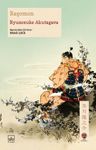
Set in Kyoto during a period of societal decay, Ryūnosuke Akutagawa’s Rashomon explores the desperation of survival in a world unraveling at its seams. The story begins with an unnamed servant, recently dismissed and sheltering from the rain beneath the crumbling Rashomon gate. The gate, once a proud symbol of the city, has become a place of neglect and death, where unclaimed corpses are discarded. Confronted with his dire circumstances, the servant debates abandoning his moral principles to ensure his survival. His thoughts veer towards theft, but he is paralyzed by the weight of his conscience, caught between righteousness and the instinct to live.
The tension escalates when he notices an old woman scavenging hair from corpses beneath the gate. Her act initially horrifies him, and he confronts her in a moment of moral outrage. The woman defends her actions by rationalizing that the dead had been dishonest in life, implying that her actions are merely a continuation of the cycle of deceit and survival. Her reasoning strikes a chord with the servant, who realizes that survival demands ruthless pragmatism. In a shocking reversal, he attacks the old woman, steals her belongings, and disappears into the night, having fully surrendered to the amorality he once resisted.
Akutagawa’s Rashomon delves deeply into the tension between morality and survival, posing difficult questions about human nature. The servant’s transformation from an ethical man to a thief highlights the fragility of moral principles when faced with desperation. The story suggests that morality is not an absolute but a construct shaped by circumstances; in a world devoid of order and stability, self-preservation often takes precedence over virtue. This bleak view of humanity is reinforced by the old
Reklam
Taking The “Home” To The Road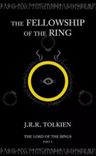

Puan vermedi
Undoubtedly, J.R.R. Tolkien bequeathed a masterpiece to the entire literary world; The Lord of the Rings trilogy. The Fellowship of the Ring is the first book of the Lord of the Rings trilogy, which begins in an inland area in the northwest of Middle Earth that has fallen into oblivion; The Shire. This is the home of the Hobbits who live in peace and tranquility. The Hobbits, are largely sheltered from the goings-on in the rest of Middle-earth. Although they have been living on their own for centuries and cannot tolerate "strange" events, things do not always turn out as expected. One day, the peaceful and quiet life of some Hobbits in the Shire has to change and it is the time to hit the road. The difficulties encountered throughout the journey, the longing that the characters experience from time to time, and the safe warmth of being in The Shire, establish a duality throughout the entire story. Ultimately an unexpected journey begins. And the reader’s adventure too…
With the sudden disappearance of Bilbo Baggins just after his 111th birthday, rumors continued for long days. For the Shire folk, whose own paradise was again their own home, to disappear as Bilbo did, is an unacceptable event. So, in this way, the reader feels the sense of being at home through the Shire at the very beginning of the book. Thereby, The Hobbits' love for their home is emphasized by their unwillingness to leave. But the real breaking point in the story begins when Frodo takes over the ring and becomes aware of the dangers. This also marks the beginning of the journey. Frodo's initial hesitation to embark on the journey reflects the Hobbits' strong affection for their home and unwillingness to leave the comfort of their familiar surroundings. When looking at the words of Frodo, “I should
THE THEME OF MONEY AND SOCIAL NOBILITY IN MOLL FLANDERSEdebiyat

Moll Flanders tells the biography of a woman born in 18th century England from her own point of view. Born in a prison, a prostitute for twelve years, a thief for twelve years, married five times, her adventures taking her from England to America, Moll Flanders is one of the most interesting heroines in English literature with her controversial view of life and her in-depth portrait. Through Moll Flanders' life and philosophy, Daniel Defoe sharply criticises and debates 18th century England's accepted notions of human relationships, gender discrimination, social structure, morality, sexuality and crime. Since its publication in 1722, Moll Flanders has been the subject of much debate and discussion, both in terms of its subject matter and its narrative style. It is not Moll Flanders who is criticised, but society itself. The book is also significant as one of the first examples of the novel genre.
When Defoe wrote Moll Flanders, women had limited freedom and choice. Because men were assumed to be better than women in everyday life, they ruled everything in this society. Upper-class women were expected to marry a socially superior man, keep a home and give birth. Less fortunate women generally had less options, being servants, mistresses, wives or criminals. Being a woman was quite a challenge, especially for lower class women. Moll suffers from poverty, class divisions, materialism, the oppression of women and capitalism as a member of the working class. These problems led her to start stealing and prostituting.
The protagonist, Moll, was born in Newgate Prison when her mother was sent there for theft. After her mother was exiled to America, Moll wandered with gypsies for a few years. She was then taken in and cared for by an elderly nurse. Moll had a strong desire to

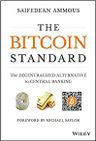
The book can be divided into two parts. In the first part, it discusses the problems emerged by switching from laissez faire economic policies & gold standard to Keynesian economic policies and fiat money. And then only in the second part, starting on page 165 of 270, it moves on talking about Bitcoin.
How bitcoin and blockchain technology works was not explained in detail. Without that technical aspect of bitcoin, the reader can't judge whether bitcoin is the money to replace fiat currencies or not. If you don't have background info on bitcoin, then most probably you will be lost in the second chapter.
This book explains more why we should stay away from fiat money than why we should use bitcoin as fiat Money. Also, it is full of anti-government propaganda. It is kind of naive to go against all central authorities especially given the fact that they all play a crucial role by adding some kind of value (stability, security, directing resources etc.)
The book refutes fiat money much more successfully than supporting bitcoin to replace it. The second part of the book where bitcoin is explained is much weaker. In fact the book only elaborates on pros of the bitcoin.
The book is the one-sided story of money and bitcoin. It does not lay down pros and cons of bitcoin clearly and then express the opinion of the author. Instead, it supports bitcoin biasedly.
İngilizce severler buraya :)Edebiyat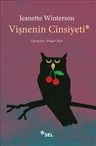

Sexing the Cherry
Postmodernism has become an important part of our life and culture in many ways. Although it is a very common word in today's world, it cannot be expressed as a complete definition. Postmodernism is known for its rebellious approach and willingness to test boundaries. It is an indisputable fact that the word ‘master narrative’ which is so popular among people has collapsed. According to Jean François Lyotard , the postmodern concept is the total expression of a process that includes both changes in material conditions and breaks in the intellectual field. First of all, it is a deep disbelief, or in other words, a radical suspicion.
It is a skepticism of modernity and is concerned with the basic notions of an entire modern project. Lyotard traces and makes sense of this suspicion. In other words, ıt is determined that a dozen concepts related to modernism,called great narrative, such as progress, enlightenment, rationality, freedom, universality are not believable. We can call the new lifestyle that started with this state of doubt postmodernism. Therefore, it is not possible to believe in a single truth, a mere mind, a universal life position and it is impossible to believe that history and progress is a single and universal aspect and to theoretically base it. Undoubtedly, literature is one of the most critical area influenced by postmodernism. One of the most important figures to be categorized as both absurdist and postmodern is Samuel Beckett. A list of postmodern authors often varies; the following are some names of authors often so classified, most of them belonging to the generation born in the interwar period: William Burroughs (1914-1997) Kurt Vonnegut (1922-2007), John Barth (b. 1930), Donald Barthelme (1931-1989), E. L. Doctorow (b.
Reklam