The Vegetarian

The Vegetarian
I have read a most staggering and profound book. I don't want to give spoilers, but I want to mention how this book affected my feelings and my thoughts about society. South Korean author Han Kang writes this book from three different perspectives. She criticizes the traditional and patriarchal society of South Korea.
At the beginning of the book, Yong-hye's husband tells us about his wife. He describes her as an ordinary woman with nothing special about her. One day, Yong-hye has a nightmare and decides never to eat meat again. This causes a major conflict within the family. Her father hits her, and for this reason, she attempts suicide. Later, her brother-in-law takes her to the hospital. Due to the Mongolian spot on Yong-hye’s back, he becomes obsessed with her and sleeps with her. His wife catches them; consequently, both of them are taken to psychiatric clinics.
Yong-hye consistently refuses to eat meat and begins to think of herself as a tree. Her sister feels sorry for her, yet on the other hand, she has been unhappy since her own marriage. Yong-hye believes that eating meat is related to violence. Society, her family, and her husband all want to take control of her life and body. Yong-hye maintains a silent resistance against South Korea's traditional and patriarchal society. At the same time, she wants to transform from an animal into a vegetal entity.
This book is about how people defy societal norms to find freedom. The Vegetarian is not just a book about diet; it is a story that depicts a person's desire to be one with nature.

Jonathan Livingston Seagull by Richard Bach may appear to be a simple story about a bird, but it develops into a layered allegory about individuality, freedom, and spiritual growth. Jonathan, unlike the rest of his flock, is not satisfied with living only to eat and survive. He becomes obsessed with flight not as a tool, but as a way of reaching perfection and understanding something greater about existence itself.
This desire isolates him. The flock, representing conformity and societal limitation, rejects him for refusing to follow its narrow rules. His exile symbolizes the cost of individuality: those who question norms are often cast out. Yet this separation is also what allows Jonathan to grow. Freed from the expectations of others, he pushes himself further and eventually reaches a higher level of existence, where he learns that true perfection is not just physical but spiritual.
Flight becomes the central symbol of the story. It represents self-discovery, discipline, and transcendence. The sky stands for infinite possibility, suggesting that limits are not absolute but largely self-imposed. Jonathan’s journey reflects the pursuit of self-actualization, the idea that fulfillment comes from realizing one’s full potential.
At the same time, the story strongly echoes Biblical patterns, especially those associated with Jesus Christ. Jonathan is rejected by his community, ascends to a higher plane of understanding, and returns as a teacher. He gathers followers and teaches them that they, too, can overcome their limitations. Like Christ, he emphasizes growth, belief, and a deeper understanding of existence.
However, Bach reinterprets these ideas in a more philosophical and less doctrinal way. There is no focus on sin or divine judgment. Instead, the central


Her çiçeğin bir mevsimi, her kitabın bir zamanı vardır. Haziranın tadını yeni hikâyelerle çıkarın.
In Ward No. 6, Anton Chekhov constructs a quiet but devastating meditation on suffering, indifference, and the fragile boundary between sanity and madness. Set in a decaying provincial hospital, the story revolves around Dr. Andrey Yefimych Ragin, a man who has retreated into intellectual detachment as a way of coping with the bleakness of life. The hospital itself, neglected and almost forgotten, becomes more than a setting; it functions as a symbol of a broader social and moral decay, where suffering is not only present but systematically ignored.
At the center of the narrative lies a philosophical tension that gradually unfolds through the doctor’s encounters with the patient Ivan Dmitrich Gromov. Ragin subscribes, at least superficially, to a version of Stoicism. Stoicism, originating in ancient Greek philosophy, teaches that individuals should cultivate inner peace by accepting what they cannot control and by remaining indifferent to external pain or pleasure. In its original form, it is a disciplined ethical system aimed at resilience and moral clarity. However, Ragin’s interpretation is hollowed out. What he practices is not active moral strength but passive withdrawal. He convinces himself that suffering is insignificant, that pain is merely a matter of perception, and therefore not worth resisting. This belief allows him to justify his inaction in the face of the hospital’s inhumane conditions.
Gromov, by contrast, embodies a radically different philosophical stance, one that could be described as an existential sensitivity to injustice. He is deeply affected by the possibility of suffering, oppression, and arbitrariness in human life. His anxiety and paranoia are not presented merely as symptoms of illness but as exaggerated responses to real conditions of


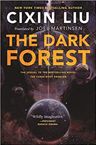
The language is extremely complex, generally it’s okey yet if you are not interested in astronomy you might get lost like me. I put it aside to read it later.
The story makes you curious however if you can’t keep up with the events which is hard based on terminology they used, you lose your interest too
And the terminology is a bit more complicated than the first book. I can’t say I enjoyed it very much.
AnalysisDuygu ve Düşünce

Fistly,I want to express some doubts about the reliability of the narrator, Nick Carraway, who tells the life of the main character, Jay Gatsby, from his own perspective because Nick sometimes praises Gatsby and sometimes expresses critical thoughts about him. This situation shows that the narrator is not completely objective and tells the story according to his own feelings.
Secondly, we see the American Dream theme from the beginning to the end of the story. The American Dream is the belief that no matter which social class people come from, they can become rich and successful through hard work. This thought is Jay Gatsby’s main motivation. His obsessive love for Daisy Buchanan and his hope that she will return to him one day lead him to work harder and do everything he can to become rich. The novel conveys this hope through the symbol of the green light. The green light comes from Daisy’s house, and when Gatsby looks at it, he sees his dreams and hopes. So the green light shows Gatsby’s dreams and the future he wants, and it also shows how unreachable the American Dream can be.
In addition, Jay Gatsby organizes big and flashy parties to prove his wealth and to show it to Daisy Buchanan. However, this situation did not affect either Daisy or the other people. Because society was divided into two parts: “new money” (people who became rich later) and “old money” (people who inherited their wealth). Although Gatsby became rich through his own efforts, he was not appreciated and was even despised by society. Therefore, Daisy did not choose to be with him. This situation shows that for Daisy, social status and wealth were more important than love.
Finally, Jay Gatsby was left alone at the end of his life despite his struggles. Nearly nobody came to his funeral. This
Léon l’Africain is one of those rare historical novels that feels both intimate and epic at the same time. Written as a fictional memoir, the book tells the story of Hasan al-Wazzan, a real historical figure who later became known in Europe as Leo Africanus. He was born in Granada at the time of its fall, traveled across North Africa and the Middle East, was captured by pirates, and eventually lived in Rome. His life alone sounds like fiction but it isn’t.
That’s part of what makes this novel so powerful: it’s based on a real person who truly moved between civilizations during a time of huge political and religious change. Through his eyes, we witness the fall of Muslim Spain, the cultural richness of Fez, the tensions within the Islamic world, and the Renaissance atmosphere of Rome. Instead of presenting history as a dry list of dates and events, Maalouf lets us experience it through emotions, relationships, and personal dilemmas.
The novel explores themes of identity, exile, belonging, and cultural hybridity. Hasan doesn’t fully belong anywhere, not in Granada after its fall, not entirely in Fez, and not even in Rome where he adapts to survive. His shifting identity raises questions that still feel relevant today: Are we defined by religion? By nationality? By language? Or are we something more fluid?
What I really appreciate about this book is how smoothly history is blended into the narrative. You learn about political struggles, trade routes, religious conflicts, and intellectual life almost without noticing that you’re “studying.” If someone doesn’t enjoy reading history books, this novel is a perfect alternative. It teaches history through story. The facts are there, but they’re alive attached to characters you care about.
Maalouf’s writing style is
