
Sanırım hayatımda bu kadar detaylı yazılmış bir İngilizce kitap okuduğumu söyleyemem. Bir noktadan sonra bu kitabın iyi çevrilmiş bir Türkçe versiyonunu okumayı gerçekten çok isterdim, ama sanırım böyle bir çevirisi yok — ya da en azından ben denk gelmedim. Bu kitabı okurken bir an bile küçük bir detayı kaçırırsanız, ne okuduğunuzu unutabiliyorsunuz. Çünkü hiçbir şey göründüğü gibi değil. Her şey düşüncelerden ibaret ve düşünceler her şey olabilir, değil mi? Mutlu bir şarkı sizi iyileştirebilir ya da hüzünlü bir şarkı kırık parçalarınızı onarmanıza yardımcı olabilir.
Okurken hikâyenin nereye varacağını çok merak ettim ve tahmin ettiğim gibi hiç olmadı. Hatta sonu beni gerçekten şaşırttı. Kafamın karıştığı çok fazla yer oldu. Ana diliniz dışında bir dilde kitap okumanın zorluklarından biri de bu sanırım. Ama Raya ve Q’yu karakter olarak gerçekten çok sevdim. Hâlâ sonundan emin değilim. Gerçek miydi, hayal miydi? Mutlu oldular mı? Birbirlerine kavuştular mı? Bence yazar bana bir açıklama borçlu.
İlk başta treni çok sevmiştim ama trenin sırları ortaya çıktıkça, Raya gibi ben de aslında böyle bir trende olmak istemediğimi fark ettim. Ama eğer bir gün denk gelirseniz, bence okuyun. Çünkü sizi oldukça ilginç bir yolculuk bekliyor olacak.
Sözlerimi kitaptaki Raya’nın şarkısıyla bitirmek istiyorum:
Live. Breathe. Be.
---
I don’t think I’ve ever read an English book written with this much detail before. At some point, I really wished I could read a well-translated Turkish version of this book, but I don’t think one exists — or at least I’ve never come across it. While reading, if you miss even the smallest detail for a moment, you suddenly forget what exactly you’re reading. Because nothing is what you think it is. Everything is made of thoughts, and thoughts can become


"But, alas, I had done what I had determined not to do; I had slipped unthinkingly into praise of my own sex." (page: 121)
A Room of One's Own is best understood when we first reflect on what feminism actually represents. Is it merely a demand for equality? Or a rebellion against centuries of imposed roles and limitations placed upon women? Even today, when we read about the historical denial of women’s most basic rights and freedoms, we are still surprised, perhaps because contemporary society presents such a different image of gender roles.
Let us imagine a world in which women were confined solely to domestic responsibilities: raising children, sewing, and managing the household, often forced into marriage and denied access to education. A world in which they had no private space, not even half an hour truly their own. In Woolf’s argument, the absence of such material and intellectual space explains why fewer women emerged as successful writers. Without a room of one’s own, she suggests, a woman is also deprived of an inner world that belongs to her alone. Nothing is truly hers; everything is defined through ownership by men. Even the impulse to resist such conditions is gradually suppressed.
Woolf’s writing carries a clear sense of intellectual rebellion. She questions why women could not live as freely as men, and imagines the creative potential that might have emerged under equal conditions. She also attempts to explain male claims of superiority through psychological and social patterns: insecurity masked as dominance, and the need to define oneself as superior to at least half of society in order to compensate for internal doubt. Meanwhile, women, historically excluded even from libraries and formal education, were denied the very conditions necessary to

Reklam

I don't wanna consume her diary fast. She'll always be w me, behind my mind. She's someone I know, sth that i am... She's a whole life, a whole spirit that belongs at least every girl.


In Ward No. 6, Anton Chekhov constructs a quiet but devastating meditation on suffering, indifference, and the fragile boundary between sanity and madness. Set in a decaying provincial hospital, the story revolves around Dr. Andrey Yefimych Ragin, a man who has retreated into intellectual detachment as a way of coping with the bleakness of life. The hospital itself, neglected and almost forgotten, becomes more than a setting; it functions as a symbol of a broader social and moral decay, where suffering is not only present but systematically ignored.
At the center of the narrative lies a philosophical tension that gradually unfolds through the doctor’s encounters with the patient Ivan Dmitrich Gromov. Ragin subscribes, at least superficially, to a version of Stoicism. Stoicism, originating in ancient Greek philosophy, teaches that individuals should cultivate inner peace by accepting what they cannot control and by remaining indifferent to external pain or pleasure. In its original form, it is a disciplined ethical system aimed at resilience and moral clarity. However, Ragin’s interpretation is hollowed out. What he practices is not active moral strength but passive withdrawal. He convinces himself that suffering is insignificant, that pain is merely a matter of perception, and therefore not worth resisting. This belief allows him to justify his inaction in the face of the hospital’s inhumane conditions.
Gromov, by contrast, embodies a radically different philosophical stance, one that could be described as an existential sensitivity to injustice. He is deeply affected by the possibility of suffering, oppression, and arbitrariness in human life. His anxiety and paranoia are not presented merely as symptoms of illness but as exaggerated responses to real conditions of


okuması inanılmaz zevkliydi 2 günde bitirdim bu gerçekten benim en sevdiğim seri ya yazar o kadar iyi ki. olayların karakterlerin absürtlüğünün yazarın anlatım diliyle desteklenmesi inanılmaz. çok sürükleyiciydi ve ne olacak ne bitecek diye merak ede ede okudum. Yer yer yazarın anlatım tarzına çooook güldüm. hemen devamını okuma için sabırsızlanıyorum bece herkesin en azından bi kitabını okuması gereken bir kitap olduğunu düşünüyorum. Kont olafın bu kitaptaki hali şu ana kadarki least favım olsa da josephine teyze falan çok komikti.
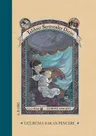
Talihsiz Serüvenler Dizisi 3 - Uçuruma Bakan PencereLemony Snicket · Doğan Egmont Yayıncılık · 2008662 okunma

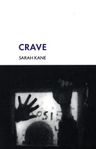
Crave is honestly and really confusing, at least it was for me. There’s no clear story, no proper characters, and it just jumps from one line to another.
At first it feels like you’re missing something, but actually that’s just how it’s written.
It’s more about feelings than meaning. Love, loneliness, obsession… all mixed together in a very messy way.
For me it was the kind of text you don’t fully understand, you just sit, read and try to understand what's going on with it.
Reklam
Reklam