
SPOILER ALERT
Huózhe (To Live) — Yu Hua
Summary
Yu Hua’s Huózhe (活着, To Live) follows the tragic life of Xu Fugui, once a wealthy young man who squanders his fortune gambling and is reduced to poverty. After losing his land and wealth, Fugui is conscripted into the Nationalist army, later captured by the Communists, and finally returns home years later only to find his father dead and his family destitute.
From then on, Fugui’s life becomes a series of losses: his mother dies, his son Youqing is accidentally killed during a blood transfusion intended for a local official’s wife, his daughter Fengxia (mute from childhood illness) dies giving birth, and his wife Jiazhen passes away quietly not long after. Fugui’s son-in-law also dies in a construction accident, leaving Fugui to raise his grandson Kugen, who later dies from overeating sweet potatoes.
By the novel’s end, Fugui lives alone with an old ox named after himself, recounting his story to a wandering narrator. Despite unbearable grief, he endures.
> “人是为了活着本身而活着的,不是为了活着之外的任何事物而活着。”
“People live for the sake of living itself, not for anything beyond that.”
This quote captures the moral essence of the novel, existence as resistance.
Character Focus
Xu Fugui: Once selfish and hedonistic, he becomes a symbol of endurance and humility.
Jiazhen: Embodies patience, forgiveness, and the quiet strength of women during turbulent times.
Youqing & Fengxia: Represent innocence crushed by forces beyond control: politics, fate, or chance.
The Narrator: A detached listener who records Fugui’s oral story, giving it a folkloric and historical weight.
Historical and Political Context
The novel’s backdrop covers four major historical periods in China:


3/5 Stars (%55/100)
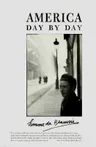
Though I've found the book interesting sometimes, it was difficult to go through because she was heavily inspired by Sartre's ideas. Here's a brief synopsis/analysis:
Simone de Beauvoir visited the US in 1947, the same year Sartre published his own essay, and recorded her experiences in America Day by Day. Because de Beauvoir and Sartre had a rather complicated relationship, their writing style has lots of similarities. For instance, de Beavoir’s book has an existentialist tone which was Sartre’s specialty. She stayed in the US for four months and from her writing, it can be said that she was very much fascinated by the people and American way of life in general. However, similar to Sartre, and perhaps Max Weber, she also talked about the contrasting values of Americans. First few entries are mostly about her fascination with New York and she thinks that the city “belongs to the future” (De Beauvoir 3). She continuously compares New York with Paris and believes that the two “do not exist together” (7). She feels like she is in an entirely different world and finds many things strange.
In her January 26 entry, she compares the day and night life New York and thinks that in time, she will find her place here. The comparison between America and Europe continues as the views the architecture of the city. Here, she calls New York the “city of contrasts” (10) and explains the difference between small alleys with huge skyscrapers. Still, like Max Weber, she is astonished by the city, and the US in general. She continues to meet Americans and some French people and compares their different behaviors. She explains that when she visited other cities, Paris remained in her heart. However, in America, she thinks that she has “landed not only in a foreign

ANALYSIS OF THE GARDEN PARTYEdebiyat

The Garden Party is a short imaginary story by the author Katherine Mansfield, published in 1922. Katherine Mansfield is a very well known modernist writer. Rather than focusing on the plot, this novel emphasises the attitudes, feelings and relationships of individuals, and the author paints a picture of the protagonist's inner world as she examines class issues and ponders the meaning of life and death. This short tale takes place in the beginning of the 1900s, mainly in the garden of the Sheridan house in Wellington, New Zealand, where the author spent her youth. It revolves around a death that occurs in the Saunders Road neighbourhood on the day of a family garden party. At first the family ignore the tragedy, too busy planning the party, but as the plot continues they begin to see the brutal realities of life outside their shell.
The story's themes are class discrimination and the gap between the upper and lower classes. The story also emphasizes the naivety and cluelessness of the upper-class characters in the face of the harsh realities of life. The story also emphasizes the naivety and cluelessness of the upper-class characters in the face of the harsh realities of life. The most outstanding of the themes in this story is class structure. The main point of comparison in the story is the difference between the rich, elite Sheridans and the poor, working-class Scotts. The author uses the theme of class structure to illustrate how one's social class can affect one's views and behaviour. The narrator highlights the privileges and rights enjoyed by the wealthy and the lack of resources and opportunities available to those in lower socio-economic groups to address social injustice and inequality. Another theme in the story is death. In the story, Laura's view of her

7/10
2022 35. kitabı
yanarım yanarım şu kitabı 'vasat' bi çeviriyle okuduğuma yanarım. hatta çeviriyi de geçtim keşke orijnal diliyle okusaymışım. daha sonradan sadece o mektubun orijinalini okuduğumda bile tüm kitaptaki duygu yoğunluğunun milyon kat daha fazlasını yaşadım. her okuduğumda fenalaşırım bi yine, edebiyat budur
"I can listen no longer in silence. I must speak to you by such means as are within my reach. You pierce my soul. I am half agony, half hope. Tell me not that I am too late, that such precious feelings are gone for ever. I offer myself to you again with a heart even more your own than when you almost broke it, eight years and a half ago. Dare not say that man forgets sooner than woman, that his love has an earlier death. I have loved none but you. Unjust I may have been, weak and resentful I have been, but never inconstant. You alone have brought me to Bath. For you alone, I think and plan. Have you not seen this? Can you fail to have understood my wishes? I had not waited even these ten days, could I have read your feelings, as I think you must have penetrated mine. I can hardly write. I am every instant hearing something which overpowers me. You sink your voice, but I can distinguish the tones of that voice when they would be lost on others. Too good, too excellent creature! You do us justice, indeed. You do believe that there is true attachment and constancy among men. Believe it to be most fervent, most undeviating, in F. W.
I must go, uncertain of my fate; but I shall return hither, or follow your party, as soon as possible. A word, a look, will be enough to decide whether I enter your father's house this evening or never."


In the analysis, Freud found that there are many similarities between the psychology of patients in mental hospitals and the psychology of primitive people. Therefore, in order to facilitate readers' understanding, the author uses the thinking logic of mental patients as a reference object to explain the thinking logic of primitive people. , such as ambivalence. Ambivalent emotions refer to the two contradictory emotions that primitive people treat totems and mental patients treat something. This emotion, I think, has some similarities with Weber's ideal type, that is, usually everyone's behavior is mixed with two or more emotion types, but the proportion of them is different. But Freud's "ambivalence" focuses on emotional transformation. That is to say, from the beginning of the party to a certain emotion, the party's attitude towards the same object is dominated by another emotion after a certain event, but the ideal type is more the main emotional content of the party in a certain situation.


İngilizce bir hikaye kitabı: The Face On The Screen and The Other Stories
Çeşitli hikayelerden oluşan ve Longman'in imzasını taşıyan, yalın dile sahip bu hikayeleri okumaktan zevk aldım. Normalde, İngilizce'yi geliştirmek için yazılan kitaplarda üsluba ve olumsuz içeriklere dikkat edilir ama bu kitapta öyle bir durum yoktu.
Hikayeleri genel olarak sevdim. Aşağıya tamamen spoilerdan oluşan içeriklerini bırakıyorum :).
(Kitabın türkçe çevirisi bulunmadığı için spoilerlı kısmı İngilizce yazdım. İçeriklerini okur okumaz yazdığım için daha kolay geldi.)
--spoiler--
The Face On The Screen: It is quite different and shocking story. Donald Henderson who is a scientist and professor sees a person's face on the TV screen but the person has died 2 years ago. While the ghost was alive and assistant of him, they spent lots of time together. After this close relationship, David proposed to marry her and it ended with rejection. He can't stand seeing her ghost on TV and desperately prevents himself to see her - with not watching TV-. The story ended with his suicide. REALLY SHOCKING!
Daniel the Painter: At the age of 25, Daniel West was a businessman. By the age of 30, he decided to be a painter. He painted and painted but unfortunately, his pictures were not good. He lost his friends, girlfriend, and luxury home. After having poor life, one night, he drunk a lot and he found a successful picture in the morning. After this situation, he started to be drunk for successful painting, and with this, he gained new friends. While in this situation, at a party, he saw the picture and realized that was his but when he looked down to signature, it was drawn by Daniel Tomkins.
The story is still mysterious to me. I couldn't understand some points however it wasn't boring.
A Far Away
