The Storm Within

There is no sea in this book; there is a human being.
While reading the stories, you don’t see events-you see people’s loneliness, helplessness, and their silent struggle with fate.
At one point in a story, I couldn’t continue reading; I had to put the book down. Because the author doesn’t merely tell - he makes you live it.
Zeyyat Selimoğlu did not write about the sea, but about the storm inside the human soul.
Tragedy of Betrayal Ian McEwan wrote
  Fındık Kabuğu and inspired by #k:1651. The plot begins with an unborn child that the author does not share the gender or name, and it progress by it's surroundings. It is basically a betrayal story. Our carrier, mom, is Trudy Cairncross, Claude as uncle and father John Cairncross. In the beginning of the it is clearly stated that mother has an affair with Claude. They are having sex and planning something. The narrator tries to estimate their plan by listening their conversation in it's mother's womb. Since, sometimes there are different factors around surroundings it is not possible. In first chapters it is clear to see that Trudy is the oppressive character over Claude and John. Just because she is still married with John, Claude does everything that Trudy wants. Also, John, who is a poet, has a emotional character. That is why, he does not want to give up on his love and tries his chance. Our narrator mentions about some of the memories of it's parents. One day John reads poem for Trudy which she hates, but John has intese feelings and every letter of the poem has a meaning for him. This indicates that John still loves his wife yet her doesn't carry the same feelings against her. She always lies to him to stay with his brother Claude. Unlike his brother Claude is someone callous. He doesn't such abilty to write poem. In a chapter John tries his chance to be forgiven by her and stay with his wife like old days but eventually he is rejected one more time. The reason is his brother, Claude, is someone manipulaitve and addicted to sex. After the last rejection everything changes, Claude and Trudy makes sneaky plan to kill John, because he tells them to find another place to live. He dedicated to move into his own house and he comes to the place with differentPostmodern
 Ian McEwan wrote Fındık Kabuğu and inspired by #k:1651. The plot begins with an unborn child that the author does not share the gender or name, and it progress by it's surroundings. It is basically a betrayal story. Our carrier, mom, is Trudy Cairncross, Claude as uncle and father John Cairncross. In the beginning of the it is clearly stated that mother has an affair with Claude. They are having sex and planning something. The narrator tries to estimate their plan by listening their conversation in it's mother's womb. Since, sometimes there are different factors around surroundings it is not possible. In first chapters it is clear to see that Trudy is the oppressive character over Claude and John. Just because she is still married with John, Claude does everything that Trudy wants. Also, John, who is a poet, has a emotional character. That is why, he does not want to give up on his love and tries his chance. Our narrator mentions about some of the memories of it's parents. One day John reads poem for Trudy which she hates, but John has intese feelings and every letter of the poem has a meaning for him. This indicates that John still loves his wife yet her doesn't carry the same feelings against her. She always lies to him to stay with his brother Claude. Unlike his brother Claude is someone callous. He doesn't such abilty to write poem. In a chapter John tries his chance to be forgiven by her and stay with his wife like old days but eventually he is rejected one more time. The reason is his brother, Claude, is someone manipulaitve and addicted to sex. After the last rejection everything changes, Claude and Trudy makes sneaky plan to kill John, because he tells them to find another place to live. He dedicated to move into his own house and he comes to the place with different
Reklam

The book is actually a great study on the human condition. As a french literature student, i analyzed this book, however i don’t have any energy to write all my analysis down here. All i’m going to say is that it has a very pessimistic and dark tone, be prepared for an incredibly dreary and dull reading experience. Yeah, it’s all about the ‘war is absurd’ stuff. The philosophies of existentialism and absurdity; the ideas of anti-colonialism, anti-capitalism, anti-nationalism and nihilism are very prevalent in this book. Personally, i geniunely hated every page of it but i had to read it for a class. I’ll probably never come back to this.


the fact that i didn't hate this makes me think. and i wrote a small essay on the queer story for personal reasons. here it is (spoilers ahead):
There's a story in here about a gay man who commits a murder with his lover and the upbringing of this entire plotline is so interesting that I will try to break it down.
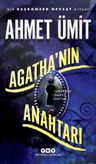
Ahmet Ümit is not at all interested in describing his characters with many details. But when Başkomser Nevzat is introduced to this young man, Yusuf, he mentions his black mustache and burning hazel eyes; before describing him as "a man so beautiful that even the most innocent of women would be tempted by the sight of him."
It feels already weird enough that his main character -a masculine, macho type cop guy who solves murder mysteries- describes an another man's beauty in such delicate details. Even Ali, Başkomser Nevzat's assistant who is also a macho guy that puts in extra effort to look tough (because he's young and still learning), also calls Yusuf "quite handsome" at some point.
Now you might find yourself thinking, "Hm... There might be something queer going on in here." Because that's exactly what Ahmet Ümit wants you to think. But why? Why does this supposed to make you feel like this story is about to take a fishy, not-so-straight turn?
When Ali brings up Yusuf's good-looking nature, it's for a reason. Unlike Başkomser Nevzat who had described him as a beautiful man at the beginning to state a fact; Ali isn't there to state facts, Ali is there to make a point.
As they were interrogating the town-folk, Ali asks a man if there were any women who had tried to seduce Yusuf; because Yusuf's so handsome and all that.
[Since this guy is incredibly hot, women must throw themselves at him—Ahmet Ümit's trying to say. (In these particular stories; we
THE USE OF NARRATIVE STRUCTURE IN TRISTRAM SHANDYEdebiyat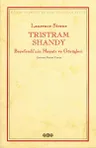

Written 264 years ago by an Anglican preacher, this novel, which subverts narrative conventions and readers' expectations, contains real and fabricated documents such as sermons, excommunication certificates, marriage contracts, various drawings, blank, black or marbled pages, flow charts, sections that have been moved or not written at all, where many of these fictional techniques are used for the first time and skilfully, the most modern of the 18th century novels and one of the earliest examples of postmodern literature before modernism existed. Marx even attempted to write a humorous novel inspired by the book at the age of 19.
The novel is an experiment in narrative form as well as a parody of the traditional 18th century novel. Tristram Shandy is essentially the story of a man called Tristram who is trying to write his own life story, but keeps getting side-tracked and distracted. The unique chronology and remarkable digressive-progressive style of Tristram Shandy are its most conspicuous formal and technical elements. The author narrates the story in a non-chronological manner, with events given out of sequence and even in reverse chronological order at times. The protagonist freely wanders back and forth in time throughout the story. He also digresses so much that story components fade into the background; the novel is filled with long essay-like passages that attract attention to what is happening or, more often than not, to something altogether else. Tristram focuses our attention to the development of his authorial endeavor in the moments when he appears to have traveled the furthest by claiming that his narrative is both divergent and progressive.
The stories of Mr. and Mrs. Shandy, Uncle Toby and Corporal Trim, Uncle Toby and the Widow Wadman, as well as
What’s it about? A guide to identify your strengthsEğitim /Kişisel Gelişim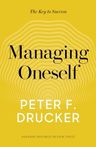

Discover your strengths, and build an action plan.
Take a moment to think about your strengths. Don’t worry if you can’t readily identify them. Most people can’t – and those who think they can are often quite wrong. The reverse is also true: many of us think we know exactly what we’re not good at. But more often than not, we’re wrong about that too!
The good news? There’s a tried and true method you can use to remedy this situation, and it’s called feedback analysis. It first emerged back in the fourteenth century and is a pretty simple technique. Here’s how it works. Each time you make an important decision, write it down along with what you think the outcome will be. Nine to twelve months later, review your predicted result and compare it to the actual outcome.
If you practice this consistently, you’ll not only be able to determine precisely where your strengths lie – you’ll also see exactly what you’re doing, or failing to do, to take full advantage of those strengths. As an additional bonus, you should be able to accurately identify where your performance is poor due to a weakness in any particular area.
There are five key actions that flow from your feedback analysis.
• First, concentrate your efforts on areas where using your strengths will produce results.
• Second, work to improve areas where you already have strengths – and fill any knowledge gaps that come to light.
• Third, don’t be willfully ignorant about subject areas where your knowledge is lacking. Acquire new skills and knowledge to enhance your strengths.
• Fourth, be sure to rectify any bad habits that are revealed through your feedback.
• And finally, recognize areas where you have little or no talent and are unlikely even to become mediocre. There’s no point in wasting your energy
Reklam