zeynep mutlu
@zeymut2
Şubat 2025 tarihinde katıldı


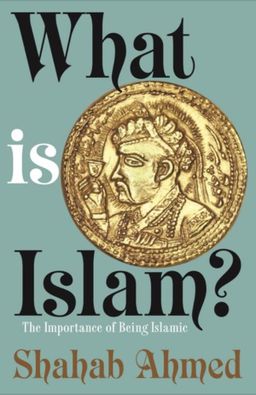




The distinguished author William C. Chittick prefaced his opus with the statement “Those familiar with the histories and literatures of the Islamic peoples know that love . . . is so central to the overall ethos of the religion that if any word can sum up Islamic spirituality—by which I mean the very heart of the Qur’anic message—it should surely be love. I used to think that knowledge deserved this honor and that the Orientalist Franz Rosenthal had it right in the title of his book Knowledge Triumphant. Now I think that love does a better job of conveying the nature of the quest for God that lies at the tradition’s heart.”
Chase F. Robinson, the author of a state- of- the- art monograph, Islamic Historiography, lamented: “Surely I am not the only Islamic historian who, though recoiling at the use of ‘essentializing’ definitions, practices his craft without a clear understanding why the history made by Muslims is conventionally described in religious terms (‘Islamic’) while that of non- Muslims is described in political ones (‘late Roman,’ ‘Byzantine,’ ‘Sasanian’).”
Wilfred Cantwell Smith, observed: “‘Islam’ could perhaps fairly readily be understood if only it had not existed in such abundant actuality, at differing times and in differing areas, in the minds and hearts of differing persons, in the institutions and forms of differing societies, in the evolving of different stages.”
Ijtihad also gave Islamic law one of its unique features. For every
eventuality or case, and for every particular set of facts, there are anywhere
between two and a dozen opinions, if not more, each held by a different
jurist. In other words, there is no single legal stipulation that has monop
oly or exclusivity, unlike the situation that obtains in the modern state.
Islamic law is thus also characterized by legal pluralism, not only because
it acknowledges local custom and takes it into serious account, but also
because it offers an array of opinions on one and the same set of facts. This
pluralism gave Islamic law two of its fundamental features, one being
flexibility and adaptability to different societies and regions, and the
other an ability to change and develop over time, first by opting for
those opinions that have become more suitable than others to a particular
circumstance, and second by creating new opinions when the need arose.
That Islamic law was accused of rigidity by European colonialism to
justify the dismanttling of the Shariʿa system is therefore not only wrong but highly ironic.