
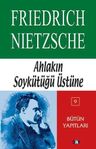
Sanırım, Nietzsche okumalarına başlamak için bu doğru bir kitap değil. Bazı yazarlar eserlerinde -kaçınılmaz, gayri ihtiyari, doğal olarak- kendilerini tekrar ediyor olsa da, ona ait okumuş olduğum bu ilk kitapta, Nietzsche’nin bunların arasında olup olmadığı konusunda bir hüküm vermem mümkün değil.
Önemli olduğunu düşündüğüm konulara yer veren bu eserde, pek de verimli ve keyifli bir okuma deneyimi yaşadığım, kitabın içeriğine yeterince odaklanabildiğim söylenemez. Gerek insanlığın asırlar boyunca kanıksayagelmiş olduğu ahlâkî kabuller üzerine yazarın ezber bozan yaklaşımıyla anlaşılması çok da kolay olmayan bir içeriğin kitapta yer alması, gerekse yazarın muğlak ifadelerle diğer yazar ve felsefecilere nazirelerde bulunması, metni iyice içinden çıkılamaz hale getirmiş. İlk okuduğum kitabında Nietzsche’nin bende bıraktığı ilk izlenim bu oldu. Okuduğum baskı itibariyle, çevirmen ve çevirinin de bu konuda çok da yardımcı olduğunu söyleyemeyeceğim. (Bu görüşümün aksine, çeviriye ve bu kitaba son derece hayran kalmış bir okurun değerlendirmesini okumak isteyenler için bağlantı:
delibasahmet.medium.com/i%CC%87%C5%9Fte...)
Bu nedenle, müteakip/muhtemel Nietzsche okumalarında kendime ve diğer okuyuculara yardımcı olacağı ümidiyle, kitabın incelemesini web üzerinde yaptığım araştırmalarla desteklemeyi daha uygun buldum.
***********************
Kitap üç ana bölümden oluşmakta:
I. Hayır ve Şer, İyi ve Kötü
II. Suç, Kara Vicdan ve Benzerleri
III. Çileci İdeallerin Anlamı
***********************
BİRİNCİ BÖLÜM
Nietzsche, ilk bölümde “efendi ahlâkı” ve “köle ahlâkı” şeklinde bir ahlâk sınıflandırması yapar. Buna göre:
Efendi ahlakı; soyluların,
An exceptional man with an extraordinary memory capacityNörobilim

This relatively short book is about an exceptional man with an extraordinary memory capacity. The author introduced him as "a Jewish boy who, having failed as a musician and as a journalist, had become a mnemonist". Whilst the focus of the book is the subject’s "vast memory", what the author eventually depicts is a man whose total personality is truly unique and complex. What emerges is a picture of a strange man with very great expectations but unfulfilled ambitions, whose inexhaustible memory capacity is matched only by his enigmatic nature. Quite fascinating is the author’s forensic and painstaking unraveling of the underlying mechanism behind this man’s phenomenal memory and unusual character (page 4). The book’s comprehensive approach was guided by the author’s precept that ‘the thoughtful physician is never interested merely in the course of a disease he happens to be studying at the moment, but tries to determine what effect a disturbance has on other organic processes…thus giving rise to the total picture of disease (pages 4-5). He exemplified this precept throughout the book, urging others to follow his example and study other psychological syndromes such as this (page 5).
The author, a psychologist and neurologist, studied the protagonist, now known as Solomon Shereshevsky, for almost thirty years, starting in the 1920’s. His approach was methodical, typified by a keen attention to detail, and carried out over a long period of time. What he unearthed was a rare and exceptional man whose memory he described as ‘one of the keenest the literature on the subject has ever described’ (page 3). It didn’t take much testing for the author to realise that "it was impossible to establish a point of limit to the capacity or the duration of his memory" because he had the

Her çiçeğin bir mevsimi, her kitabın bir zamanı vardır. Haziranın tadını yeni hikâyelerle çıkarın.

It sounds strange however contrary to popular belief, rate of all kind of violence, death toles in wars, homicide rates, beating of children and woman, cruelity to animals and goes so on, declines throughout history. In this book, Steven Pinker uses a lot of numerical data and scientific research, papers to demonstrate that fact.
The book consists of 10 sections. The first six sections are about history and history of violence. We see a lot of data about that violence is really declined course of history. Also, Pinker explains political theories and ideas that influenced the revolutions that declined violence.
Sections 7 to 9 are about the psychology of violence and passivism. We see the affective neuroscience theory of the brain created by  Jaak Panksepp (
  Afektif Nörobilim ). This is the part that is related to our nature. We see brain systems related to violence and how to affect or suppress them. Also, as an evolutionary psychologist, Pinker explains some nature-nurture facts about the psychology of violence.
It's a really big book (For me, it took 2 big months of tons of reading) about the subject. Although books' length, Pinker is very successful in writing clear and incredibly fluent texts.
Unfortunately, I can not mention the content of the book here. I have dozens of pages of notes for this book. If someone curious about it can send me a private message to get them :).
Afektif Nörobilim ). This is the part that is related to our nature. We see brain systems related to violence and how to affect or suppress them. Also, as an evolutionary psychologist, Pinker explains some nature-nurture facts about the psychology of violence.
It's a really big book (For me, it took 2 big months of tons of reading) about the subject. Although books' length, Pinker is very successful in writing clear and incredibly fluent texts.
Unfortunately, I can not mention the content of the book here. I have dozens of pages of notes for this book. If someone curious about it can send me a private message to get them :).
Jaak Panksepp ( Afektif Nörobilim ). This is the part that is related to our nature. We see brain systems related to violence and how to affect or suppress them. Also, as an evolutionary psychologist, Pinker explains some nature-nurture facts about the psychology of violence.
It's a really big book (For me, it took 2 big months of tons of reading) about the subject. Although books' length, Pinker is very successful in writing clear and incredibly fluent texts.
Unfortunately, I can not mention the content of the book here. I have dozens of pages of notes for this book. If someone curious about it can send me a private message to get them :).
Before You Judge me, make sure You are Perfect!Psikoloji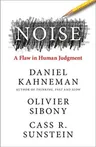

Imagine a world where a patient goes to a clinic and gets prescribed highly addictive opioids because it is the end of the doctor’s long day – or that different sentences are given to people who committed the same crimes because one judge hasn’t had lunch yet.
These are some of the many real-world examples of “noise” that are mentioned in Noise: A Flaw in Human Judgment by renowned psychologist and winner of the 2002 Nobel Prize in Economic Sciences Daniel Kahneman. Noise is the follow-up to his previous book Thinking, Fast and Slow, released in 2011, which brought attention to his work on how cognitive biases shape judgment. In Noise, Kahneman and his co-authors, Oliver Sibony and Cass R. Sunstein, explore the other type of error impacting our judgments: noise.
The book follows the premise that “wherever there is judgment, there is noise – and more of it than you think”. If noise is so prevalent, why is it not widely spoken about? Kahneman notes that noise can only be identified in statistics, making it more difficult to track, which means it tends to go unnoticed and unmentioned.
Noise is broken up into six parts. It begins with the difference between noise (random scatter) and bias (systematic deviations), the nature of human judgment and how to measure accuracy and error. It also goes into predictive judgment, human psychology and the causes of noise, how to improve judgments and prevent error, and what is the right level of noise.
Who knew that important decisions could be swayed by seemingly redundant factors? Such as who spoke first in the meeting, what day of the week it is or whether the local football team won last night’s match. Many different types of noise are discussed in the book, but the most significant one, Kahneman says, is system noise. System

"Irkçılık, kalıtsal hastalık, dejenerasyon ve yok oluş arasında ezelden beri süregelen bir mücadeledir. Aynı zamanda daha iyi yaşam standartlarına sahip, daha sağlıklı bir toplum isteğidir. Irkların birbirine karıştırılması, çift taraflı bir soykırımdır. Küçük bir böceğin neslini sürdürmek adına gen bankalarının kurulduğu bir dünyada, gelişmesi asırlar süren insan ırklarının karıştırılması ve yok edilmesi genel anlamda kabul görmektedir. American Psychologist dergisinde, 1972 yılında yayımlanan bir makalede Amerikalı ve Avrupalı bilim adamlarından oluşan elli kişilik bir kurulun kalıtım teorisi üzerine sürdürülen tartışmaların bastırılmaması konusunda yaptıkları uyarılara yer verilmiştir."
Kendini İyileştirme İşi Nasıl Yapılır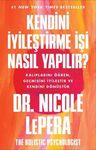

Yazar “@the.holistic.psychologist” hesabının sahibi Dr. Nicole LePera.
Kitapta yazar kalıcı bir değişim yaratmak için kişiyi kendi gücünü kontrol altına alıp kullanmaya yöneltmeyi amaçlıyor.
Kendisi de bir klinik psikolog olan Dr. Nicole LePera kitap boyunca kendi sorunlarından ve bunlari nasıl aştığından bahsediyor. Kendisinin ve hastalarının geleneksel psikoterapinin kısıtlamaları yüzünden nasil sık sık hayal kırıklığına uğradığını belirtiyor.
Ve iyileşme yolculuğunda birleşik bir zihinsel, fiziksel ve ruhsal iyilik halinden bahsediyor. Beslenmeden uyku düzenine, çocukluk travmalarindan meditasyon, nefes egzersizleri ve spora kadar hemen her şeye değiniyor. Yani iyileşme işine bütünsel yaklaşıyor.
Hepimiz dönem dönem iyileşmek için farklı uygulamaları deneyimliyoruz ama butunsel olmak o kadar kolay olmuyor. Bu kitap bunun için güzel bir rehber niteliğinde. Bölüm sonlarında alıstırmalar var.
Ben kitabi okumayıp dinlediğim için istediğim verimi alamıyorum, alıştırmaları yapamıyorum yani kitabi okumaya karar verirseniz dinlemek yerine fiziki olarak edinmek daha iyi bir seçim olabilir.
Çeşitli sebeplerden ötürü psikolog ya da terapiye ulaşmamız her daim mümkün degil. Bu kitap bu anlamda size yardımcı olabilir kendinize bir yol haritası çizebilirsiniz. Ya da terapistiniz ile konuşarak yardımcı olarak okuyabilirsiniz.
Ben henüz bitirmedim ama sona yaklaştım. Bana göre okunması zor bir kitap çünkü bahsedilen travmalardan dolayı tetiklenmeler yaşıyorum. Yazarın yönlendirmesi ve soruları ile sık sık geçmişi tarıyor ve kendinize önemli birtakım sorular soruyorsunuz.
Okudum bitirdim kitaplardan değil de bir başucu kitabı niteliğinde. Bahsedilen iyileşme metotlarıni birden bire değil de yavaş yavaş hayatınıza dahil edebilir olumsuz alışkanlıklarinizi bu şekilde