
I. INTRODUCTION: THE PURPOSE OF THE NOVEL
Tess of the d’Urbervilles is Thomas Hardy’s most powerful and controversial novel, written as a direct challenge to Victorian moral, religious, and sexual values. Through the life of Tess Durbeyfield, a poor rural woman, Hardy exposes the cruelty of a society that equates female worth with sexual “purity,” excuses male transgression, and disguises injustice as moral order.
Hardy does not present Tess as a fallen woman seeking redemption. Instead, he presents her as morally pure from beginning to end, and argues that the true corruption lies not in Tess, but in the social systems that destroy her.
II. DETAILED SUMMARY (WITH SPOILERS)
1. Origins and the Weight of Ancestry
Tess Durbeyfield is the eldest daughter of a poor rural family in Wessex. Her life changes when her father learns that they may be descended from the ancient aristocratic d’Urberville family. This discovery fills her parents with ambition and false hope, while Tess herself feels unease rather than pride.
When Tess accidentally causes the death of the family’s horse, Prince—their sole means of livelihood—she feels intense guilt and responsibility. This event, driven by chance rather than moral fault, sets the tragic pattern of her life: random misfortune followed by self-blame.
To help her family recover financially, Tess is sent to seek help from the wealthy d’Urbervilles—unaware that they are not true aristocrats, but merely have purchased the name.
2. Alec d’Urberville and Sexual Violation
At Trantridge, Tess meets Alec d’Urberville, a manipulative and predatory man who immediately fixates on her. Despite Tess’s repeated resistance and discomfort, Alec pursues her relentlessly.
The pivotal event of the novel occurs when Alec sexually violates Tess in

Atomic HabitsPiskoloji

As Mr Clear said this book teaches us about how to build new habits, how to keep them stable, what are the tiny steps we can do to become the person we are seeking for, how to talk to ourselves in order to believe in ourselves...
Each chapter starts with real examples of the people who have been in that situation related to the topic of each chapter.
I personally enjoyed this book because I have been trying to use Mr. Clear's insights
He mentions "It's remarkable the knowledge you can build if you don't stop learning."
"Disciplined" people are better at structuring their lives in a way that does not require heroic willpower and self-control"
For instance, he suggests leaving your phone in a different room until lunch, which is something I have started doing as well.
Additionally, he notes, "We are more likely to repeat the behavior when the experience is satisfying."
The most important takeaway for me as a reader is to utilize the knowledge I've gained, share it with others, and teach it to those around me. I always start with my family and partner, and I find that when I do, I reinforce my own understanding even more. So, dear reader, I encourage you to start this magical book and believe in its wisdom!
 James Clear
  Atomic Habits
James Clear Atomic Habits
0-30p: Kontrollü okuyucu 📖
40-70p: Hafif bağımlı 👀
80p+: Geçmiş olsun, kitaplar seni ele geçirmiş 😅
Blindness – A Psychological and Social Analysis of a Moral Allegory
José Saramago’s Blindness is not merely a tale of disaster; it is a profound psychological and sociological examination of the dark corners of human nature. The sudden onset of blindness in one man, followed by a rapid and contagious epidemic, affects not just individuals but the very fabric of society. This loss is not merely physical—it symbolizes the collapse of moral values and social norms.
Throughout the novel, characters are not referred to by names but by descriptors: the doctor, the doctor’s wife, the first blind man, and so on. This narrative choice emphasizes the stripping away of identity and individuality, turning each character into a faceless part of a collective mass. In terms of social psychology, this is a direct reference to the concept of deindividuation—a state where individuals lose their self-awareness and moral compass in group settings. Without names, the characters are deprived of personal identity, and as a result, they begin to behave in ways that defy their former ethical standards.
This psychological erosion becomes most apparent in the mental hospital where the blind are quarantined. A new power hierarchy forms, and a small group dominates the rest through control of food, coercion, and even sexual violence. This descent into cruelty mirrors the findings of Philip Zimbardo’s Stanford Prison Experiment, in which participants assigned the role of guards rapidly became abusive. Similarly, in the novel, individuals who acquire power abandon empathy and embrace authoritarianism.
The novel also reflects the disturbing ease with which people obey authority without questioning its legitimacy—a central theme in Stanley Milgram’s obedience experiments. In Blindness, many

Spirit of CapitalismSosyoloji

> "It was the power of religious influence, not alone, but more than anything else, which created the differences of which we are conscious to-day”
Max Weber saw reformation as a new form of religion control, not elimination of Church’s ones. His aim focused on finding intimate relationship between asceticism and capitalism.
He emphasized that commercial and social interests determine opinions and altitudes of people. In today's world, person should make adapted his manner of life to conditions of capitalistic success.
“The capitalistic economy of the present day is an immense cosmos into which the individual is born, and which presents itself to him, at least as an individual, as an unalterable order of things in which he must live”
As he said: “Spirit of capitalism might be understandable, as has been said, purely as a result of adaptation”
For to discover ideal type of person who owns spirit of capitalism use Franklin.
He gets nothing out of his wealth for himself, except the irrational sense of having done his job well
One major principle of Capitalism is Labor must be performed as if it were an absolute end in itself, a calling. For providing this, Human must be able to cover some characteristics. Such as: cool self-control and frugality which enormously increase performance, being free from continual calculations of how the customary wage may be earned with a maximum of comfort and a minimum of exertion
To achieve its goal(increasing the productivity of human labor by increasing its intensity), modern capitalism was faced traditional worker’s character who did not ask how much can I earn in a day if I do as much work as possible? but how much must I work in order to earn the wage for take care of my traditional needs?”
And even to describe ideal type of
ANALYSIS OF THE STORY OF AN HOUREdebiyat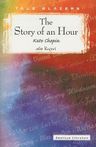

Kate Chopin’s The Story of an Hour is an early feminist work that questions attitudes about what women should be. The protagonist challenges the belief that women are nothing without a husband. After her grief subsides, Louise Mallard begins to see opportunity and freedom in her future. The author expresses the traditional idea of marriage, male-female relations, men's supremacy, and women's oppression throughout the novel. Louise Mallard realizes that she is free from the pressures of marriage and society's expectations of her and feels free for the first time in her life. But nothing would turn out as she had imagined.
The themes of The Story of an Hour are independence, death, marriage, and oppression. Women were under pressure in all aspects of life in the nineteenth century, including politics, society, economics, and psychology. Chopin focuses readers' on a story of a married lady who longs for independence. In the story, Louise Mallard's emotional transformation from a wife to an individual represents the loss of self-worth and identity that women experienced as oppressed Victorian wives, but also the desire for it. It was a completely different era than the one we are familiar with today. People were coerced into marriages over which they had no control back then. Women may marry for a variety of reasons, including social position, income, or feelings of safety. Furthermore, women see themselves as being in roles that demand they be financially, intellectually, and emotionally reliant on their spouses, requiring them to get identity and purpose from their husbands. Miss Mallard has felt trapped all her life because she was pushed into a marriage with a guy she did not love. Despite this feeling of being stuck, Miss Mallard is released on the news of her
inspiring and convincingGirişimcilik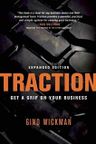

I thought such books are just doing emotional manipulation and they are far from real life. But now I really find this book as a guide book or Bible for managing your business. I also believe the principles in the book might be applicable to managing business or personal life. Below you will find the parts I underlined in the book while reading.
introduction 13: business is controlling you, you aren't have control
introduction 14: business itself is an entity, turn it into a self-sustaining organism
3: communicate visions to people
5: keep scorecard weekly 5-15 numbers
7: document all processes
16: build maintain leadership team
16: open minded, growth oriented, vulnerable
dictatorships not only are exhausting, but also precule future growth.
17: leadership team must present a unified front
21: stop working in business %100, work ON business often
22: delegate and elevate7
40: reputation outweighs profit every time
41: open and honest communication should be our goal
47: find your core focus, stick to it, and devote your time and resources to excelling at it.